
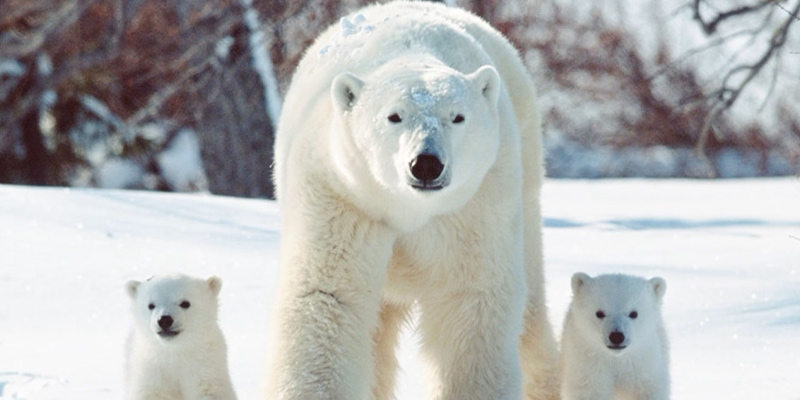
Chinese Scientists Develop Aerogel Fiber Inspired by Polar Bear Hair
Inspired by the core-shell structure in polar bear hair, Chinese scientists have developed an encapsulated erogel fiber (EAF) that imitates this unique structure. This fiber significantly outperforms conventional aerogel fibers.
A team of scientists at Zhejiang University in China has developed an aerogel fiber that could revolutionize the textile industry. The team, led by Professor Bai Hao and Associate Professor Gao Weiwei overcame the limitations of aerogel fiber with an ultralight fabric inspired by polar bear hair. Although traditional aerogel has been used in the aerospace industry, it has found limited use in other fields due to its fragility and difficulty in processing.
Inspired by the core-shell structure in polar bear hair, scientists have developed an encapsulated erogel fiber (EAF) that mimics this unique structure. The porous core within the dense shell increases the material’s durability and flexibility while providing exceptional thermal insulation. Professor Bai Hao said: “Our fiber can stretch up to 1000% despite its internal porous structure of over 90%. This significantly outperforms conventional aerogel fibers.”
Thanks to Its Superior Insulation Properties, it Leaves Feather, Wool and Cotton Behind
This new fiber has the potential for wide use. Researchers demonstrated the material’s success in practical applications by knitting a thermally insulated sweater comparable to a traditional down jacket, but only one-fifth as thick. In an experiment at -20 degrees Celsius, the EAF material demonstrated superior insulation properties, outperforming down, wool and cotton.
The advantages of EAF, such as its suitability for everyday use in the aerogel fiber textile industry, its washability and dyeability, and its ability to maintain thermal insulation even in wet environments, point to the innovation’s potential for versatile use. However, Professor Zhang Xuetong from the Suzhou Institute of Nanotechnology and Nanobionics highlighted the difficulties in mass production, especially in areas such as military uniforms and space suits in extremely cold environments.