Türkiye Competes Wıth Global Gıants In Textıle Exports
Türkiye’s textile and raw materials sector closed 2025 with exports totaling USD 11.4 billion. Together with the ready-to-wear industry, total exports reached USD 26 billion in 2025, while the two sectors jointly generated a USD 17 billion foreign trade surplus.
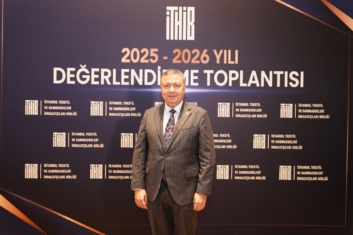
Ahmet Öksüz, Chairman of the Board of the ITHIB
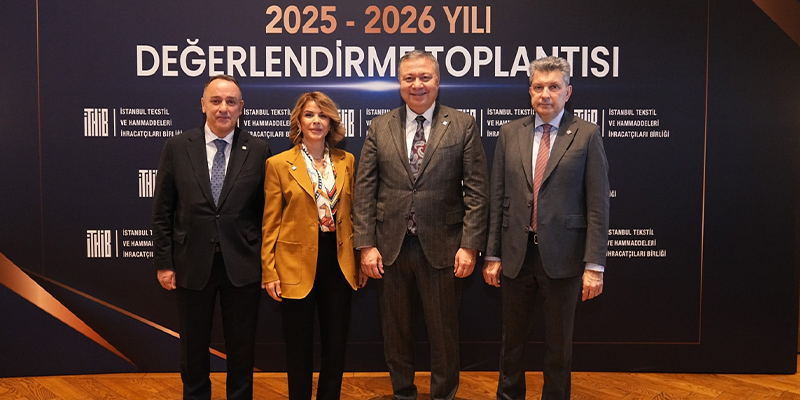
At a meeting attended by Ahmet Öksüz, Chairman of the Board of the Istanbul Textile and Raw Materials Exporters’ Association (İTHİB), Fatih Bilici and Ali Sami Aydın, Vice Chairmen, and Sultan Tepe, Board Member, an evaluation of the sector’s performance in 2025 was presented, along with discussions on targets for the upcoming period. Emphasizing that the textile and raw materials sector, together with ready-to-wear, achieved USD 26 billion in exports, Ahmet Öksüz stated: “Together, the textile and ready-to-wear sectors rank third among Türkiye’s top exporting industries. With a USD 17 billion foreign trade surplus, we are the sectors that generate the highest foreign currency inflow for our country. Combined with ready-to-wear, we are also the largest manufacturing sector in terms of production value, with a total of USD 77.2 billion. Of this figure, textiles account for USD 44.8 billion, while ready-to-wear contributes USD 32.4 billion.”
40.3% Of Exports Were To The EU
Stating that the textile sector closed 2025 with exports totaling USD 11.3 billion, Ahmet Öksüz said: “Last year, our exports were at the level of USD 11.4 billion. Our largest export market was the EU countries, with exports amounting to USD 4.5 billion. Exports to the EU accounted for 40.3% of our total exports. Exports to African countries reached USD 1.5 billion, representing a 13.6% share of total textile exports. The third-largest export region was the former Eastern Bloc countries, to which we exported approximately USD 1.4 billion, corresponding to 12% of our total exports.”
Italy Leads Our Exports, Egypt On The Rise
Stating that Italy ranks first among the countries to which the sector exports the most, with USD 838 million, followed by the United States in second place with USD 792 million, and Germany in third place with USD 715 million, Ahmet Öksüz said: “The most remarkable export increase in 2025 was recorded in Egypt. Following the investments made by Turkish investors in Egypt, exports to the country reached an all-time high. Exports amounted to USD 344 million in 2023, USD 461 million in 2024, and USD 567 million in 2025, representing a 23% year-on-year increase. In terms of export unit value per kilogram, our textile sector is well above the national average. While Türkiye’s average export unit value per kilogram stands at USD 1.59, the textile sector’s export unit value is around USD 4.3 per kilogram. The ready-to-wear sector’s export unit value per kilogram has increased to USD 21.3.”
“G20 Countries Are Investing In Textiles”
Evaluating the latest data on global textile exports, Ahmet Öksüz continued as follows: “Eight of the world’s top ten textile-exporting countries are members of the G20, while four are also members of the G7. China ranks first on the list with textile exports worth 141 billion dollars, followed by India in second place with 19 billion dollars. The United States ranks third with an export volume of 18 billion dollars, while Germany takes fourth place with 13 billion dollars. Turkey and Italy share fifth place, each with textile exports totaling 12 billion dollars.”
He also noted that the United States, which is the world’s largest investor in the textile sector, has made investments worth 3 billion dollars in this field. Ahmet Öksüz added: “Among the countries that increased their manufacturing industry exports, G20 members recorded significant growth rates, with Russia posting a 92.5% increase, Brazil 63.8%, Japan 9.7%, the United Kingdom 6.1%, and Austria 3.2%. In light of these figures, we can say that there is strong global demand for the textile sector.”
Commenting on the sector’s import data, Ahmet Öksüz stated that textile imports amounted to 12.7 billion dollars in 2022, marking the highest level of all time. He noted that imports declined from 2023 onwards due to the slowdown experienced in the sector, adding: “In 2023, imports stood at 9.2 billion dollars, followed by 8.2 billion dollars in 2024, and 7.3 billion dollars in 2025 (January–November period). In 2022, 19.5% of the sector’s imports were carried out under the Inward Processing Regime (IPR). We see that this ratio increased to 22.9% in 2025. In Turkey’s overall imports, the share of IPR has averaged around 10% over the past year. When examining sub-product groups, the IPR share in the yarn product group rose to an all-time high of 44.1%. While the IPR share in cotton yarn imports was 26% in 2017, it increased to 65.5% in the January–November period of 2025. Considering imports from the EU and Free Trade Agreement (FTA) countries, the rate of duty-free imports has reached as high as 75%. From a country-based perspective, it is observed that 5 of the top 10 countries from which textile imports are made benefit from tariff advantages in imports.”
Stating that the textile and apparel sectors together provide employment for a total of 860,000 people, Ahmet Öksüz said: “In August 2022, we employed approximately 1 million 250 thousand people, reaching the highest level in our history. However, since then, employment has declined by 31%. On an annual basis, employment in the textile sector decreased by 9.3%, while the ready-to-wear (apparel) sector recorded a decline of 12.1%. Overall, employment in the textile and apparel sectors fell by 10.9%.”