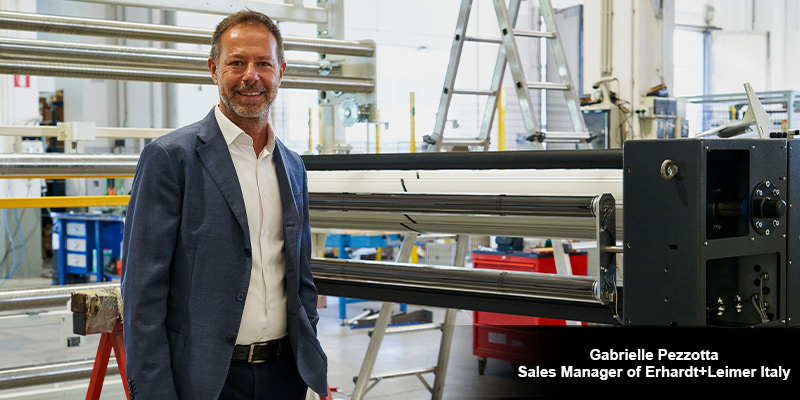
“Erhardt+Leimer Delivered a Resilient Performance in the First Three Quarters of 2026”
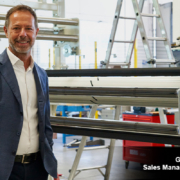
Erhardt+Leimer Italy Sales Manager Pezzotta Gabriele highlights that Türkiye continues to maintain its strategic importance thanks to its strong textile infrastructure, noting that Turkish manufacturers are showing growing interest in technologies that enhance efficiency, quality and process control.
Alongside growing competition, the global textile industry is also undergoing a rapid transformation driven by efficiency, quality and digitalisation. As one of the key markets in this transformation, Türkiye holds a strategic position in Erhardt+Leimer’s global operations thanks to its well-established production infrastructure and strong export capabilities. Evaluating the first three quarters of 2026 and technology investments across the industry, Erhardt+Leimer Italy Sales Manager Pezzotta Gabriele points out that demand from Türkiye is particularly focused on solutions that improve efficiency, reduce material waste, enhance process stability and strengthen quality control. Gabriele also notes that, alongside camera-based measurement and process control systems such as Elcount, AI-powered technologies are becoming increasingly important in helping Turkish textile manufacturers strengthen their competitiveness in international markets.
How did the first three quarters of 2026 perform for Erhardt+Leimer?
 Despite a challenging market environment and continued uncertainty across parts of the global textile industry, Erhardt+Leimer delivered a resilient performance during the first three quarters of 2026. While investment decisions in some regions were delayed by economic factors, customers continued to prioritize technologies that enhance process stability, operational efficiency and product quality. International business remains a cornerstone of our success. Our broad global footprint and close cooperation with customers worldwide allow us to respond effectively to regional market requirements while benefiting from the ongoing modernization and digitalization of textile production on a global scale.
Which regions and markets stood out in Erhardt+Leimer’s global sales in 2026? What changes have you observed in demand dynamics across Europe, Asia, Türkiye and other emerging markets?
Asia remained a key growth driver throughout 2026, supported by continued investments in productivity enhancement, quality assurance and production modernization. Textile manufacturers across the region have shown a strong commitment to upgrading their facilities and implementing advanced automation solutions to increase competitiveness. In Europe, investment activity was more targeted, with companies primarily focusing on projects aimed at improving operational efficiency, reducing energy consumption and accelerating digital transformation initiatives. Türkiye continued to play a strategically important role within the global textile industry. Its well-established manufacturing base, flexibility and proximity to European customers reinforce its position as a major textile production hub and a key partner for international brands. Beyond these established markets, we have seen increasing interest from emerging textile regions. Manufacturers are actively exploring automation, process monitoring and intelligent quality control solutions to address labor challenges, enhance productivity and meet increasingly demanding quality standards.
Global competition in sensor, camera and imaging technologies is becoming increasingly intense. What are the key factors that differentiate Erhardt+Leimer from its competitors?
 In today’s market, innovation is not just about individual components. Customers are looking for integrated solutions that combine sensors, camera technology, software intelligence and machine control into a seamless and efficient production environment. What sets Erhardt+Leimer apart is our unique combination of technological expertise and deep application know-how. With decades of experience across the textile industry, we understand our customers’ processes in detail and can deliver solutions that are tailored to real production challenges. Our strength lies not only in developing advanced hardware and software, but also in integrating these technologies into complex manufacturing environments where reliability and performance are critical.
Another important differentiator is our ability to translate data into actionable process improvements. By combining high-performance sensors and machine systems with intelligent software and AI-supported analytics, we help manufacturers achieve higher levels of automation, quality assurance and operational efficiency. Equally important is our global presence and service infrastructure. Through local teams and application specialists around the world, we are able to provide fast support, close customer collaboration and practical expertise built on many years of experience throughout the entire textile value chain.
“Demand for Advanced Metering and Process Control Technologies Like Elcount Has Increased in Türkiye”
What position does Türkiye hold in Erhardt+Leimer’s textile technology business? What changes have you observed in demand and investment trends in the Turkish market during 2026?
 Türkiye is one of the most important textile markets for Erhardt+Leimer. The country has a highly developed textile industry and a strong focus on exporting high-quality products to international markets. During 2026, we observed continued interest in technologies that increase efficiency, reduce material waste and improve product quality. Even in periods of economic uncertainty, Turkish manufacturers have demonstrated a strong willingness to invest in solutions that provide measurable operational advantages.
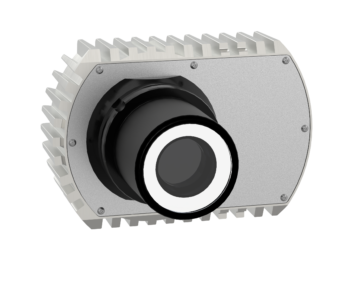
We also see growing demand for advanced measurement and process control technologies such as Elcount, our camera-based system for online detection and control of stitch and thread density.
As quality requirements become increasingly demanding, solutions that enable continuous monitoring and consistent fabric characteristics throughout the finishing process are becoming more important for textile manufacturers seeking to improve both productivity and product quality. Elcount helps customers achieve greater process stability, reduce variability and ensure compliance with increasingly stringent quality standards. Looking ahead, we see significant potential in AI-based systems, digital process optimization, quality monitoring and fully automated production workflows. Combined with intelligent measurement solutions such as Elcount and innovative inspection technologies, these developments will help Turkish textile manufacturers further strengthen their competitiveness in international markets.
What are the key differences between AI-based systems and conventional sensor and camera technologies, and what measurable benefits does this transformation provide to textile manufacturers?
Traditional sensors typically operate based on fixed parameters and predefined rules. AI-based systems, by contrast, can learn from large amounts of real production data and adapt to changing process conditions. For textile manufacturers, this means more reliable detection of complex structures, greater flexibility with different materials and significantly reduced manual intervention. AI can identify patterns and anomalies that would be difficult or impossible to detect using conventional methods. The measurable benefits include reduced waste, fewer machine stoppages, lower maintenance costs, increased production efficiency and more consistent product quality. You should try our Elseamtex, in order to understand how AI-based systems can be integrated in textile production processes!
“We Have Received Very Positive Feedback from Our Customers Regarding Elseamtex SI 1001”
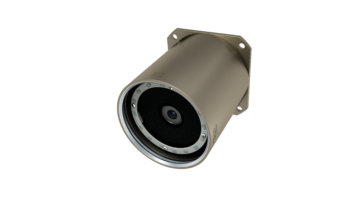
The Elseamtex SI 1001, which uses AI-supported, contactless optical detection for seam detection, represents an important innovation. What feedback have you received regarding Elseamtex SI 1001?
Customer feedback has been very positive since the market launch. Users particularly appreciate the contactless seam detection capability, the ease of integration into existing production lines and the reliability achieved even with challenging materials and printed fabrics. One of the strongest messages we receive from customers is that the system helps reduce process disruptions while protecting sensitive downstream equipment. The combination of optical detection and artificial intelligence enables seam detection capabilities that were previously difficult to achieve with conventional sensor technologies. The feedback we collect continuously contributes to further refinement of our algorithms and user interfaces.
Looking ahead, which technologies do you believe will be the key drivers of camera technology over the next few years – higher resolution, faster image processing, AI, edge computing, or the integration of different technologies?
The future will not be defined by a single technology but rather by the intelligent combination of multiple technologies. Higher resolution remains important, but customers increasingly gain value from faster processing speeds, integrated image evaluation and AI-assisted decision making. Edge computing will also play a growing role because many applications require real-time analysis directly on the machine. In our view, the most important development will be the increasing integration of systems, AI algorithms and machine controls into unified, self-optimizing production environments.
What technologies are on Erhardt+Leimer’s innovation agenda?
Our innovation agenda focuses on digitalization, intelligent automation and advanced inspection technologies. We continue to invest heavily in artificial intelligence, machine technology and data-driven process optimization. Our aim is to provide customers with systems that not only detect problems but also actively support production decisions. In addition, we see considerable opportunities in cloud-enabled services, predictive maintenance solutions and enhanced connectivity between machines, sensors and enterprise-level production management systems.
“We Will Continue to Invest in Artificial Intelligence, Smart Sensors, and Software Development in the Coming Period”
Has Erhardt+Leimer made any significant investments in R&D, production capacity, software, artificial intelligence, testing infrastructure or human resources during 2026?
Innovation and globalization remain our highest priorities. Throughout 2026, we continued investing in research technology and develop our supply chain. We have also strengthened our engineering capabilities and expanded development resources to accelerate innovation cycles. Beyond product development, investments in testing infrastructure and digital engineering tools ensure that new solutions can be validated under realistic production conditions. Going forward, AI, software development, intelligent sensors and advanced systems will remain central investment areas.
Finally, looking ahead to the next 3–5 years, how do you envision textile production lines evolving from a technological perspective?
The textile factory of the future will be significantly more autonomous, connected and data-driven than today’s production environments. We expect quality control to move increasingly toward continuous real-time monitoring, with intelligent systems detecting deviations immediately and automatically adjusting process parameters. Artificial intelligence will play a central role in transforming production data into actionable decisions. While human expertise will remain essential, especially for process management and strategic decision-making, routine inspection and optimization tasks will become increasingly automated. We are moving steadily toward production environments where quality assurance is performed continuously, transparently and with minimal manual intervention. Manufacturers that embrace this transformation will benefit from higher productivity, better quality consistency and greater operational flexibility.
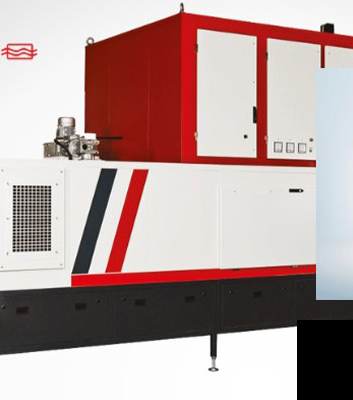
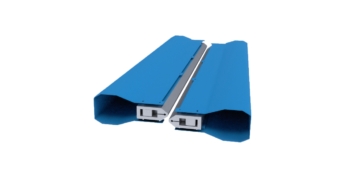
At the same time, the focus will not only be on inspection and process control, but also on preventing quality issues before they occur. Solutions such as our Elclean modular cleaning system are a good example of this approach. By removing dust, fibers and other contaminants directly from the production process, Elclean helps improve product quality, reduce rejects, protect sensitive equipment and create a cleaner working environment. As textile production becomes increasingly automated, technologies that combine process cleanliness, quality assurance and operational efficiency will play an even more important role in overall factory performance.