Picanol to Focus on Smart and Efficient Weaving Technologies in Türkiye
Interview: Dilek Hayırlı
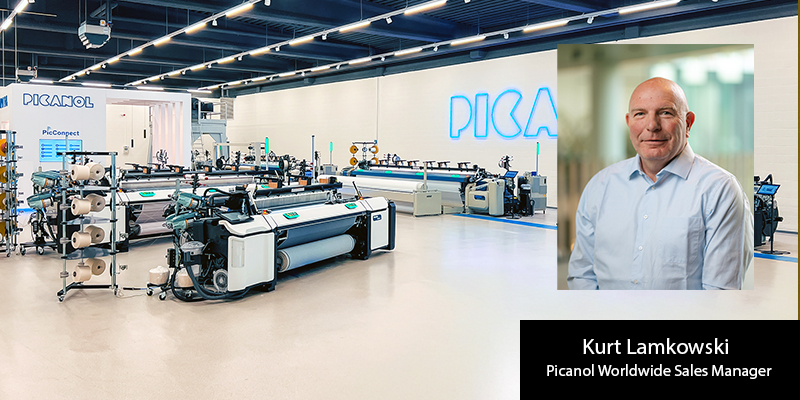
Picanol Worldwide Sales Manager Kurt Lamkowski stated that total cost of ownership, energy efficiency, production flexibility, and digitalization are becoming increasingly important factors in Turkish weaving manufacturers’ machinery investment decisions. He emphasized that Picanol will continue to focus on smart and sustainable technologies that enhance the competitiveness of manufacturers in Türkiye.
Rising production costs, the need for greater energy efficiency, and digitalization are driving a new transformation in weaving technologies. By combining machine performance with artificial intelligence, smart automation, and resource optimization, Picanol is developing solutions for the weaving factories of the future. In our interview with Picanol Worldwide Sales Manager Kurt Lamkowski, we discussed the developments shaping the future of the industry, from next-generation weaving machines and digital production systems to sustainability and the evolving investment priorities of the Turkish market.
One of Picanol’s most significant recent product developments is the new-generation OmniPlus-i Connect. What key needs and expectations from weaving manufacturers were taken into consideration when developing this platform?
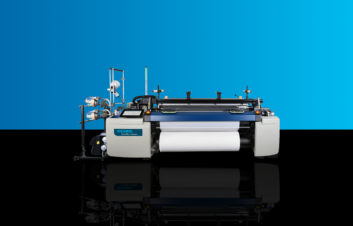 When developing the next-generation OmniPlus-i Connect, we started from the needs of modern weaving mills. Customers are facing higher energy costs, increasing sustainability requirements, labor shortages, and growing pressure to improve productivity and profitability simultaneously. They also expect machinery to be easier to operate and more integrated into digital mill environments.
We redesigned and optimized key machine components to achieve significantly lower energy consumption while maintaining the excellent productivity, reliability, and fabric quality that our weaving machines are known for. The introduction of EcoBoost, together with further improvements in air insertion efficiency, machine intelligence, and connectivity, has enabled energy savings of up to 1.5 kW per machine. At the same time, the machine is fully PicConnect-enabled, allowing customers to benefit from advanced digital monitoring and optimization tools.
Picanol states that EcoBoost can deliver energy savings of up to 1.5 kW per machine on the OmniPlus-i Connect. When it comes to improving energy efficiency in weaving machines today, is simply reducing energy consumption sufficient, or is Picanol developing a more integrated approach that optimises energy costs, production speed, air consumption and fabric quality simultaneously?
Reducing energy consumption is one way to optimize the costs for weaving mills. At Picanol, we view energy efficiency as part of a broader optimization strategy. Customers evaluate their machines based on the total cost of ownership rather than on a single parameter. That is why our approach combines several features such as EcoBoost, EcoWeft, AirStream, ELSY Pro, WeavePilot, SmartShed Pro, and intelligent software algorithms within our digital platform PicConnect. Together, these innovations help mills reduce energy consumption, lower compressed air usage, minimize raw material waste, maintain high production speeds, ensure consistent fabric quality, and this with the highest ease of use and operational flexibility.
PicConnect’s integration of artificial intelligence appears to represent an important milestone in Picanol’s digitalisation strategy. What decisions can AI currently support in a weaving mill, and how far does Picanol aim to take autonomous machine optimisation over the next few years?
 PicConnect supports practical operational decisions. Analyzing machine performance, monitor energy consumption, highlighting deviations, and prioritizing corrective actions before problems affect production. Recently we’ve launched the detection of eventual air leakages of our airjet weaving machines, supported by AI-technology.
Looking ahead, we see increasing levels of assisted optimization. The objective is not to replace human expertise but to provide operators and managers with intelligent recommendations and automated setting adjustments. Over the coming years, AI will play an increasingly important role in predictive optimization, enabling weaving machines to continuously adapt to operating conditions and achieve the best balance between quality, productivity, and efficiency.
When developing the Ultimax, how did Picanol balance maximum performance with minimum resource consumption? Particularly in denim, technical textiles, voile and other high-value fabric applications, which new markets or applications do you expect the different Ultimax configurations to address in the future?
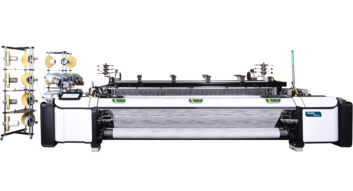 The Ultimax was developed around the principle that maximum performance must go hand in hand with sustainability and ease of use. High productivity is important, but it must be achieved efficiently and consistently. The machine therefore combines advanced mechanical design, intelligent monitoring, digitalization, and optimized yarn handling to deliver top performance while minimizing waste and resource consumption.
The versatility of the Ultimax allows it to address a very broad range of applications. In denim, customers benefit from high productivity combined with the capability to handle recycled yarns effectively. In lightweight fabrics such as voile, the focus is on precision and outstanding fabric quality. Future opportunities will continue to grow in technical textiles requiring excellent process control and flexibility.
One of the major challenges facing weaving mills today is the shortage of skilled operators and technical personnel. How will solutions such as Picanol’s WeavePilot, SmartShed Pro, automated settings and production and fault monitoring change the role of operators in the future?
We believe human expertise will remain essential. But the industry is increasingly supported by intelligent automation. Automation will simplify repetitive and highly technical tasks, allowing fewer operators to supervise more machines.
Solutions such as WeavePilot, automated machine settings, digital monitoring, and fault analysis reduce the need for extensive machine-specific know-how and shorten learning curves for new personnel. At the same time, operators will increasingly focus on process management, performance improvement, and quality optimization rather than manual machine adjustments.
Looking ahead, where do you expect the greatest sustainability gains in weaving machines to come from: lower energy consumption, reduced raw material waste, or overall process optimisation?
 Energy consumption remains extremely important, especially with rising energy costs, but focusing on one parameter alone misses significant opportunities.
The most sustainable weaving mill is one that simultaneously minimizes energy consumption, yarn waste, downtime, and rejected fabric while maintaining high productivity. In the future, digital technologies will increasingly connect these different optimization areas, allowing mills to achieve substantial sustainability improvements across the entire production process.
Sustainability is also closely linked to the lifetime and versatility of weaving machines. A machine that can efficiently produce a wide range of fabrics, adapt to changing market requirements, and remain productive for many years represents a highly sustainable investment. By combining durable machine designs with continuous technological upgrades and optimization solutions, Picanol helps customers maximize the value of their equipment and extend its operational lifetime, reducing the need for premature replacement and contributing to a more sustainable textile industry.
Ultimately, the biggest sustainability gains will come from looking at the complete lifecycle of the weaving process and the machine itself, where energy efficiency, resource optimization, machine longevity, and production flexibility all work together.
Technical textiles, recycled yarns and increasingly complex fabric constructions are creating new demands on weaving technology. With regard to the Ultimax solutions developed specifically for technical textiles, which technological challenges is Picanol focusing on solving that differ from those encountered in conventional apparel textile production?
Technical textiles often involve materials and production requirements that are far more demanding than conventional apparel fabrics. Challenges include complex fabric structures while maintaining stable weaving performance and consistent quality.
Our Ultimax platform focuses on precise yarn handling, excellent process stability, wider weaving widths, advanced monitoring, and flexible rapier technologies that can accommodate these challenging materials. Technical textile manufacturers often prioritize reliability, consistency, and process control over simply achieving the highest possible speed.
As technical textile applications continue to expand, these capabilities will become even more important for producing next-generation industrial and functional fabrics.
Picanol’s investment in its new facility in Ieper demonstrates the importance the company places on its manufacturing and engineering capabilities in Europe. At a time when production capacity and competition in Asia are rapidly increasing, what role does Belgium play in the future development and manufacturing of high-tech weaving machines?
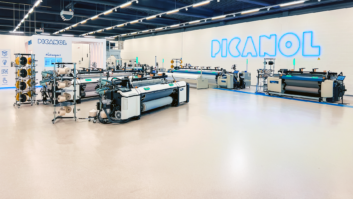 Belgium remains the heart of Picanol’s innovation, engineering, and manufacturing activities. Our investment in a new head office in Ieper reflects our confidence in the value of maintaining strong technological expertise, advanced engineering capabilities, and close interaction between research, development, and production.
While Asian textile markets continue to grow and are strategically important for Picanol, we remain committed to staying close to our customers worldwide through our strong local sales and service organizations. Providing local support, training, technical expertise, and other customer services remains a key strength of Picanol. This proximity allows us to understand our customers’ needs, support them throughout the lifetime of their machines, and build long-term partnerships.
From the perspective of the Turkish market, what has changed most in the expectations of Turkish weaving manufacturers when it comes to machinery investments, and which technologies will Picanol focus on specifically for the Turkish market in the coming period?
Turkish weaving manufacturers have always been technology-oriented, but today their investment decisions are increasingly driven by the total cost of ownership. Beyond productivity, customers are closely evaluating energy consumption, resource efficiency, flexibility, ease of operation, and digital connectivity.
Turkish mills are also operating in a wide variety of market segments, from fashion fabrics and denim to technical textiles, which means versatility remains extremely important.
Going forward, we will continue focusing on solutions that help Turkish customers improve competitiveness through lower operating costs, higher sustainability, and smarter digital factory management.
How do you expect weaving machines to evolve over the next five years? Where does Picanol want to position itself in this transformation?
All these trends will play a role, but the most significant development will be their convergence. Future weaving machines will not simply be faster; they will be smarter, more connected, more autonomous, and more resource efficient.
We expect greater adoption of AI-assisted decision making, automated machine optimization, predictive maintenance, energy management, and seamless integration into fully connected digital factories. Sustainability requirements will further accelerate this evolution.
Picanol intends to remain at the forefront of this transformation by combining high-performance weaving technology with digital intelligence, advanced automation, and sustainable innovation. Our goal is to help customers achieve the optimal balance between productivity, quality, flexibility, and resource efficiency, ensuring their weaving operations remain competitive and future-proof for years to come.