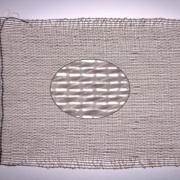
Smart Fabric Developed at Harran University Offers 90% Protection Against Radiation
Interview: Tuğba KARADEMİR
A project titled “Development of Smart Protective Fabric Against Radiation” prepared by the Faculty of Science and Letters at Harran University has been deemed worthy of support by the Scientific and Technological Research Council of Turkiye (TÜBİTAK).
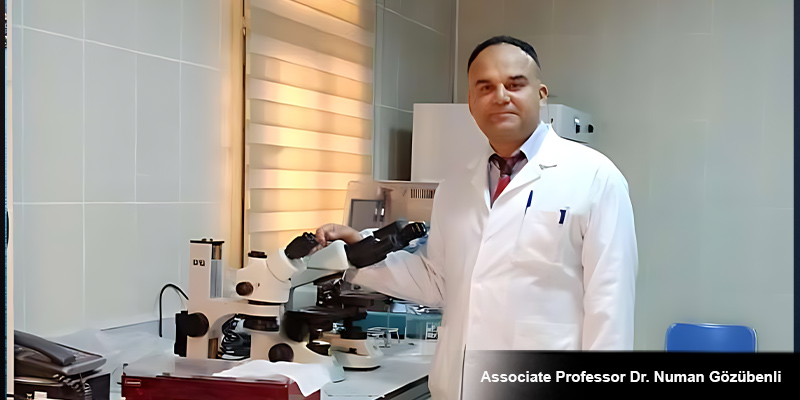
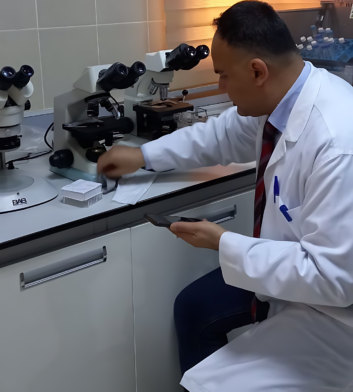 Supported under the TÜBİTAK 1002-A Rapid Support Program, the project is being carried out by a team led by Associate Professor Dr. Numan Gözübenli from the Department of Molecular Biology and Genetics.
The aim of the study is to develop smart fabrics with varying structural features and the capacity to attenuate radiation by using nanoparticles derived from rare earth elements. The project seeks to contribute to the development of advanced textile technologies that can protect users from the harmful effects of radiation.
Firstly, we’d like to get to know you better. What are your scientific ınterests? How did your educational and research journey evolve?
I completed my PhD in 2015 at the University of Florida in the USA, focusing on nanoparticles and their surface coatings. At Harran University, our main area of study has been to develop biosensor surfaces and anti-reflective, dirt-repellent coatings for solar panels. However, we discovered that these particles could also be applied to chip surfaces, silicon, plastic types, and especially to fabrics, metals, and surfaces like glass. Nanoparticles enable us to create more functional and intelligently designed surfaces.
“We Believe This Fabric Can Also Be Used in Everyday Clothing”
Could you tell us about the origin of the project? How did the idea to develop radiation-protective fabric emerge?
This idea emerged while trying to answer the question: How can we block the intense gamma rays expected to reach Earth during the solar flares anticipated in 2025? We believe that this fabric can be used not only to protect healthcare professionals and workers in nuclear facilities but also in everyday clothing.
Studies conducted so far have shown that fabrics made of polyethylene (PE), cotton, and polypropylene (PP), processed using a special molding technique, can provide more than 90% protection against high-energy gamma rays. These results have been validated both through simulations using NaI (sodium iodide) detectors and through experimental testing.
“Smart Fabrics Can Provide Protection Against Skin Cancer”
Could you elaborate on the concept of “smart fabric”? What are the key features that differentiate this fabric from others? How does it respond to environmental conditions?
 Smart fabrics are innovative textile products that respond to environmental changes, interact with users, or offer specific functions by integrating technology into textiles. In addition to shielding against high-energy radiation, these fabrics also offer antimicrobial activity thanks to their surface coating. Furthermore, they contain rare earth oxides capable of minimizing the effects of reactive oxygen species on the skin, which could offer protective effects against skin cancers.
Which sectors could benefit from the prototype fabric? Can it be used beyond health, defense, energy, and aerospace?
The application areas for this smart fabric prototype are quite broad. While the primary sectors may be health, defense, energy, and aerospace, I believe smart fabrics will inevitably find a place in everyday use as well.
Who is your target audience initially? How do you plan to integrate this fabric into daily use considering design, cost, and accessibility?
Given the high cost and niche nature of this radiation-shielding fabric, it’s more realistic to initially focus on groups with specific and urgent needs. Potential target groups include:
Professionals Exposed to Radiation:
- Healthcare Workers: Radiologists, radiotherapy specialists, X-ray technicians, and surgeons frequently using radiation-emitting devices.
- Nuclear Power Plant Workers: Engineers and technicians working under radiation risk.
- Aviation Personnel: Pilots, cabin crews, and flight staff who are more exposed to cosmic radiation at high altitudes.
- Military Personnel: Units operating in radioactive zones or near nuclear weapons.
Why did you choose cerium oxide nanoparticles in your research? What are its advantages over other materials?
Reasons for choosing cerium oxide nanoparticles include:
- Antioxidant and Radioprotective Properties:
- Free Radical Scavenging: Cerium oxide nanoparticles can effectively neutralize free radicals (reactive oxygen species – ROS) caused by radiation thanks to their unique redox properties. These radicals damage DNA, proteins, and lipids in the body. CeO₂ nanoparticles reduce cellular damage by neutralizing them.
- Enzymatic Mimicry: They can mimic natural antioxidant enzymes, providing continuous protection against radiation damage.
- Broad-Spectrum Radiation Shielding:
- Cerium oxide can shield against various types of ionizing and non-ionizing radiation, including X-rays, gamma rays, and even some UV radiation. The nanoscale size further enhances this shielding efficiency.
How do nanoparticle size, shape, and distribution affect the fabric’s effectiveness? What do initial experimental results show?
Our initial results indicate strong antimicrobial activity and effective radiation shielding, providing over 90% protection.
You mentioned that these fabrics could be effective against radiation types found in daily life, like sunlight. When might the general public access this fabric? What’s the commercialization process like?
Since our work is conducted within the university, we currently share results within academic circles. However, if there is interest in commercializing the product, we are ready to offer our support.
What is the importance of this project in terms of local production and regional development? How do you position this work in terms of university-industry collaboration and economic impact?
We see this as a highly promising project. We are confident that it will contribute not only to the textile industry but also to defense, industrial, and space applications.
How has TÜBİTAK 1002-A support contributed to your project?
We consider this support a stepping stone. The TÜBİTAK 1002 program is significant in that it gives us hope and visibility. We are currently preparing higher-budget project applications for TÜBİTAK and international funds.
Finally, what advice would you give to young researchers interested in this field? What would you recommend to students interested in nanotechnology, materials science, or textile technology?
- Follow Your Curiosity and Read Widely: Nanotechnology is vast. Read scientific journals (e.g., Nature Nanotechnology, ACS Nano) and science news to identify what interests you most.
- Build a Strong Foundation: A solid understanding of chemistry, physics, biology, and mathematics is essential. These fundamentals help grasp the complex aspects of nanotechnology.
- Gain Lab Experience: Volunteer in university labs, join internship programs, or attend summer schools. Practical lab skills are invaluable in this hands-on field.