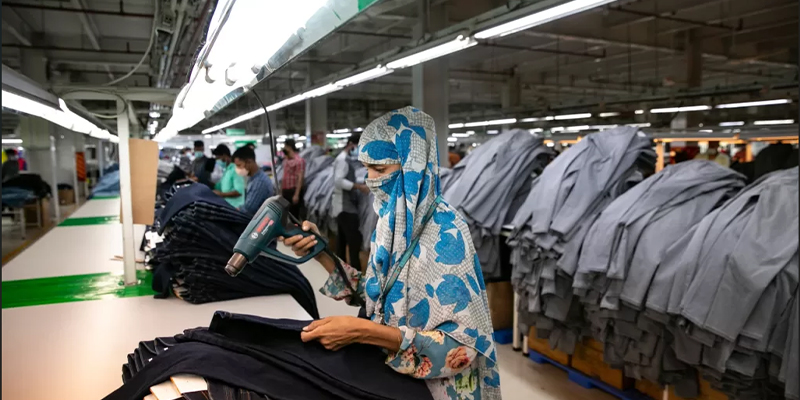
Wage Protests in Bangladesh Put Global Ready-to-Wear Competitiveness Back in the Spotlight
Rising wage demands, production costs and pricing pressure from international brands in Bangladesh are prompting renewed debate over competitiveness in the global ready-to-wear industry. Worker protests disrupting operations at hundreds of factories have resulted in $428 million in production losses and the relocation of $254 million worth of orders to other countries, bringing the sustainability of the low-labour-cost production model and the importance of productivity-driven transformation into focus.
 Protests triggered by workers’ demands for wage increases in Bangladesh, one of the world’s largest ready-to-wear manufacturing hubs, have brought the industry’s production and competitive dynamics back into the spotlight. The demonstrations, which began in October 2026 and intensified again in November, disrupted operations particularly in major ready-to-wear manufacturing regions, while also creating uncertainty in international brands’ supply chains.
Thanks to its low labour costs, extensive manufacturing capacity and access to international markets, Bangladesh has long been one of the key hubs in the global ready-to-wear supply chain. However, workers’ demands for higher wages in response to rising living costs have once again raised questions about the economic and social sustainability of this production model.
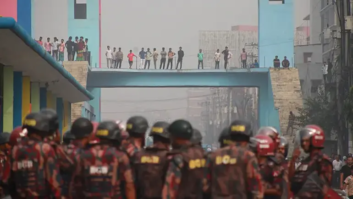
On 17 November, thousands of ready-to-wear workers took to the streets again, particularly in Gazipur, near the capital Dhaka, and other major manufacturing regions. Demonstrations escalated after a planned meeting under the minimum wage negotiations was postponed. Police used tear gas and sound grenades, while roads were blocked and some vehicles were set on fire. These developments posed risks not only to manufacturing operations but also to international order fulfilment and delivery schedules.
Wage Demands Reach 30,000 Taka
The monthly minimum wage in Bangladesh’s ready-to-wear industry was set at 12,500 taka under a regulation that came into effect in December 2023. However, rising food, housing, transportation and healthcare costs have significantly eroded workers’ purchasing power. Arguing that current wages are insufficient to cover basic living expenses, workers are demanding that the monthly minimum wage be increased to 30,000 taka (approximately $240). The formal proposal submitted by worker representatives to the wage board stands at 32,000 taka.
 In response to mounting pressure, the government established a six-member minimum wage board. The new wage structure is expected to be announced in December and implemented as of January 2027. However, postponed negotiations and disagreements between the parties continue to fuel uncertainty across the industry.
The latest survey released by the Bangladesh Garment Manufacturers and Exporters Association (BGMEA) has also revealed the economic impact of the protests. According to data collected from 317 member factories, worker unrest during the 18-day period between 1 and 18 November resulted in direct production losses totalling $428 million at these facilities. Factories participating in the survey were forced to suspend production for between one and 16 days during this period.
In addition to production disruptions, international brands and buyers shifted confirmed orders worth a total of $254 million, covering 59 million garments, to other countries due to uncertainty in their supply chains. BGMEA reported that more than 600 factories had been affected by the protests, although only 317 factories were able to provide data for the survey conducted within a limited timeframe. The association noted that the reported $428 million in production losses may therefore not fully reflect the actual damage across the industry.
The relocation of orders stands out as a development that could affect not only Bangladesh’s existing manufacturing capacity but also its reliability as a supplier to international buyers. Disruptions to production and shipment schedules are accelerating brands’ shift towards alternative manufacturing hubs, while also bringing Bangladesh’s position in the global ready-to-wear supply chain into question.
Manufacturers Caught Between Cost and Pricing Pressures
Behind the developments in Bangladesh lie not only demands for higher wages but also an increasingly challenging cost and pricing environment for manufacturers. Employing more than 4 million people and accounting for over 80% of the country’s export earnings, the ready-to-wear industry remains one of the main pillars of the Bangladeshi economy. With annual industry revenues standing at approximately $38 billion, the scale of production disruptions highlights their significance for the national economy.
 Manufacturers are struggling with rising energy, raw material and logistics costs while simultaneously facing pricing pressure from international buyers. Some manufacturers report profit margins as low as 2-3%, highlighting the difficulty of absorbing rising costs under existing order prices. Labour is estimated to account for approximately 10-13% of total production costs, while manufacturers say they are struggling to pass wage increases on to international brands.
This situation also raises the question of how costs should be shared across the global ready-to-wear supply chain. While manufacturers argue that order prices need to be reassessed to ensure that higher wages can be sustained, worker representatives are also calling for international brands to ease the pricing pressure imposed on suppliers.
The fact that international brands demand higher social and environmental standards while simultaneously expecting suppliers to maintain low prices is among the factors limiting manufacturers’ ability to cover their costs. Therefore, achieving sustainable wage increases requires a reassessment not only of manufacturers’ operations but also of brands’ purchasing policies.
A New Era of Competitiveness: Productivity and Technology
Developments in Bangladesh once again demonstrate that competition in the global ready-to-wear market is no longer shaped solely by low labour costs. Other Asian manufacturing hubs, including India and Vietnam, are also strengthening their competitive positions through capacity expansion, trade agreements and industry incentives, prompting international brands to diversify their sourcing strategies. This makes preserving Bangladesh’s traditional cost advantage increasingly important.
Meanwhile, rising labour and production costs are increasing the importance of automation and productivity investments in the ready-to-wear industry. The digitalisation of production processes, adoption of automated systems, improved resource management and the development of value-added products are becoming decisive factors in maintaining manufacturers’ competitiveness.
Technologies that enable shorter production times, lower defect rates, energy and water savings, as well as flexible manufacturing systems, are among the key tools that can help offset the impact of rising costs. This transformation is important not only for low-cost manufacturing hubs such as Bangladesh but also for producers across the global textile and ready-to-wear industry.
The protests in Bangladesh do not mean that the low-labour-cost production model will disappear in the short term. However, recent developments demonstrate that cheap labour alone is no longer sufficient to secure a long-term competitive advantage. In the coming period, the balance between production costs, workers’ rights, supply chain reliability and technological efficiency will be one of the key factors shaping competitiveness in the global ready-to-wear industry.