New Evolon ESD Packaging Textiles From Freudenberg
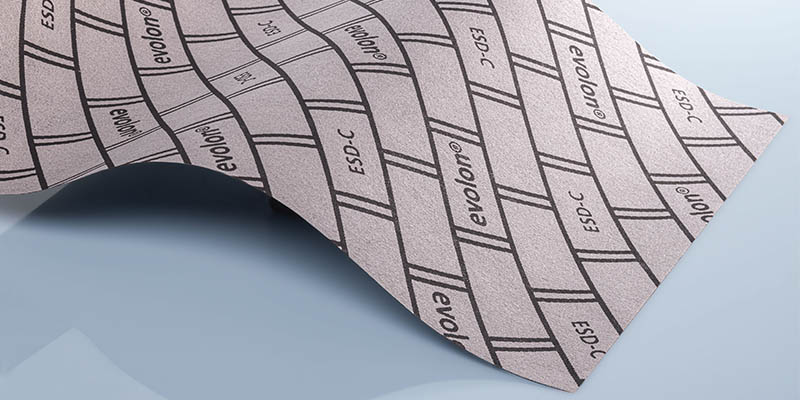
Germany’s Freudenberg Performance Materials is widening its range of technical packaging textiles. The company introduced the new Evolon ESD collection it has developed to the market.
The new Evolon ESD collection protects automotive and industrial parts with electronic components from electrostatic discharge. This includes trim lines, dashboards, mirrors, steering wheels, etc. Evolon ESD also prevents scratching of sensitive surfaces.
This eliminates ESD damage
The company shared the following information in its press release: “The new technical packaging textile also provides several sustainability benefits: it helps manufacturers to reduce their scrap waste, it is long-lasting, and is made from recycled polyester. The ElectroStatic Discharge (ESD) feature of the new Evolon technical packing textile provides permanent electrostatic discharging protection and the fabric’s surface resistivity can be customised. This eliminates ESD damage to electronic components during transport because electrostatic charging due to movement and friction is safely prevented. As this kind of damage cannot be detected with the naked eye, Evolon ESD helps to avoid failures which can occur after the final product is assembled and released.”
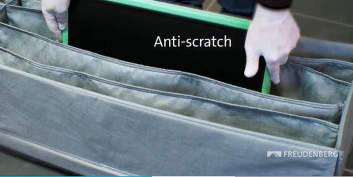
Unlike conventional ESD packaging solutions, Evolon ESD also protects parts surfaces by avoiding micro-scratches or lint contamination. By using Evolon reusable packaging to transport parts with highly-sensitive surfaces, customers reduce the number of damaged parts and the reject rate.
Evolon microfilament textiles are also extremely strong and are available in different weights to meet a wide range of requirements – from lightweight to heavy-duty. They can be used to pack and transport very heavy parts without damage. In addition, Evolon fabrics are extremely durable, and contain up to 85 % recycled PET.
Tech textiles with 35% less CO2 emissions
By using a high share of recycled content in its Evolon materials, Freudenberg Performance Materials offers technical packaging textiles with a 35 % reduction in carbon footprint. An independent life cycle assessment (LCA) study showed additional benefits such as energy resource savings and lower water use.
By replacing virgin PET with recycled PET, the cradle-to-gate carbon footprint of Evolon packaging textile materials decreased by 35 %. This is the result of a study by an independent LCA and eco-design consultancy firm, which made a Cradle-to-Gate assessment of several Evolon products using virgin PET or recycled PET. The study was finalised in 2022 and conducted according to the principles of ISO 14040/ ISO 14044 standards, following the recommendations of the Product Environmental Footprint and the Circular Footprint Formula, according to a press release by Freudenberg.
The study highlighted additional significant benefits on other criteria such as lower water use, reduced emissions into water, lower ozone formation, as well as important savings of minerals, metals, and energy carrier resources. Last but not least, Freudenberg has identified the highest priority areas of work to decrease the material’s CO2 emissions further on.
Evolon microfilament textiles have a small carbon footprint because their manufacturing process uses low CO2 energy sources. The fabrics are lightweight and can be reused throughout entire production programmes. Furthermore, the new Evolon RE fabrics contain up to 85 % of recycled PET which is produced in-house out of post-consumer PET bottles.
Evolon textiles are suitable for reusable technical packaging, which eliminate the use of thousands of disposable packaging materials. Evolon fabrics offer scratch-free, lint-free, high-end surface protection for moulded plastic parts, painted parts, and other sensitive industrial and automotive parts during transport. This contributes to lower the scrap rate of parts and provide both financial and ecological benefits.