“We Offer Customized, Modular and Integrated Nonwoven Lines for Every Application”
Interview: Tuğba KARADEMİR
Dilo Group evaluates the transformation of the global nonwoven and technical textiles market within the framework of modular needling lines, a sustainability-driven engineering approach, and digitalization strategies.
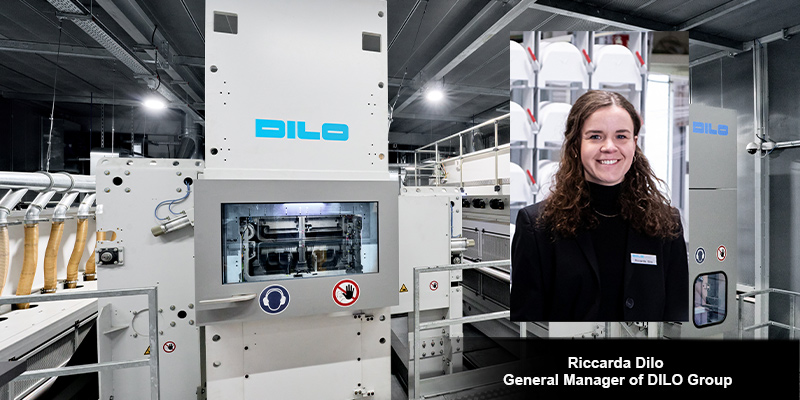
The global nonwoven and technical textiles industry is characterized by a broad and heterogeneous demand structure, ranging from filtration and automotive to geotextiles and industrial applications. This multi-layered landscape is directing manufacturers toward technologies that offer greater flexibility, energy efficiency, and enhanced process control. In this comprehensive interview with Riccardo Dilo, General Manager of Dilo Group—a globally strong player in nonwoven lines and needling technologies—we discuss the key issues shaping the future of the industry, from the 2025 market outlook and modular system concepts to digitalization, automation, and expectations for the Turkish market.
How would you assess the overall landscape of the global nonwovens and technical textiles market in 2025? How did this environment impact Dilo Group’s operational and commercial performance?
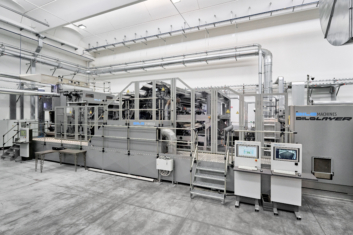 The nonwovens and technical textiles sector consist of many different application areas, each with its own demand cycles. This heterogeneous structure means that requirements vary significantly between segments. For Dilo, this mainly reinforces the importance of flexible, robust, and precisely engineered nonwoven lines that can serve a wide range of production needs.
What are the key strategic pillars that enable Dilo Group to sustain its leading position in global nonwovens and needle-punched technologies? How would you define your approach to R&D, engineering expertise, and system integration within this framework?
Our position is based on long‑standing engineering expertise, complete system integration, and continuous technical improvement. R&D follows a practical approach, aiming for measurable improvements in productivity, quality consistency, and process reliability.
“Performance and Process Reliability Are at the Core of Our Design Philosophy.”
How have the technological and structural transformations observed in nonwoven production processes in recent years influenced Dilo’s product development strategy and machine design philosophy?
Technical applications increasingly require specific material properties and precise process control. For Dilo, this means adapting our technologies to individual customer requirements and configuring each line according to the targeted performance profile. Our modular systems allow us to provide a suitable technical solution for any application.
Dilo’s needle-punch lines and fiber preparation systems are known for their modular and customizable structure. How do these solutions address the specific requirements of different segments such as filtration, automotive, geotextiles and industrial applications?
How do you evaluate their advantages in terms of performance, process flexibility, and total cost of ownership?
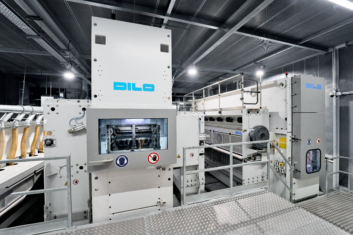 DiloGroup’s modular line concepts allow us to configure fiber preparation, web formation, and needling stages according to the specific technical requirements of each application. Whether the focus is on uniformity, mechanical strength, surface characteristics, or throughput, the system layout can be adapted accordingly. This flexibility ensures that customers receive a line design that matches their material targets while benefiting from stable performance, efficient operation, and a long service life.
Advantages include high performance, scalable process flexibility, and low total cost of ownership due to long machine lifetime and efficient operation.
In line with increasing demands for energy efficiency, raw material optimization, and sustainable production, which concrete technological solutions stand out in Dilo machines?
Energy efficient drive concepts, optimized air systems engineering by DiloTemafa, precise crosslapper control, and needling technologies engineered for high output with reduced energy use and minimal fiber waste are key elements of our approach.
How do automation and digitalization in Dilo production lines contribute to strategic gains for customers in terms of process control, consistent quality, and traceability?
Automation and digital tools support consistent process control, recipe based production, and continuous monitoring of key parameters. This leads to stable quality, reduced manual intervention, and improved traceability across the entire line.
How do you evaluate the investment trends of nonwoven and technical textile producers in Türkiye and the surrounding region?
 Producers in Türkiye and the surrounding region show interest in modern and reliable nonwoven technologies across various application fields. For Dilo, the region is one of several international markets where we support customers with flexible, durable, and scalable needle‑punch solutions.
“Integrated Lines from a Single Source Provide Long-Term Investment Security”
Looking ahead to the coming years, how would you define Dilo Group’s technology roadmap and market priorities? Which product groups, system developments, and application areas are expected to be at the core of this strategy?
DiloGroup’s future development focuses on further optimization of needling technologies, including solutions that enable the use of needlepunch processes in application areas that have so far been less typical for this technology. We place strong emphasis on sustainable production through energy‑efficient components, reduced fiber waste, and resource‑optimized process control. In addition, we continue to advance automation and the integration of AI‑based functions to support stable quality, predictive maintenance, and intelligent line operation. As a general contractor, we offer modular system concepts from a single source, allowing customers to configure complete, coordinated production lines tailored to their specific requirements