“Flame-Retardant Fabrics Should Be Made Mandatory in Public-Use Areas”
The Turkish technical textile sector, which showed strong participation with 66 companies at Techtextil Frankfurt 2026, attracted attention internationally with its innovative products.
Turkish technical textile companies left their mark on Techtextil Frankfurt 2026, held in Germany. At the organization, shown among the world’s important technical textile fairs, a total of 1,659 companies took part, including 1,475 companies at Techtextil and 184 companies at Texprocess. Türkiye, meanwhile, provided strong participation with a total of 78 companies, including 66 at Techtextil and 12 at Texprocess. At the fair, where the Turkish technical textile sector displayed its strength in global markets, İTHİB Chairman of the Board Ahmet Şişman made statements.
Interest Was Extremely High
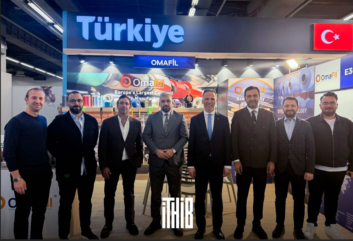 Emphasizing that Turkish companies took part strongly in one of the world’s most important technical textile fairs, Ahmet Şişman said that innovative products developed by Turkish companies in many areas, from personal protective equipment textiles to automotive textiles, from geotextiles to ecotextiles, received intense interest from international visitors. Stating that in this organization, where innovation, R&D and high value-added production guide the transformation in the textile sector, they saw that interest especially in flame-retardant textile products was extremely high, Şişman said, “The fact that special halls were created for this field at the fair was one of the most concrete indicators of this.”
Underlining that today the textile sector stands out not only with fashion and traditional production, but also with critical areas that directly affect human life, Ahmet Şişman continued his words as follows: “Especially in textile products used in hotels, hospitals and public-use areas, the widespread adoption of flame-retardant properties carries great importance. Regulations that will encourage the use of flame-retardant textile products will be an important step both in terms of the safety of our citizens and in terms of accelerating the transformation of our technical textile sector.”
“It Will Accelerate Value-Added Production”
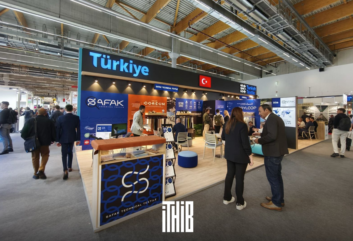 Expressing that the transition to value-added production in technical textiles is constantly discussed, but that the most critical sides of the matter can sometimes be overlooked, Şişman said, “Today, there are no clear legal obligations regarding flame-retardant properties in products such as curtains, upholstery fabric and bedspreads used in hotels, student dormitories, hospitals and communal living areas. However, the hotel and dormitory fires we have experienced clearly showed how vital this issue is. After fires, only the visible results are focused on, but the basic measures that will reduce risk are not sufficiently brought to the agenda. Turkish companies today export the flame-retardant and high-tech fabrics they develop in their R&D centers to many countries, especially Europe. From nonwoven products to automotive textiles, we carry out production in many areas in accordance with international standards. The automotive sector has created its own standards in this regard. A similar approach needs to be implemented in hotels, hospitals, student dormitories and similar areas as well. Standards to be created in this field will both contribute to life safety and further accelerate value-added production in our technical textile sector,” he said.
“We Have the Production Capacity and Technology”
Emphasizing that Türkiye has a strong production infrastructure in flame-retardant technical textile products with high safety standards, Şişman noted that approximately 90–95 percent of production in this field is exported to markets such as European Union countries and the USA. Stating that demand in the domestic market is still at the level of 5 percent, Şişman said that the sector has more than enough production capacity and technology to meet this need.
Şişman continued his words as follows: “Today, we must implement for our own country the safety standards that we export to Europe. Türkiye produces these products and sells them to the world; however, their use in the domestic market is not widespread to the same extent. At this point, cost justification is frequently mentioned, but the effect of using flame-retardant fabrics on the total investment cost is not as high as assumed. Especially in hotels, hospitals, student dormitories and communal living areas, the creation of standards that will encourage the use of these products is now an issue that must no longer be postponed.”