A New Era in Nonwoven Technologies from Andritz: Efficiency, Digitalization and Sustainability Combined
Interview: Tuğba KARADEMİR
With its next-generation solutions developed for nonwoven and technical textile technologies, Andritz offers manufacturers higher efficiency, energy savings and sustainable production opportunities. Digitalization, recycling and cellulose-based technologies stand out among the key factors shaping the future of the industry.
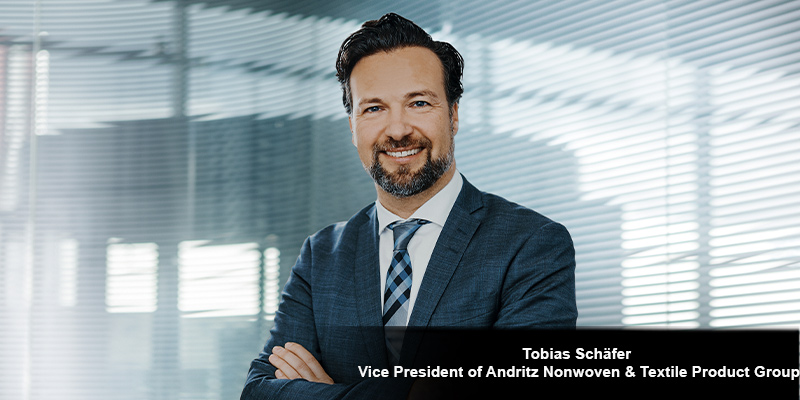
The technical textiles and nonwoven industry is being reshaped around sustainability, energy efficiency and digital transformation. In our interview with Tobias Schäfer, Vice President of Andritz Nonwoven & Textile Product Group, we discussed the company’s latest innovative technologies, the transformation in global markets and its strategic vision for the future. Schäfer emphasized that cellulose-based solutions, recycling technologies and smart production systems will be the main drivers of the industry in the coming years.
How was 2025 for Andritz? How do you evaluate the year in terms of production, sales, R&D, and global market performance?
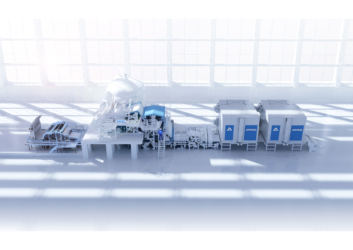 Despite a challenging geopolitical environment, 2025 was a year of clear strategic execution for Andritz. In our Nonwoven & Textile business, we saw strong customer interest in productivity-driven investments. One example is our new X‑Pro™ crosslapper for spunlace and needlepunch, delivering higher speeds and improved web uniformity for measurable performance gains on industrial lines. At the same time, market activity is picking up again in key regions such as China and Turkey, with customers looking for reliable technology partners to support efficient ramp-up and stable quality. In parallel, we observe increasing demand for retrofits of existing carded-crosslapped (CC) lines to add pulp capability and enable carded-airlaid-carded (CAC) configurations. It is a cost-effective way for producers to broaden their product portfolio toward pulp-based and more sustainable wipes while leveraging installed assets, reducing time to market.
“The New X-Pro™ Crosslapper Delivers Higher Speed and Improved Uniformity”
What are the latest products or solutions that Andritz has recently developed in the field of nonwoven and textile technologies? What kind of advantages, performance improvements, or cost savings do these new technologies provide for manufacturers?
Recent developments at Andritz focus on enabling manufacturers to increase throughput and quality while lowering costs and resource consumption. With the Andritz X-ProTM crosslapper, we address higher speed operation and improved web uniformity supporting stable basis-weight profiles and consistent product properties at industrial production rates for spunlace and needlepunch processes. In textile recycling, solutions such as the Andritz teXscan unit strengthen feedstock control by providing transparency on material composition and quality, which is critical for achieving reproducible recycling outcomes and meeting tightening regulatory requirements. For sustainable wipes, our Andritz neXline airlace hybrid in carded-airlaid-carded configuration and corresponding service upgrades are designed to support efficient production of next-generation products, helping customers optimize energy use, improve process stability, and switch more easily between product variants as market requirements evolve.
“Andritz Stands Out from Competitors with Its Broad Technology Portfolio”
What differentiates Andritz nonwoven lines from other systems in terms of performance and energy efficiency? Could you explain the measurable advantages they offer regarding production costs, energy consumption, and operational continuity?
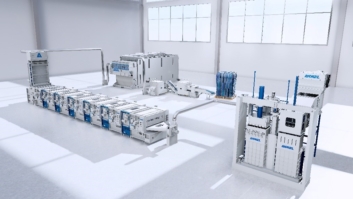 Andritz Nonwoven & Textile lines are differentiated by their ability to combine high productivity, consistent product quality, and resource efficiency within robust, scalable industrial solutions. This differentiation is built on a unique mix of technological breadth, proven process know-how, and continuous innovation.
A key competitive advantage is Andritz’s exceptionally broad portfolio of nonwoven technologies under one roof, covering processes for applications from disposable products to technical nonwoven and textiles. These technologies complement each other and allow Andritz to transfer long-standing experience, engineering principles, and best practices across different processes. As a result, customers benefit from optimized line configurations, stable process windows, and efficient use of energy and raw materials, directly optimizing production output.
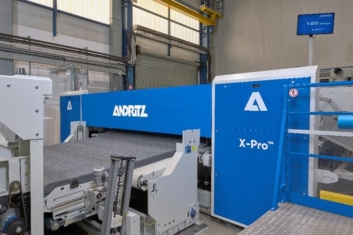
Andritz’s differentiation is further demonstrated by solutions that combine high productivity with consistent quality and resource efficiency. A strong example is the X-Pro™ crosslapper for spunlace and needlepunch applications. It is specifically designed to enable higher production output while maintaining excellent web uniformity and consistent fabric quality. When integrated with the Andritz ProWin™ web weight regulation system, batt formation is further optimized, material distribution is improved, and raw material losses are reduced – resulting in measurable gains in material efficiency and overall process stability. Beyond productivity, we also provide upgrade solutions that help customers reduce energy consumption on spunlace lines. Andritz neXecodry, for instance, improves dryer efficiency by optimizing airflow and heat transfer, which lowers the energy required per ton of output and therefore delivers direct energy savings.
With manufacturing facilities and technical centers worldwide, all operating in line with international quality standards, Andritz ensures consistent quality assurance, reliable commissioning, and fast technical support. Customers can validate new processes, optimize line settings, and secure high line availability and long-term operational continuity.
“Sustainability Is Part of Our Daily Engineering Work”
How does sustainability rank as a priority in Andritz nonwoven technologies?
What solutions have you developed in areas such as energy, water, and raw material savings, as well as waste reduction?
 Sustainability is an integral part of Andritz’s engineering approach and is embedded in our day-to-day development work. We translate overarching sustainability targets – such as reducing energy and water consumption, minimizing waste, and increasing raw material efficiency – into practical, industrial-scale technical solutions.
One clear example is the Andritz recycling line for industrial waste from absorbent hygiene product manufacturing. This technology enables the recovery of superabsorbent polymer (SAP), fluff pulp, and plastics from production waste. In parallel, our textile recycling solutions support customers in preparing for future regulatory requirements by improving material sorting and feedstock qualification, while also enabling more stable and efficient downstream processing.
In the field of nonwovens, ANDRITZ focuses strongly on technologies based on renewable and cellulose-based fibers. This includes Wetlace™ technology for flushable and dispersible wipes, which supports the growing demand for sustainable wipe solutions. We also enable the use of natural fibers such as bast fibers and lyocell, helping manufacturers expand their fiber portfolios while maintaining required performance levels. The objective is to support the industrial implementation of sustainable product concepts without compromising productivity or quality stability.
From a resource efficiency perspective, Andritz offers a range of solutions aimed at reducing energy consumption through optimized process design. These include heat recovery systems as well as technologies such as neXecodry and Metris EcoDEWatt, which can be applied both in new lines and as upgrades to existing installations, improving overall energy efficiency and extending asset lifecycles.
In addition, process optimization concepts such as Andritz ProWin support raw material savings by improving process efficiency and material distribution. Combined with lightweight product design approaches, these solutions help reduce material input while maintaining functional product performance – lowering both the environmental footprint and raw material-related production costs.
“Demand for Cellulose-Based and Flushable Products Is Increasing”
What trends do you observe in global demand for nonwoven and textile solutions?
Could you share your views on emerging markets, application areas, or changes in industry segments?
We observe a strong interest about renewable and cellulose-based fibers, driven by regulation and brand expectations, along with growing demand for wipes concepts with proven flushability and dispersibility performance.
In durable nonwovens such as needlepunch, demand remains resilient thanks to diversified end markets from geotextiles and filtration to automotive interiors, insulation, and technical felts. Investment behavior is increasingly focused on productivity upgrades, quality differentiation, and energy-efficient technologies rather than capacity alone.
In the context of today’s geopolitical conflicts and resulting volatility in energy prices, solutions that reduce dependency on fossil-based raw materials are becoming even more attractive for our customers. Technologies such as neXecodry, for example, support this shift by improving drying efficiency and helping minimize reliance on resources linked to fossil energy value chains.
Besides, technologies using pulp-based fibers, such as Wetlace™ and solutions to produce man-made cellulosic (MMCF) fiber can help producers with the transition to sustainable nonwovens.
In terms of regional approach, Asia continues to be a key growth engine, while mature markets such as Europe and Turkey remain strategically important for high value-added applications.
“Recycling and Digitalization Will Shape the Future of Manufacturing”
What innovations do you expect in nonwoven and textile production technologies in the coming period? What is Andritz’s vision in terms of R&D activities, new products, or emerging trends?
Looking ahead, we see three developments with the greatest long-term impact: more renewable and cellulosic feedstocks, industrial-scale recycling routes, and deeper digitalization of operations. Andritz is investing accordingly. For example with Wetlace™ technologies enabling pulp-based and blended wipe structures, including flushable and dispersible concepts; with complete MMCF production solutions for lyocell, covering the full plant scope and key equipment, supported by Andritz’s process know-how and integration capabilities to help customers achieve stable, efficient production at industrial scale. Our lyocell offering also includes lifecycle services to support reliable start-up, ramp-up, and long-term performance. Another pillar of our strategy is productivity innovations such as the Andritz XPro™ crosslapper, designed to raise output while keeping web uniformity under control on new lines and retrofits. In parallel, we expect continued demand for upgrades and conversions that help producers adapt existing assets quickly to new materials, regulations, and market requirements.