
“Despite Economic Challenges, We Saw A Significant Increase in International Orders in 2025”
Interview: Dilek HAYIRLI
Despite challenging market conditions, Asteks, which closed 2025 with stable sales volume, is entering 2026 with a strong preparation process thanks to its domestic production capacity, effectiveness in global markets, and R&D-focused vision. Asteks Marketing and Sales Manager Sabri İlknur said, “As Asteks, we have not experienced any decline in the order volumes we have received; in particular, we have recorded a significant increase in our international orders.”
 Despite rising production costs, contraction in global and local demand, and intensified competition, Asteks managed to maintain its market strength and operational stability in 2025. Leveraging its domestic production advantage, fast service infrastructure, and competitive product portfolio, the company is increasing its effectiveness both in Turkiye and in emerging global markets. For 2026, the company anticipates a renewed surge in investments. In an interview for our Tekstil Teknoloji magazine, Asteks Marketing and Sales Manager Sabri İlknur shared his assessment of 2025, predictions for 2026, and his views on the ITM 2026 Exhibition. İlknur stated, “We have returned from every ITM Exhibition with new collaborations, and we believe this potential will further increase in 2026.”
How was 2025 for Asteks? What kind of progress was made in terms of sales performance and market strength; how would you express this process with numerical data? Despite increasing costs and market challenges, was Asteks able to maintain its success?
2025 was a very challenging year for manufacturers. Production costs exceeding the exchange rate increase, global and local demand contraction, and increased competition from import-substitute products due to the low exchange rate were the defining factors of the year. As Asteks, being a domestic manufacturer, our fast service, reliable quality, and competitive pricing significantly contributed to our continued presence during this period. While our sales volume was on par with 2024, our turnover in foreign currency did not reach the same level due to exchange rate fluctuations. We experienced similar challenges with all our stakeholders in the textile sector, and despite this, we were able to maintain our equity and strength, and draw a strong vision for 2026.
“We Have Reached Significant Customer Profiles in Uzbekistan, Pakistan, Bangladesh, and Egypt”
In which markets has Asteks further strengthened its position this year? Have you entered any new markets, or have you observed increased activity in any new regions?
 The Turkish textile sector maintained its position as our main market. In 2025, we achieved higher sales volumes domestically thanks to rapid supply needs arising under unforeseen circumstances. Furthermore, as a supplier steadily increasing its brand recognition and strength in the global market, we continued our efforts to establish a presence in all regions with intensive textile production. During this period, we continued both our participation in international trade fairs and our customer visits, and we successfully reaped the positive results of these efforts. We have reached significant customer profiles in emerging textile markets such as Uzbekistan, Pakistan, and Bangladesh. We also established a strong position in the Egyptian market, which surprised many with its growth performance in 2025. We achieved successful results in the Egyptian market by offering our apron and cots products, as well as our cots grinding machines. Another market we focused on during this period and received positive feedback from was China. Contrary to popular belief, the Chinese market holds great potential when approached with the right steps and effective solutions.
“We Recorded a Net Increase in Our Apron Sales in 2025”
Which products and solutions have seen increased sales? Besides aprons and cots, what is the trend in demand for grinding technologies?
We have a broad product portfolio for the grinding department. This structure allows us to be more flexible in the face of market fluctuations. We recorded a net increase in our apron sales in 2025. Demand for cots grinding machines generally parallels investment trends in yarn factories; accordingly, during this period, we received demand for our technology-oriented solutions from emerging markets, primarily Egypt and Bangladesh. In the Turkish market, our grinding machines were mostly preferred within the scope of modernization projects. However, we clearly saw that whether it is new investment or modernization, Asteks has now become the preferred brand for cots grinding machines.
What were the major corporate initiatives and strategic projects you implemented throughout 2025?
Asteks is repositioning itself as a technology and R&D company in line with its sustainable corporate structure and global market goals. In line with this, in 2025, Asteks and Nexrone Global, a strong player in the European startup ecosystem, established a new investment company called Westure Ventures with a shared vision. Based in the Netherlands, Westure aims to invest over $30 million in the next five years. The company will focus particularly on future-shaping areas such as financial technologies (fintech), artificial intelligence (AI), manufacturing technologies, deeptech, aerospace, and healthcare technologies. At the heart of Westure Ventures’ investment strategy is a priority approach for technological startups that add value to society and the planet, defined as ‘Goodness Technologies’.
Which projects did you focus on this year within the scope of R&D activities? What role do digital technologies and artificial intelligence play in new development processes?
 At Asteks, our R&D efforts, conducted in-house with an interdisciplinary team of experts, aim to contribute to sustainability through durable products while simultaneously focusing on efficiency. Our recent work includes projects such as the development of aprons and cots used in high-speed air spinning technologies, extending the lifespan of aprons in texturing systems, and projects aimed at more effectively meeting customer needs in the use of grinding machines. At the center of all these efforts lies the goal of meeting customer expectations and increasing satisfaction, while our commitment to a greener textile industry also stands out as a significant motivating factor. Artificial intelligence applications are rapidly integrating into the textile sector today, and it seems poised to set a new standard, particularly in the area of data evaluation. As Asteks, we plan to undertake numerous projects focused on digitized textile technologies in the coming period.
What sales figures do you anticipate for the end of 2025? Similarly, what is the current outlook for sales and orders in 2026?
When we evaluate the 2025 sales chart, we can say that in terms of units, we are following a trend parallel to the previous year’s data. In terms of turnover, however, we anticipate a slightly lower closing price than last year due to the surge in exchange rates. Nevertheless, Asteks has not experienced any decline in the number of orders we have received; in particular, we have recorded a significant increase in our international orders.
In terms of market strategy for 2026, which regions do you plan to focus on? Accordingly, which products and solutions do you expect to stand out?
All markets where we receive investment and acquisition requests will remain a priority for us. We will accelerate our efforts to improve and strengthen our services in these markets. Conversely, in markets experiencing demand contraction, we will continue our work to prepare for the next period and ensure a more robust transition process. In 2026, as in 2025, we will strengthen our ties with our customers by being a fast, competitive, and reliable supplier of our specialized product groups: aprons, cots, draw frame cots, compact hole and lattice aprons, in line with their needs. Similarly, we will continue to support our users with our technology systems encompassing machinery and equipment for sleeve reconditioning departments.
“2026 Could Be a Year When Deferred Demand Turns Back into Investment”
Compared to 2025, how do you foresee 2026 unfolding, both in Turkiye and globally? What advantages and disadvantages will the new year bring?
Analyses by experts indicate that local and regional risks, as well as economic challenges, persist. Risks of regional conflict and economic uncertainties are leading to more cautious market actions and the postponement of investments. However, needs can only be postponed up to a certain point; in this context, 2026 could be a period when previously deferred demands are transformed back into investments. As Asteks, we have completed our preparations for this potential market revival and are maintaining our capacity to meet any emerging demand. Accordingly, we aim to demonstrate our strength by participating in trade fairs to be held in Turkiye and other important markets in 2026.
Which trade fairs do you plan to participate in Turkiye and around the world in 2026?
Despite the challenges in the market, we do not plan to reduce our participation in trade fairs. On the contrary, we are focusing more on our market initiatives with the aim of turning this period into an opportunity. In line with this strategy, the events included in our 2026 trade fair calendar are as follows: DTG Bangladesh 2026, Igatex 2026 – Lahore, SaigonTex 2026, Indo Intertex 2026 – Jakarta, ITM 2026 – Istanbul, CAITME 2026 – Uzbekistan, EgyStitch 2026 – Cairo, Asia ITMA – CITME 2026 – Shanghai, Inlegmash 2026 – Moscow and Exintex 2026 – Mexico.
“We Returned from Every ITM Exhibition with New Business Collaborations”
What kind of participation are you aiming for at the ITM 2026? Which products, technologies, and solutions are planned to be highlighted at the exhibition?
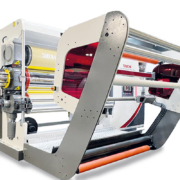
ITM Exhibition is undoubtedly the most important event for the Turkish textile industry. As in previous years, we will participate in ITM 2026 with our innovative R&D products. Our aprons and cots for high-speed air spinning machines; our peforated and lattice aprons and cots for compact spinning systems; our CTA carbon-reinforced aprons offering a long service life in synthetic fiber applications; and our draw frame cots providing ease of use thanks to their low-soiling properties will be presented to visitors from both the local and global markets at our stand. In addition, our technological solutions, which have now become an integral part of the Asteks stand, will also be presented to ITM 2026 visitors. Our 401-SF&M machine, which is part of our cots grinding machine series and features improved automation solutions and UV integration, will once again showcase the advantages it offers to yarn manufacturers at the exhibition. We have returned from every ITM Exhibition with new collaborations, and we believe that this potential will increase even further in 2026.