EU’s Destruction Ban Opens a New Production Opportunity for Türkiye
The European Union (EU) has put an end to the long-criticized practice of destroying unsold fashion products. Under the new regulation, large textile companies will no longer be allowed to burn or otherwise destroy unused clothing and footwear left in warehouses or unsold on store shelves. Instead, these products will have to be donated or made available for resale.
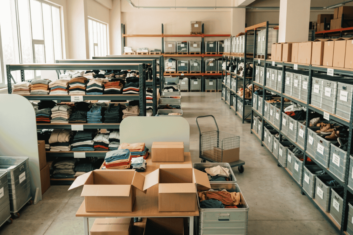 For years, overproduction and the destruction of unsold products have been among the most debated issues in the European fashion industry. The issue has now moved beyond being simply a stock management problem for companies and has become a matter of legislation. Under the European Union’s Ecodesign for Sustainable Products Regulation (ESPR), new rules that came into force on July 19, 2026 prohibit major fashion brands such as LVMH, Prada, Chanel and Inditex from destroying unsold clothing, clothing accessories and footwear. Medium-sized companies will be subject to the same rules as of 2030. The regulation is expected to encourage brands to move away from overproduction and toward more accurate demand forecasting, small-batch production, resale, donation and recycling models. Türkiye’s proximity to Europe, flexible production capabilities and short lead times are expected to provide a significant advantage in this new era.
However, the regulation does not constitute an absolute ban on destruction. Exceptions may apply to products that pose health, hygiene or safety risks; products damaged beyond economically viable repair; products unsuitable for reuse or remanufacturing; and certain intellectual property violations. Products offered for donation but not accepted may also fall within the scope of the exemptions under certain conditions.
In addition, large companies will be required to disclose the quantities of unsold products they destroy and the reasons for doing so. This is intended to increase transparency regarding companies’ inventory management and production planning performance.
Approximately 600,000 Tons of Textile Products Destroyed in Europe
According to European Commission data, approximately 4% to 9% of textile products placed on the European market—an estimated 264,000 to 594,000 tons per year—are destroyed before being used. This practice results in the loss of hundreds of thousands of tons of fibers, water, energy and labor used in production without creating economic value.
Reasons cited by companies for destroying products include protecting brand value, avoiding the reputational damage associated with discounted sales, preventing counterfeiting, reducing storage costs, and keeping defective or returned products out of the market.
Burberry, for example, became one of the most prominent cases after it was revealed in 2018 that the company had destroyed unsold products worth millions of pounds. Following public criticism, the company announced that it would end the practice. H&M came under scrutiny over reports that it had destroyed unsold or returned products, while Nike was also cited in reports concerning the destruction of excess inventory and unused products. In the luxury segment, Louis Vuitton was among the brands associated with destroying stock instead of discounting it. Coach announced changes to its policies following criticism over the destruction of bags and accessories by cutting them up. Urban Outfitters and Victoria’s Secret have also been mentioned in connection with the destruction of unsold or unused inventory.
Fashion Brands’ Inventory Strategies will Change
The new regulation represents a significant transformation, particularly for fashion companies that operate with high inventory levels and renew their collections at short intervals. Until now, brands have generally considered options such as discounts, outlet sales, exports or destruction for products left over at the end of a season. They will now have to manage their inventories more carefully from the production stage onward.
The issue takes on a different dimension in the luxury fashion sector. Luxury brands have traditionally limited discounted sales channels in order to protect brand perception and the value of scarcity. The destruction of excess inventory had previously been one of the controversial tools used as part of this strategy. The new rules will require brands to reconsider this approach.
Replacing Destruction with Reuse and Resale
Key alternatives include controlled outlet sales, second-hand and resale platforms, donation networks, repair and refurbishment services, and material recovery. The aim is to keep excess inventory within the economy for longer and ensure that the resources used in producing these products can be utilized again.
However, the expansion of these channels may also create new challenges, including greater availability of discounted products in more markets and increased gray-market risks. As a result, technologies such as AI- and data analytics-based demand forecasting, real-time inventory tracking, and inventory optimization between stores and warehouses are expected to become increasingly important in the fashion industry.
The Number of Discounted Products May Increase
The regulation is also expected to have positive implications for consumers. The German Retail Federation (HDE) estimates that more products could become available at affordable prices through outlet stores, clearance campaigns and second-hand sales channels. HDE Managing Director Stefan Genth, however, noted that the process will not be easy for manufacturers. He pointed out that damaged packaging, low demand, high logistics costs and donation processes, as well as storage, refurbishment and documentation requirements, could increase companies’ costs.
Fashion Industry Supports the Regulation
The German Fashion Industry Association has also expressed its support for the regulation. Managing Director Thomas Lange welcomed the prevention of clothing destruction, noting that garments are valuable products from both economic and environmental perspectives. At the same time, Lange argued that limiting the regulation to large manufacturers operating in Europe could create competitive disadvantages. He stated that low-cost companies selling directly into Europe from outside the region should also contribute to the costs of collection, sorting and recycling.
The EU’s Destruction Ban will Benefit Turkish Apparel
The European Union’s regulation banning the destruction of unsold apparel products is set to open the door to a new era for Türkiye’s Europe-oriented apparel manufacturing industry. Toygar Narbay, Chairman of the Turkish Clothing Manufacturers Association (TGSD), believes the regulation can create an advantage if Türkiye positions itself correctly, but could become a disadvantage if the country fails to respond. Narbay commented: “While Europe is closing the door on waste, it is opening a window to smart and nearshore production. Türkiye is one of the countries standing in front of that window.”
Lower Production, Faster Delivery
“The destruction ban is forcing brands to avoid overproduction. With the new regulation, companies are expected to shift toward lower-volume production, faster delivery, resale and recycling-oriented models. This is an area where Türkiye is strong,” Narbay said.
He continued: “We have advantages such as flexibility, fast lead times and geographical proximity. Looking at the Far East, they have an advantage in large-scale production with low unit costs, but with this regulation, the risk of destruction could become a disadvantage for them. The regulation will also create a compliance burden for us in areas such as ecodesign requirements, digital product passports and traceability. A supply chain that fails to meet this standard on time could lose the advantage of proximity.”
“We are the Right Address”
Narbay noted that an estimated 4% to 9% of textile products that are not sold in Europe are destroyed each year before reaching consumers, adding that this volume will now be redirected into the market.
“The law does not say ‘recycle everything no matter what’; it says ‘sell first, donate and reuse.’ This will create structural demand for outlet and resale channels. For Turkish manufacturers, the message is twofold: on the one hand, there will be greater competition on European outlet shelves; on the other, Türkiye is the natural address for fast, small-batch production capable of supporting this flexible and circular model,” Narbay said.