Turkish Ready-to-Wear Manufacturers Prepare to Invest in Syria
Striving to revive its textile and apparel sector in the post-war era, Syria is drawing the attention of foreign investors. With 234 investment applications submitted in the first half of 2026, LC Waikiki launching production in Aleppo, and İsparko seeking partnerships for factory investments, Turkish companies are demonstrating a concrete and growing interest in Syria.
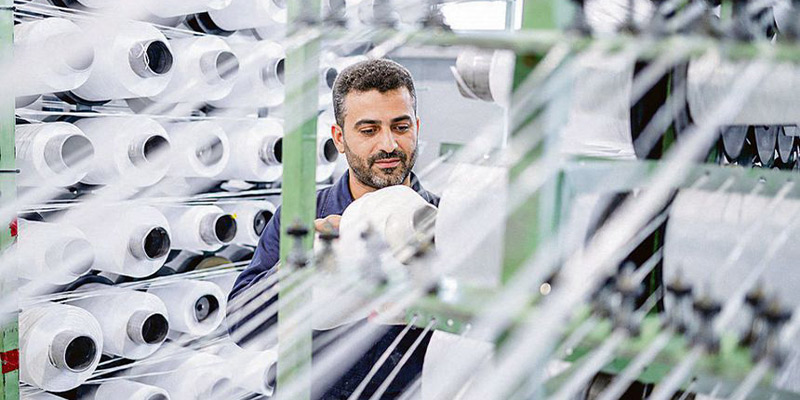
Syria is knocking on the doors of foreign investors to rebuild the textile and apparel manufacturing capacity it largely lost during the war years. Alongside the 234 investment applications filed in the sector during the first half of 2026, Turkish companies have begun preparing to establish manufacturing facilities in the country. Turkish ready-to-wear giant LC Waikiki has reportedly launched production in Aleppo, while İsparko is evaluating opportunities to establish a factory in partnership with Syrian investors. Syria’s textile industry had suffered a severe loss of capacity following the civil war that began in the 2010s, due to damaged facilities and the exodus of investors and skilled labor. The Damascus administration has designated the sector’s revival as a priority industrial area. The gathering of over 300 companies from more than 25 countries at the Nastex 2026 textile exhibition in July signaled an accelerating drive for investment in the industry.
234 Textile Investment Applications
In the first half of 2026, 234 investment applications were submitted in Syria’s textile and apparel sector. While some applications involve the construction of new facilities, others focus on modernizing existing plants and upgrading production lines. The Syrian administration aims to support investors through financing options, customs privileges, and tax incentives for setting up new lines. However, officials note that the figure of 234 reflects application counts rather than completed factories. Alongside greenfield investments, reactivating idle facilities and expanding existing capacity account for a significant share of the sector.
First Turkish Factory Investment
LC Waikiki, a major player in the Turkish ready-to-wear industry, took the most concrete step in the production drive within Syria. Syrian sources report that the company opened its first facility and commenced production at the Al-Rai Industrial City, on the rural outskirts of Aleppo. Initial operations employ approximately 150 workers, with plans to scale the workforce to 1,000 within three years. Output is slated for both the Syrian domestic market and regional exports. In a late-2024 statement, Chairman of LC Waikiki, Vahap Küçük, stated that the company would re-enter Syria once stability was restored, noting that they had previously incorporated a local entity and that setting up manufacturing workshops would become clear over time.
The second notable Turkish company is İsparko. Company executive Ümit Kerim announced during Syria-Türkiye business talks that they are evaluating opportunities to build a factory in Syria through partnerships with local Syrian investors. While İsparko has not yet finalized a factory investment, its active exploration of domestic production opportunities reflects the Turkish apparel sector’s tangible interest in the Syrian market.
Machinery Manufacturers Join the Investment Chain
Turkish textile interest is not limited to ready-to-wear manufacturers. Mikrotx announced that it is working alongside Turkish investors on projects to establish new textile and yarn factories in Syria, while Turkish textile machinery companies such as Mersan and Tumkalıp are engaging in cooperation talks for rebuilt manufacturing capacities. Current data indicates these engagements focus on machinery, technology transfer, and joint investment models rather than direct, standalone factory developments.
Syria Aims to Re-Emerge as a Regional Textile Hub
The Syrian administration views the textile industry not merely as a domestic supply base, but as a strategic export driver. During Nastex 2026, stakeholders addressed key themes including investment financing, production line modernization, investment incentives, digital transformation, and export-oriented manufacturing. However, notable hurdles remain in Syria’s path toward re-establishing itself as a manufacturing hub. Local producers state that rising imports in the domestic market complicate the recovery of domestic output. Industry representatives emphasize that, alongside manageable production costs and access to capital, protective policies for domestic manufacturing are critical. Syria’s historical industrial base—anchored primarily in Aleppo and Damascus—remains a major catalyst for investor interest. By recommissioning portions of its pre-war infrastructure and attracting foreign capital, particularly from neighboring Türkiye and regional peers, Syria aims to reposition itself as a central textile manufacturing hub in the region.