Leather and Leather Goods Sector Announces Its 2026 Targets
Emphasizing that high interest rates and inflation have weakened exporters’ competitiveness, IDMIB Chairman Güven Karaca stated that rising costs in the leather sector have made it increasingly difficult to maintain competitive pricing in global markets, saying, “Today, we are trying to export not only our products, but also interest rates and inflation.”
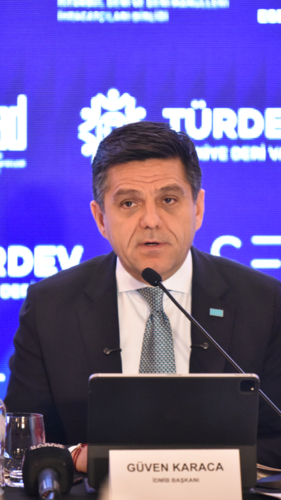
Pointing out that the pressure of high interest rates and inflation has seriously undermined exporters’ competitiveness, Güven Karaca, Chairman of the Board of the Istanbul Leather and Leather Goods Exporters’ Association (IDMIB) said: “Today, as exporters, we are trying to export not only our products, but also interest rates and inflation. Although our products are in demand in global markets, we struggle to compete due to high costs.” Karaca noted that production costs in Türkiye have risen faster than in competing countries, making it harder for the sector to set competitive prices in foreign markets and leading to export losses. “While the US dollar appreciated by 21.4% against the Turkish lira from the beginning to the end of the year, inflation reached 30.9%. This caused us to become more expensive than our competitors in Asia and even Europe, reducing our competitiveness.” he said.
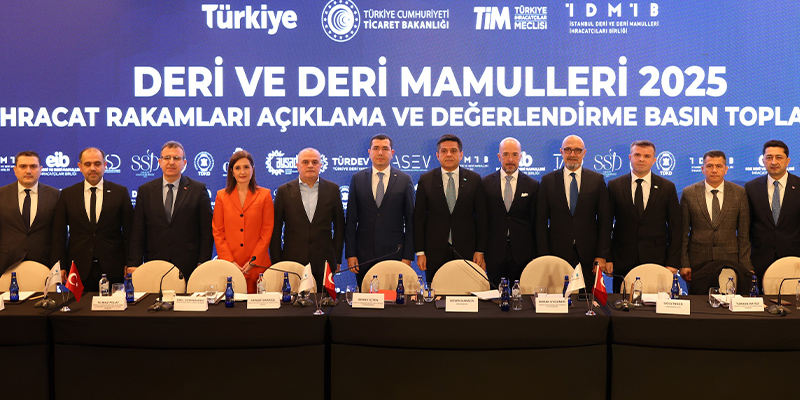
Türkiye closed 2025 with exports of USD 273.4 billion, marking a 4.5% increase. Of the 26 sectors, 18 recorded positive export performance while 8 posted declines. The average export unit value per kilogram stood at USD 1.54. Exports of the leather and leather goods sector, however, declined by 5.3% to USD 1.44 billion. At the meeting hosted by IDMIB Chairman Güven Karaca, the sector’s 2025 performance was reviewed and its 2026 targets were announced.
“Fourth Most Valuable Sector”
Güven Karaca made the following statements regarding the situation in exports: “High inflation and high interest rates in our target markets have changed consumption habits. In the challenging year of 2025, when our markets contracted, we experienced a 5.3% decline. However, our sector’s average export unit value per kilogram reached USD 13.9. With this figure, our sector became the fourth most valuable sector after jewelry, defense and aerospace, and ready-to-wear and apparel.”
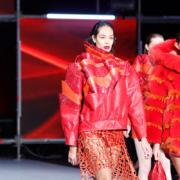
By sub-product groups, footwear exports declined by 11.7% to USD 774.8 million; leather goods exports increased by 3.1% to USD 247.4 million; leather and fur apparel exports rose by 17.2% to USD 226.6 million; and finished leather and fur exports fell by 9% to USD 195 million.
“Our Sector Has A Trade Deficit of 1 Billion Dollars”
Karaca recalled that the sector closed 2021 with a foreign trade surplus of USD 566 million and 2022 with a surplus of USD 241 million, but noted that the balance later turned negative. “In 2023, the sector recorded a foreign trade deficit of USD 551 million. We closed 2024 with a deficit exceeding USD 1.1 billion. According to January–November data, the deficit in 2025 also exceeded USD 1 billion.” he said.
He added that high production costs in 2025 led to export losses in foreign markets, while local brands opting for imports, declining profitability, and unmet sales targets caused production capacities to shrink.
MEHMETYILMAZ
“We Have Become More Expensive Than European Countries”
Expressing confidence that the sector will return to record-breaking years once economic policies and the disinflation process are completed and the production and investment environment improves, Karaca said: “The disinflation process driven by monetary tightening policies has deeply affected the real sector and households. While industrial activity cooled, the expected slowdown in consumption did not materialize, widening the CPI/PPI gap. Unfortunately, this consumption demand in our product groups was met through imports. During this period, while the dollar appreciated by 21.6% against the lira, inflation reached 30.9%. This made us more expensive than our competitors in Asia and even Europe, reducing our competitiveness. In light of these figures, we are trying to export not only our products, but also interest rates and inflation. Although our products are in demand, we struggle to sell interest rates and inflation.”
“Support for Labor-Intensive Sectors is Crucial”
Stressing that the sector passed a financial resilience test without experiencing a major financial accident in 2025 despite very high interest rates, Karaca said: “Our sector, which has participated in seven national participations and dozens of individual fairs and continues B2B activities across the Americas, Asia, Africa, and Europe, will keep moving forward to increase its share of global exports. As we enter the first days of 2026, we view import safeguard measures and support for labor-intensive sectors positively. Although their economic impact may be limited, we believe their psychological impact will be significant. We see that the disinflation process has begun and hope it will be permanent. In parallel, we attach great importance to interest rates coming down, reducing the cost of access to finance for production and investment.”
“One in Four Leather Jackets Goes to the U.S.”
Noting that one out of every four leather jackets produced is exported to the United States—the world’s largest importer of leather and fur—Karaca also evaluated the sector’s main markets: “EU countries rank first with a 40.7% share of our total exports. The Middle East follows with 12 percent, former Eastern Bloc countries with 11.7%, the Americas with 8.4%, and African countries with 7.6%. In terms of individual countries, Germany ranks first with an 8.2% share, followed by Italy with 7.2%, Iraq with 7.1%, and the U.S. with 6.8%.”