“Our Customers Achieved Up To 30% Energy Savings With SX PRO”
Interview: Tuğba KARADEMİR
Despite challenging global conditions, Stäubli maintained strong performance, redefining productivity and sustainability in the weaving industry through innovative solutions focused on automation, energy efficiency, and technical textiles.
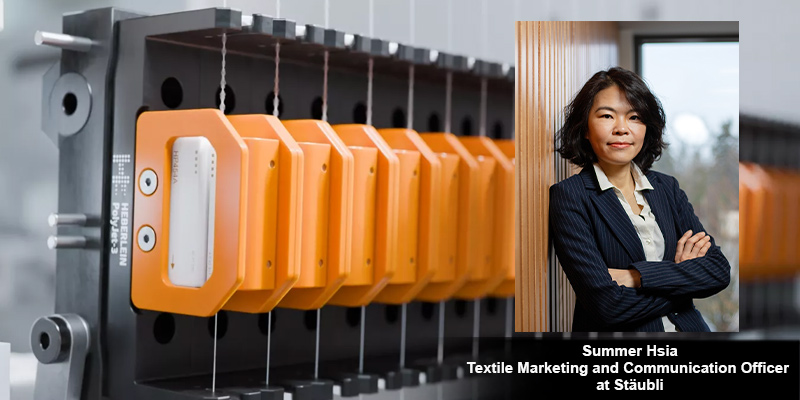
The year 2025 went down in history as a year full of uncertainties and challenges for the global textile industry. High energy costs, declining consumer demand, and geopolitical fluctuations forced many manufacturers to take cautious steps. During this period, Stäubli continued to provide solutions that give manufacturers confidence with its innovative technologies and strong global presence. In our interview with Summer Hsia, Textile Marketing and Communication Officer at Stäubli, we discussed the company’s 2025 performance, market trends, and R&D vision in technical textiles.
“Custemers Achieve A Clear Improvement in Process Stability During Long Production Runs”
How was the year 2025 for Stäubli? Can you evaluate the year in terms of market demand, order intake, and developments in key global markets? What were the main challenges and opportunities for the weaving industry during this period?
 2025 was a challenging year for the global textile industry, marked by weakened consumer demand, high energy costs, new tariffs, and cautious investment in several regions due to geopolitical events. Despite this context, Stäubli performed solidly thanks to its strong positioning as a global technology leader in shedding systems and manufacturer of high-speed textile machinery. Order intake remained resilient, supported by modernization projects.
The main challenges for mills were cost pressure, labour shortages, declining export volumes, and market volatility driven by geopolitical tensions and trade disruptions, while opportunities emerged from the need for automation, process stability, and the expansion of technical textiles. In this environment, customers increasingly prioritized reliability, efficiency, and technologies that ensure consistent performance even during market downturns.
Active Warp Control (AWC) 2.0 continues to be a popular solution, especially among denim producers. How does this technology help manufacturers manage complex weave structures, and what feedback have you received from the market since its launch?
AWC 2.0 is the 100% controlled identification and handling of warp yarns in order to achieve the highest quality and reliability for an efficient downstream weaving process. It helps manufacturers manage complex weave structures by ensuring automatic, precise layer and offset management in the warp sheet. This stabilizes fabric quality, reduces manual adjustments, and minimizes startup faults—especially valuable in denim, where shade consistency and pattern definition are critical. Customer feedback has been extremely positive: users highlight fewer errors, higher productivity, and a clear improvement in process stability across long production runs.
Energy efficiency and sustainability are becoming critical in textile machinery. What measurable reductions in energy consumption and carbon footprint can your PRO series jacquard machines achieve, and what are the long-term cost benefits for manufacturers?
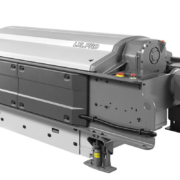
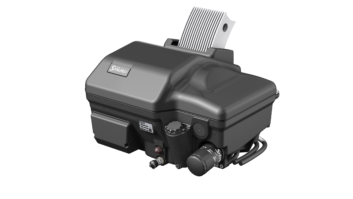
The PRO series Jacquard machines are engineered to significantly reduce energy consumption and maximize long‑term sustainability. Their optimized drive system, low‑friction kinematics and high‑efficiency electronic architecture limit mechanical and electrical losses. Robust materials, wear‑resistant components and simplified electronics further ensure long service life, reduced maintenance needs, and a lower overall environmental footprint. These sustainable benefits were confirmed by one of our valued French customers, Les Tissages de Charlieu who report achieving up to 30% energy savings with the SX PRO, meeting their stringent ESG requirements.
Tiepro and MyStäubli Provide Solutions to Workforce Shortages
Automation and digital solutions help mitigate workforce shortages. How do TIEPRO warp tying and the MyStäubli digital service portal streamline maintenance, production processes, and overall operational efficiency for your customers?
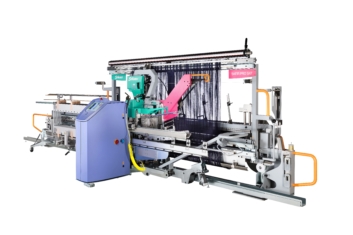 Automation and digitalization play a key role in helping mills cope with labour shortages and rising productivity demands. TIEPRO simplifies warp tying through fast, safe and highly reliable yarn handling, reducing downtime and eliminating dependency on highly skilled operators during warp changes. Its stable tying process, minimal material loss, and intuitive operation make it a robust solution for maintaining consistent production even with leaner teams.
On the other side, the MyStäubli customer portal brings IoT‑enabled visibility into daily operations. By centralizing machine documentation, service history, spare‑parts access, and support requests, it helps maintenance teams act faster and more precisely. Connectivity with Stäubli equipment enables smarter diagnostics, better monitoring of machine conditions, and more efficient planning of interventions.
Innovation and R&D Driving Advances in Technical Textiles
Technical textiles are a fast-growing market segment. What innovations has Stäubli developed for defence, medical, and automotive weaving, and what can we expect from your upcoming R&D projects in technical textiles?
Our ongoing R&D focuses on expanding automation, digitalization, and enabling new capabilities for 3D weaving, lightweight composites, protective structures, and highly engineered technical fabrics, addressing the needs of all these demanding industries. Stäubli offers a complete high‑performance ecosystem, empowering mills to push the boundaries of technical textile creation while ensuring efficiency, repeatability, and industrial robustness. At the forefront, Stäubli’s TF weaving systems offer unmatched creative freedom. They stand among the most advanced platforms on the market, enabling complex 3D, multilayer, and hybrid constructions using aramid, carbon, glass, thermoplastic and composites. On the shedding formation, our UNIVAL 100 electronic Jacquard machine delivers precise motion, full reproducibility, and unlimited design capabilities making it ideal for technical materials, composite preforms, and sophisticated 3D shapes. On the warp‑preparation side, the MAGMA warp knotting machine strengthens production stability and quality. Its robust processing of technical yarns, consistent sheet formation, and high reliability make it an essential complement to advanced weaving operations.
The upcoming ITM 2026 International Textile Machinery Exhibition will be a major platform for textile machinery innovations. What technologies and solutions will Stäubli showcase at ITM 2026, and which innovations will be particularly relevant for weaving mills and technical textile manufacturers?
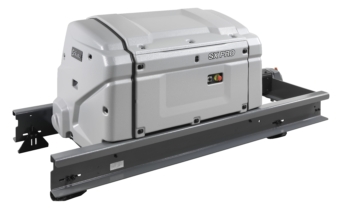 At ITM 2026, Stäubli will showcase a concentrated lineup of technologies designed to boost productivity, reliability, and automation in weaving mills. Our SAFIR PRO S47 automatic drawingin system will highlight fast setup, precise yarn recognition (AWC 2.0), and high efficiency for denim, shirting, and home textiles. The TIEPRO warp tying machine will demonstrate faultless, needlefree tying for rapid style changes and smooth mill operation. In shedding solutions, visitors will discover our highperformance S3280 and S3060 rotary dobbies, engineered for speed, pattern precision, and robust 24/7 weaving. In addition, Stäubli will present the PRO V series of Jacquard machines and the GA500 Jacquard harness. The PRO V machines offer stable shedding, low vibration, and excellent energy efficiency for velvet and technical fabrics weaving. The GA500 harness ensures reliable thread control and long service life, even under demanding weaving conditions. Stäubli will also present carpet samples woven on the ALPHA 580, illustrating outstanding design versatility and production quality.
Looking ahead to 2026, what are Stäubli’s global strategic priorities, including investments, technological developments, and market expansion plans? How do you see the weaving industry evolving in the coming years?
In 2026, Stäubli will continue investing in automation, energy‑efficient technologies, and enhanced digital services. We aim to reinforce our presence in emerging markets while supporting our existing customers by addressing their challenges. We will also support our partners as they grow in technical textiles.
As the industry evolves, weaving mills will increasingly prioritize precision automation, lifecycle‑optimized equipment, and more sustainable production models—directions in which Stäubli is actively accelerating its innovation efforts.