Slowdown in Manufacturing Relocation to Egypt Raises Recovery Hopes for the Turkish Textile Industry
Over the past two years, due to rising production costs, one of the most important issues facing the textile and ready-to-wear sectors has been the shift of production to low-cost countries, particularly Egypt. However, recent statements from industry representatives and on-the-ground developments indicate that this process has entered a new phase.
While the cost advantage offered by Egypt remains significant, issues related to quality, productivity, and a skilled workforce are slowing down new investment decisions. In contrast, the resumption of order activity in Türkiye is fostering a cautiously optimistic mood within the sector.
Egypt is No Longer as Attractive as It Once Was
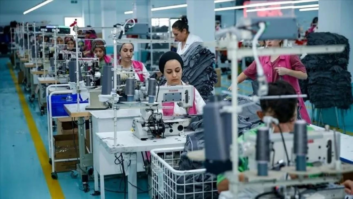 The rapid rise in labor, energy, and financing costs following the pandemic has led many manufacturers to seek alternative production centers. During this process, Egypt stood out for its low labor costs, investment incentives, and trade advantages in certain markets.
However, according to industry representatives, the picture has begun to change. Efficiency issues encountered in production processes, difficulties in maintaining quality standards, and challenges in accessing a skilled workforce demonstrate that competing solely on the basis of low-cost advantages is no longer sufficient. For companies engaged in high-value-added production in particular, consistent quality and production discipline are just as critical as cost.
Discussions Focus on a Slowdown in New Migration Rather Than Mass Repatriation
 In his recent assessments, Trade Minister Ömer Bolat emphasized that the textile and ready-to-wear sector is a strategic area with an economic value of approximately $75 billion, noting that a renewed shift in favor of Türkiye has been observed in the flow of global orders. While stating that support mechanisms to boost the sector’s competitiveness will continue, Bolat highlighted that Türkiye could once again become one of the preferred supply hubs, particularly thanks to its production infrastructure and delivery capabilities.
Sector representatives are approaching the “production is shifting to Egypt” debate—which has resurfaced in public discourse in recent weeks—from different angles. Mustafa Paşahan, President of İstanbul Apparel Exporters’ Association (İHKİB), stated that the perception formed in the public sphere does not fully reflect reality, noting that the majority of Turkish investments in Egypt were made years ago, while the number of companies making new investments in recent times has been quite limited. According to Paşahan, companies that have moved their production abroad are not doing so by choice but are forced to do so due to rising cost pressures.
EHKİB President Çağlar Bağcı noted that some companies facing quality issues have shifted their production back to Türkiye, while emphasizing that Egypt maintains a strong position, particularly in high-volume production; however, he stressed that Türkiye continues to hold a competitive advantage in value-added, flexible, and high-quality production.
“If Competitive Strength is Enhanced, Orders Will Return Permanently”
 Toygar Narbay, President of Turkish Clothing Manufacturers’ Association (TGSD), also notes that recent signals from the European market have given the sector cause for hope. According to Narbay, Türkiye is once again being preferred for certain order categories, particularly due to issues related to quality, delivery times, and operational processes in Egypt.
However, Narbay emphasizes that this development alone does not signify a lasting recovery. He states that for Türkiye to re-emerge as a strong production hub, financing costs must be reduced, the balance between exchange rate and monetary policy must be strengthened to support exports, and cost pressures on production must be alleviated. According to Narbay’s assessment, while 2026 will still be a year of survival for the sector, a more pronounced recovery is expected in 2027.
Areas Where Türkiye Excels Are Regaining Value
As global brands diversify their supply chains and place renewed emphasis on sourcing from neighboring regions, Türkiye’s advantages are coming to the fore. Proximity to the European market, rapid delivery capabilities, a well-developed supporting industry, technical expertise, and high-quality standards are among the key factors underpinning the competitiveness of Turkish manufacturers.
It is noted that Türkiye maintains a strong position, particularly in short-lead-time orders, technical textiles, sustainable production, and high-value-added product groups.
The Key to the New Era: Competitiveness
Industry representatives share the view that the new era in textiles and ready-to-wear will be shaped not so much by low-cost competition as by high efficiency, investment in technology, sustainability, and value-added production.
Although the uptick in orders observed in recent months and Türkiye’s re-emergence as one of the preferred supply hubs paint a positive picture, the sustainability of this trend is seen as dependent on structural measures that will enhance competitiveness. Provided that production costs are balanced, access to financing is facilitated, and policies supporting exporters are maintained, the Turkish textile sector is expected to re-strengthen its position in the global market in the coming period.