
‘‘The Textile Sector Has a Distinctive Superiority over Its Competitors Regarding Sustainability’’
The coronavirus pandemic outbreak affected the whole world, causing a global slowdown in many sectors. In this troublesome period, the textile and ready-made garments sectors went through a successful test due to the confidence they have provided in their supply chains and the actions they rapidly took in altering conditions.
The Turkish textile industry, which can overcome difficulties with its swift mobility and solution-oriented approach, continues to repair losses and strengthen confidence in the post-pandemic period.
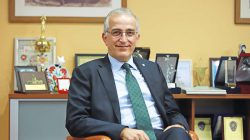
Mustafa Gültepe, Chairman of the Board of Istanbul Ready-to-Wear and Garment Exporters Association (İHKİB), made assessments regarding the ready-to-wear sector in the post-pandemic period for this month’s issue of Textile Technology.
Mustafa Gültepe shared the following statements on the subject: ‘‘It is important to invest in automation and digitalization at every stage, from manufacturing to advertising, from export operations to post-export processes. We are going to have a chance to go one step ahead in the competition depending on how fast we realize this.’’
Expressing that environmentally friendly and socially compatible products are more demanded after the pandemic outbreak, Gültepe also emphasized that the textile industry has a distinctive superiority over its competitors in terms of sustainability.
During the troublesome Coronavirus pandemic period, the Turkish textile and ready-to-wear garment industry went through a successful test with the confidence it provided in the supply chain and the actions it quickly took in altering conditions. The industry supported many countries, especially in masks and protective clothing. What kind of expansions should the Turkish textile and ready-to-wear garment sector perform in the post-pandemic period? What should be our road map?
In the post-pandemic normalization period, the main starting point of our sector is reliable collaborations and safe fashion. During the pandemic outbreak period, there were important changes in the supply chain, trusts were hurt, losses occurred. It is time to repair losses and restore trust relationships. Therefore, we are a fortunate sector. With our rapid mobility and solution-oriented approach, we were able to overcome difficulties. It was a result of our ability to move towards the production of protective masks, overalls and other medical garments. In the post-pandemic period, there will be categories expanding in terms of demand such as medical clothes, hygiene products, and indoor wear fashion due to the increased amount of working from home. Therefore, we anticipate expansions in this direction in our sector.
On the other hand, we think that it will be important to develop and maintain trust-based collaborations in the forthcoming period. It will be important for exporters to proceed more carefully in this period and to locate their supply relations on a reliable basis required by the legislative infrastructure.
On the other hand, it is important to invest in automation and digitalization at every stage, from manufacturing to advertising, from export operations to post-export processes. We are going to have a chance to go one step ahead in the competition depending on how fast we realize this.
Sustainability, environmentally friendly production and practices, recycled material use, and production will still be the leading values in international markets. We will be directing our efforts to these areas and we will increase the awareness of the partners in the sector. With our projects, we will support the strengthening of the sector’s infrastructure on these issues. We have projects initiated in this field. In our EU IPA project titled ‘Digital Transformation of the Ready-to-Wear Clothing Sector’, there are activities to improve both digitalization and sustainability infrastructure, whereas at the same time we are working on establishing standards on carbon footprints and Turkish garment and textile production procedures.
In the post-pandemic period, the European countries moved their orders to Turkey instead of remote routes especially in supplying textile and ready-to-wear products. This means new business opportunities and more exports. What is your assessment of this subject? What kind of steps should Turkey take to convert this opportunity into advantages?
The concept of close supply was on the agenda for a while now. Along with the pandemic outbreak, local and close supply has come to the fore more imminently. In this sense, we are in an advantageous position, especially since we are close to major markets such as the EU and we can meet all kinds of demands in the fastest way.
In this troublesome period, consumer demand and preference shifts towards sustainable products in many markets, particularly in the EU. Products that are low in carbon emissions, consume less energy, are environmentally friendly, and meet social standards are in demand in the post-pandemic period. Our sector also has an advantage that distinguishes itself with its competitors in terms of sustainability.
In a similar way, in the US, the searches for different supply chains were brought to the agenda due to the problems and insecurity between the two countries in the supply of textile and ready-to-wear products that are mostly imported from China. Turkey, analogous to China, stands out as a major supplier to the US market due to its capacity to produce various kinds of products.
In order to make better use of these opportunities, we are in more contact with both the buyers and the sector organizations in our main markets as the leading institutions of our sectors and we will increase our communications. For example, we develop collaborations with US industry organizations USFIA (US Fashion Industrialists Association) and AAFA (US Apparel and Footwear Federation). We are also continuing our discussions with UKFT (United Kingdom Fashion and Textile Association) on post-Brexit collaborations. In the post-pandemic period, we will intensify our organizations based on this type of cooperation in our markets.
Are there any envisions in the agenda of the Turkish textile and apparel industry to increase capacity and make new investments after the pandemic outbreak ended? Can you please share your insights on this subject with us?
Prior to the pandemic outbreak, capacity utilization rates in the sector exceeded 85 percent, thereby creating a significant need for investment. As a matter of fact, while investments in all industrial sectors stopped in 2019, we invested 3 billion TL in total as a sector and we provided employment for an additional 60 thousand people within this scope.
In the post-pandemic normalization period, we need investments not only for additional capacity, but also based on automation and developing advanced technology applications and sustainable production infrastructure. We need to realize this transformation rapidly in the infrastructure of the industry.
As it is known, in the beginning of 2020, the green agreement was announced by the EU, and the textile and ready-to-wear sectors are among the few sectors that stand out in this agreement. According to this agreement, in order to achieve climate-neutral targets by 2050, it is envisaged to tax the products entering the market according to their respective carbon emissions. These targets of the EU, which is our biggest market, are important to us. Beyond that, many of our buyers already have increasing demands for sustainable and green products. Therefore, we have to direct our investments in this direction.
Both automation-based advanced technology and sustainable infrastructure investments are very costly investments. Therefore, we demand that the government’s incentives be recreated in this direction. For this, as the Istanbul Ready-to-Wear and Apparel Exporters Association (İHKİB), we conducted a comprehensive study titled ‘Export-Oriented New Generation Investment Incentives in the Ready-to-Wear Garment Industry’, including international comparisons and field research studies, and presented these necessities of our sector to the related ministries. Now, we have a study to establish a sustainability-oriented support mechanism in the state aid communiqués, and we will complete this study and forward it to our ministry as soon as possible.
Interview: Tekstil Teknoloji Magazine