

Turkey Wants to Recycle 40 Million Tons of Textile Waste
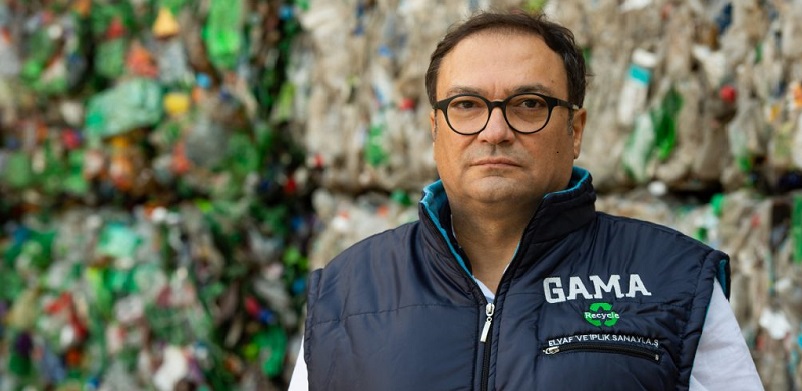
Zafer Kaplan, Chairman of the Board of Directors of Gama Recycle, Europe’s largest recycling facility, expressedin an interview with Dünya Newspaper that 500 million tons of clothes are idle worldwide. Reminding that only 7-7.5 tons of clothing can be collected annually through waste management, Kaplan continued as follows: ‘‘4 million tons of this is collected in Europe, 3 million tons in the USA and the rest in developed countries such as Japan. The collected clothes are then subjected to sorting. Approximately 2.5 million tons of this is resold as used clothes. Of the remaining 4.5 million tons, 3.5 million tons go to incineration. While 90 percent of the last 1 million tons is turned into insulation material, only the remaining 100 thousand tons of clothing is used in the transformation of clothing into new clothes again, which we call ‘garment to garment’ worldwide. This is an embarrassing situation for the textile industry.’’ Pointing out that in Turkey, 650 thousand tons of the 1.8 million tons of consumption per year becomes waste, Kaplan said that the part that can be collected here is 40 thousand tons, 30 thousand of which goes to the soil.
Ready-to-Wear Consumption to Increase by 63 Percent in 2030
However, many sectors all over the world have started a mandatory transition process from linear economy to circular economy with the pandemic. One of the sectors that started this process is the textile industry. Because the sector ranks 4th in terms of climate change and its impact on the environment, 3rd in water and land use, and 5th in the world in terms of raw material use. On the other hand, consumption is also increasing rapidly. By 2030, ready-to-wear consumption is expected to increase by 63 percent. This indicates how important the circular economy is in the sector, 95 percent of which consists of recyclable products.

EU Regulation on Sustainable Textiles
On March 30, the EU Commission published a regulation on “EU Strategy for Sustainable and Transformable Textiles”. This draft includes items such as leaving rapid changes in fashion behind, reducing the number of annual collections of brands, mandatory eco-design requirements for textile products, introducing a digital product passport, making products durable and repairable, reducing harmful chemicals, limiting the use of recycled content, and increasing this limit over time.
Import of Textile Waste Banned in Turkey
This draft is expected to be enacted in early 2024 at the latest. It is now important to recycle textile waste in addition to plastic bottles. In this context, Euratex, a Belgium-based EU organization, has launched a project called ReHubs for the recycling of textile waste in the whole EU. Within the scope of the project, it was decided to designate certain regions of the continent as textile waste collection centers. However, Turkey could not take part in this project. Because it is forbidden to import textile waste in Turkey. Now the textile industry is saying that the regulation should be changed for the circular economy, which will grow very rapidly in the coming period, and Turkey should be included in ReHubs.

Waste imports also on the agenda of the ministry
Cem Altan, President of the International Ready-to-Wear Federation and member of the Board of Directors of TGSD, stated that circular economy is a must for the ready-to-wear and textile industry. Explaining that big brands in the US and the EU make a significant part of their collections from recycled products and that many giants such as H&M and Inditex have filled companies with orders that make this kind of transformation for 10 years, Altan said, “There is a huge demand. We need to create supply. Recycling clustering areas have been identified in many EU countries. Unfortunately, Turkey is not included in this. Used clothes cannot be brought to Turkey. Ministries are working on it and the EU is looking for new countries. This issue is also important for Turkey to increase its exports. We all need to work on this issue and a law should be passed for these products to enter the country.” Officials, on the other hand, indicated that the issue of importing textile wastes is on the agenda of the ministry and that a regulation on the issue may be introduced in the coming period.
FIGURES
110 million tons
Amount of clothes consumed in a year
40 million tons
Amount converted into waste
7,5 million tons
Amount collected within the waste regulations
3,5 million tons
Amount burned
2,5 million tons
Amount sold as used clothing
900 thousand tons
Amount used as insulation material
100 thousand tons
Amount converted into new clothes