“In Textiles, Growing Is No Longer Enough—We Must Grow Sustainably”
Sustainability in textiles was discussed at Sustainability Talks Istanbul. Sustainability Talks Istanbul, one of the most comprehensive sustainability-focused gatherings in the textile sector, brought together all stakeholders of the industry in Istanbul for the sixth time this year.
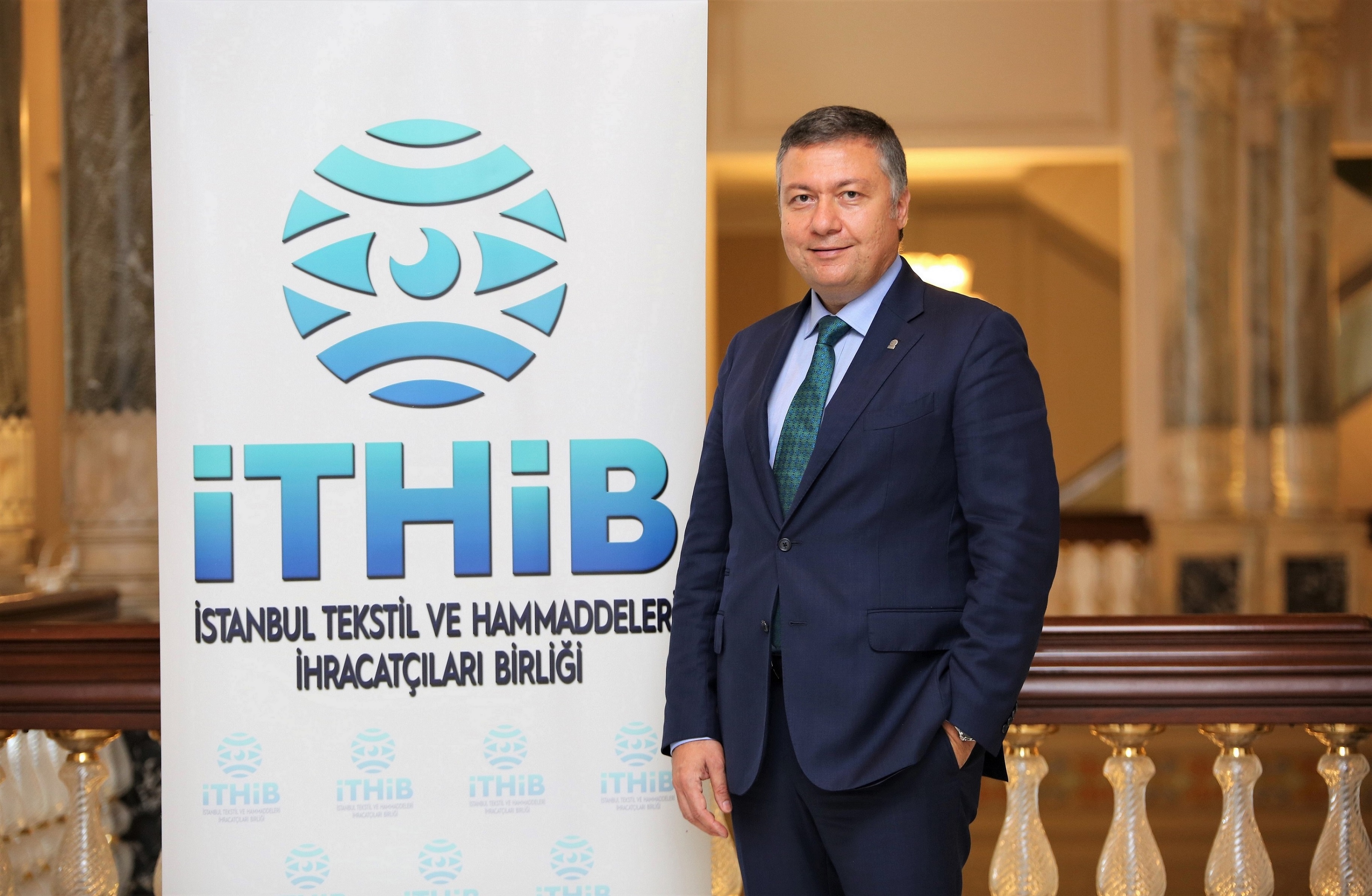
 Drawing attention to the leading role the textile industry undertakes in sustainable transformation and its global responsibilities, Ahmet Öksüz, President of the Istanbul Textile and Raw Materials Exporters’ Association (ITHIB), said: “Every year, 92 million tons of textile waste are produced worldwide, and 85% of it goes to landfill. While 20% of global wastewater originates from the textile industry, 10% of the microplastics in the oceans also come from the textile ecosystem. This picture tells us one thing: Growing is no longer enough—we must grow sustainably.”
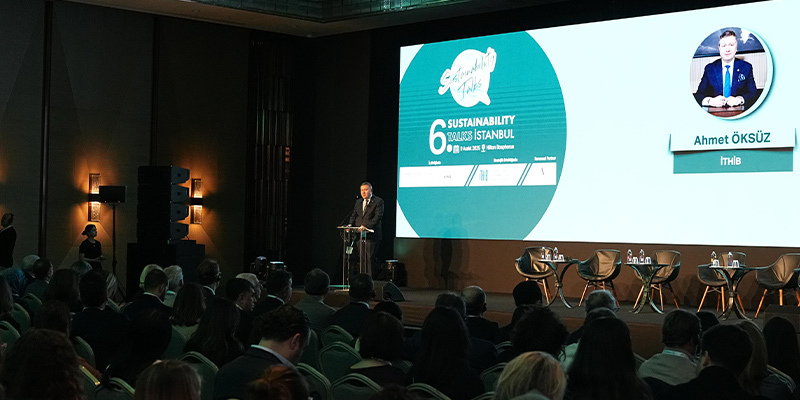
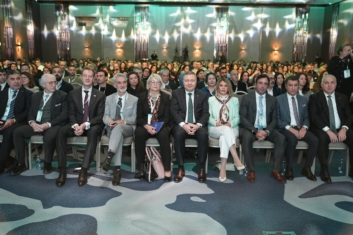
Sustainability Talks Istanbul, which sets the sustainability agenda for the global textile and apparel industry, was organized for the sixth time this year in Istanbul through the collaboration of Orbit Consulting and Kipaş Textiles, with the strategic partnership of the Istanbul Textile and Raw Materials Exporters’ Association (ITHIB). The corporate partner of the event, held at Hilton Istanbul Bosphorus, was Aster Textile, which transforms supply chains with measurable sustainability criteria.
In his opening speech at Sustainability Talks Istanbul, Ahmet Öksüz, President of the Istanbul Textile and Raw Materials Exporters’ Association (ITHIB), emphasized the leading role and global responsibilities the textile sector has undertaken in sustainable transformation, while also drawing attention to both global risks and the role of the textile industry in this transformation.
“The Turkish Textile Industry Is Taking the Stage as the Driving Force of Change”
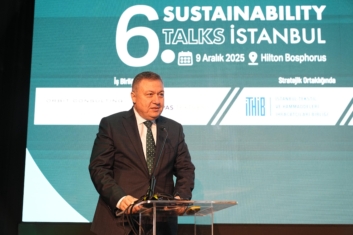
Ahmet Öksüz, President of the Istanbul Textile and Raw Materials Exporters’ Association (ITHIB)
Öksüz stated that 2025 is a year in which nature has not remained silent in the face of environmental processes, noting that natural disasters, climate-related issues, and diminishing resources have drawn a new roadmap for all industries. Emphasizing that no sector can continue with old habits anymore, Öksüz said: “And at exactly this point, the Turkish textile industry is taking the stage as the driving force of change. We have become a sector that not only manufactures but also designs the transformation process. By combining our traditional production heritage with innovation and environmental consciousness, we are not merely keeping pace with transformation—we are also guiding it.”
In his speech, Öksüz referred to the Disclosure Dividend 2025 Report, reminding that environmental risks could bring a cost of 38 trillion dollars to the global economy by 2050. Öksüz stated that 90% of global companies have launched systematic processes regarding their environmental dependencies, and emphasized that Türkiye has an above-average level of awareness, having already initiated processes to identify 98% of its environmental dependencies.
Öksüz noted that the global textile industry has reached a size of 1.8 trillion dollars and is expected to exceed 2 trillion dollars by 2030. Stating that Türkiye is the 2nd largest supplier in Europe and the 5th largest in the world, Öksüz said: “With a production value of 78 billion dollars including apparel, our sector points not only to a strong industrial infrastructure but also to a culture of sustainable production.”
“Growing Is No Longer Enough—We Must Grow Sustainably”
Öksüz stated that 92 million tons of textile waste are produced worldwide every year, and 85% of it goes to landfill, drawing attention to the fact that 95% of textile materials are recyclable. He noted that 20% of global wastewater originates from the textile sector, and 10% of microplastics in the oceans also come from the textile ecosystem. This picture tells us one thing: Growing is no longer enough—we must grow sustainably. We are not just a part of this ecosystem; we continue our efforts with determination to be its driving force.” he said.
Emphasizing that sustainability is a journey extending from the manufacturer to the brand, from the designer to the consumer, Öksüz said: “Everyone carries equal responsibility on this journey. Real change is possible when we think together, produce together, and take ownership together. A system in which the manufacturer’s labor is protected, the brand acts fairly, and the consumer makes conscious choices… This is true sustainability. In this context, we need all stakeholders in the textile ecosystem to act together—from the financing of sustainability to the fight against greenwashing.”
“Brands Must Also Take Responsibility for Sustainable Production”
Öksüz also gave an example of how brands should act more fairly on this issue, concluding his remarks as follows:
“As you all know, during the production of textile products, certain deviations may occur in the features requested by the buyer. Because of minor differences—such as acceptable variations in color, weight, and quality that do not negatively affect the consumer—our companies frequently encounter product returns and claims. If we want a product to be sustainable, we must encourage both consumers and brands to be sensitive to such small differences. Considering the additional raw material, chemicals, water, and energy used in the reproduction process, significant costs arise, and carbon emissions increase even more. It should not be forgotten that sustainability is a chain, and expecting sacrifice from only one link weakens the entire system.”