“ITM 2026 is a Strategic Platform Where We will Present Our Approach to the Transformation of the Textile Industry”
Interview: Dilek Hayırlı
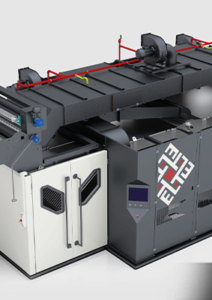
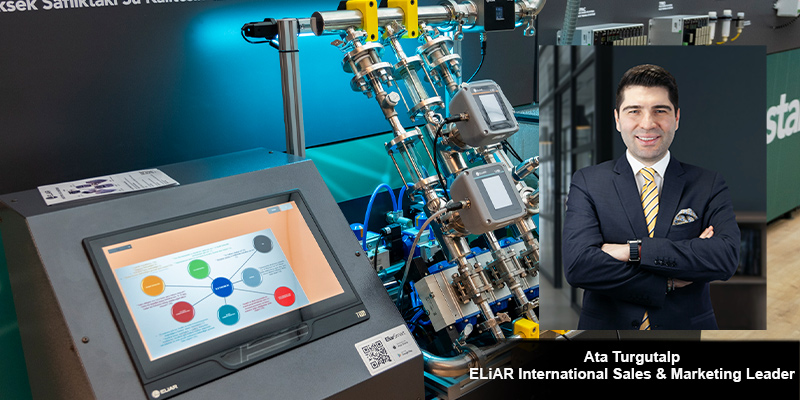
ELiAR International Sales & Marketing Leader Ata Turgutalp emphasizes that ITM 2026 will not only be a trade exhibition showcasing products, but also a strategic platform where the digital transformation vision, integrating automation, software, and process knowledge, will be brought to the field. ELiAR will be present at the exhibition with its smart and measurable solutions offering a holistic perspective on dyeing and finishing processes.
In the new era where automation in the textile industry has become a prerequisite for competition, not just a choice, companies that can translate digitalization into measurable and sustainable results in the field are making a difference. ELiAR stands out with its approach that addresses this transformation process not only through technology but also through process knowledge and field experience. Positioning ITM 2026 as a strong reflection of this vision, ELiAR is preparing to offer industry professionals the opportunity to look at “the production of the future” today with its integrated solutions ranging from digital factory concepts to smart sensors, fully automated dosing systems to software infrastructures.
How was 2025 going for ELiAR? Can you share the changes you’ve observed in the demand for automation and digitalization in Turkiye and your export markets?
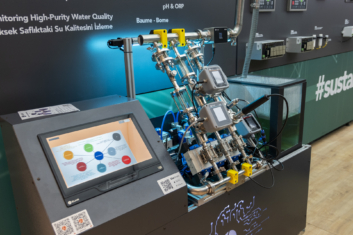 For ELiAR, 2025 has progressed as a period marked by both transformation and selective growth. In Turkiye and our export markets, automation has ceased to be an “investment choice” and has become a fundamental requirement for remaining competitive. In particular, rising energy, raw material, and labor costs are driving businesses to establish more controlled and predictable processes.
The most significant change becoming apparent in the market by 2025 is that the focus is more on the impact of investments rather than their scale. Companies are no longer evaluating automation investments based on “what we gained,” but rather on “what we can control better.” Especially in this period of increasing cost pressure and deadline sensitivity, making processes more predictable, maintaining production discipline, and managing operations holistically are becoming paramount. For EliAR, this picture indicates a period where technology alone creates value, but in conjunction with process knowledge and field experience.
How do your fully automated systems, predictive maintenance, and digital factory solutions for dyeing and finishing processes contribute to your customers’ production efficiency and cost optimization? Can you share concrete examples?
The key to efficiency in dyeing and finishing processes lies in controlling process variability. ELiAR’s fully automated dosing systems, intelligent sensors, and digital factory solutions minimize production variability, ensuring process stability. Especially in dyeing and finishing processes, accurate dosing, precise timing, and continuous monitoring directly increase efficiency by reducing repair and repainting rates.
Thanks to our predictive maintenance approach, deviations in process behavior can be detected before equipment failure occurs. This prevents unplanned downtime and unexpected maintenance costs. The digital factory infrastructure, on the other hand, provides managers with the ability to monitor production holistically and make decisions, enabling more effective management of operational costs.
What role do digital twins, AI-powered process optimizations, and sensor technologies play in creating a competitive advantage in your industry? Can you give examples of the preventive effects these systems provide against production errors?
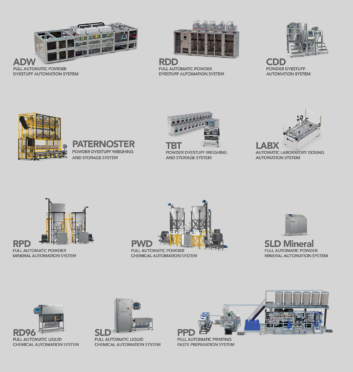 Digital twins and AI-powered algorithms enable the virtual modeling of production processes and the pre-analysis of various scenarios. This allows process parameters to be evaluated before they are tested in the field. Data from our smart sensors detects process deviations early, preventing quality problems from escalating. This approach offers our customers a significant competitive advantage, as it allows them to manage not only the consequences but also the causes of production errors.
How do the solutions you develop, focusing on energy efficiency, water conservation, and resource optimization, minimize your clients’ environmental impact? Can you share the concrete results of your sustainability goals?
Controlling energy, water, and chemical consumption is a key focus of ELiAR solutions. Automated dosing and continuous monitoring prevent unnecessary consumption, ensuring processes run correctly the first time. This approach reduces environmental impact and makes it easier for businesses to achieve their sustainability goals. Our customers are able to tangibly improve their environmental performance by achieving more transparent reporting, lower resource consumption, and more consistent production results.
What is your growth strategy in markets such as North Africa and South America? What value propositions and support mechanisms do you offer that differentiate you from other suppliers in these regions?
North Africa and South America are regions where textile production is rapidly developing and the need for modernization is increasing. Our growth strategy in these markets is based on establishing strong technical support infrastructures with local business partners and adapting our solutions to regional needs. What differentiates ELiAR in these markets is not just that we offer technology, but that we actively participate in commissioning, training, and after-sales support processes. We aim to truly integrate into our customers’ processes by establishing long-term collaborations.
What are some of ELiAR’s new projects driven by its R&D-focused approach? Could you elaborate on the innovative solutions you’re working on, particularly in the fields of artificial intelligence, robotics, and advanced automation?
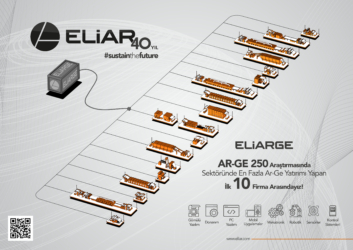 For ELiAR, R&D is not an afterthought; it’s a fundamental approach ingrained in the company’s DNA since its inception. As a leading brand in automation and control devices for the textile industry, we leverage our 40 years of expertise to integrate electronics, mechatronics, and software disciplines under a single R&D umbrella. With our in-house data science team, we not only produce technology but also continuously test and improve how it adds value to processes in the field.
Since our founding, we have expanded our focus from mechatronic weighing and dispensing systems to fully automated control and reporting of all dyeing and washing processes. The goals of “correct dyeing the first time” and “repeatability” are central to our R&D efforts. Through projects that combine digitalization, artificial intelligence, and robotics, we continue to work on solutions that increase process stability, reduce operator dependence, and create the infrastructure for future production models. This approach enables ELiAR to not only develop technology but also lead the transformation process in the textile industry.
What products and solutions do you plan to showcase at ITM 2026? Are there any new automation or digital factory solutions you are considering introducing? What is the strategic importance of your participation in the exhibition?
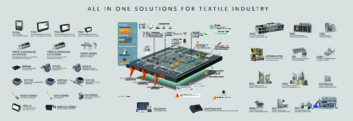 ITM 2026 will be more than just a product exhibition for ELiAR; it will be a strategic platform where we comprehensively present our approach to the transformation of the textile industry. To this end, we aim to showcase integrated structures where digital factories, smart sensors, and software work together, alongside individual automation solutions, in order to offer our visitors a broader perspective on the future.
Visitors will have the opportunity to experience ELiAR’s solutions that approach dyeing and finishing processes holistically; from fully automated dosing systems to process monitoring and reporting, from digital factory concepts to software infrastructures supporting production discipline. Our goal is to demonstrate to our visitors, through concrete examples, that digitalization is not an abstract concept, but an approach that can be measured, managed, and produces sustainable results in the field.
How do you see the technological transformation of the textile industry in the next 10 years? How does ELiAR plan to strengthen its leadership in digitalization and automation during this period?
The next 10 years will be a period in which digitalization deepens and automation becomes standard in the textile industry. However, the real difference will be between businesses that can make sense of data and manage their processes holistically. As ELiAR, we aim to strengthen our leadership in this period by combining our R&D strength, field experience, and process partnership approach. Our goal is to be a technology and solution partner with whom our customers can manage not only their current needs but also the challenges they will face in the future.