“ITM 2026 Plays a Critical Role for the Global Textile Machinery Market”
Interview: Tuğba Karademir
Growing with a strong focus on automation, energy efficiency, and customized solutions, Fadis positions ITM 2026 not merely as a trade fair, but as a strategic meeting point shaping the future of the global textile machinery market.
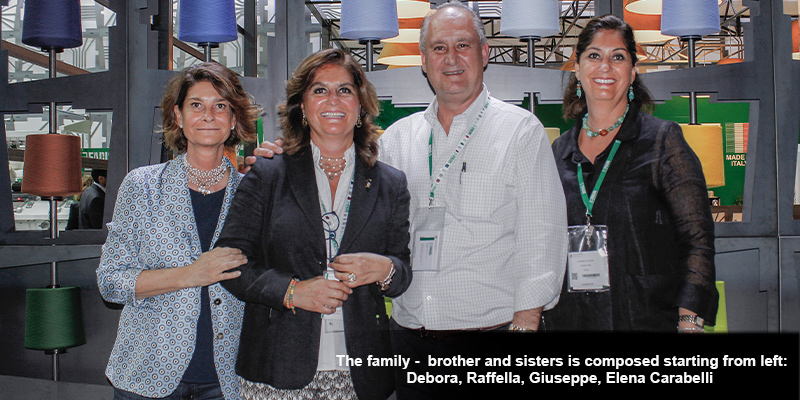
One of the long-established brands of the Italian textile machinery industry, Fadis continues to strengthen its global position by combining a family-driven management structure with advanced engineering, automation, and a sustainability-focused vision. Led by siblings Debora, Raffaella, Giuseppe, and Elena Carabelli, the company focuses on delivering flexible and tailor-made solutions in response to changing yarn types, increasing expectations for energy efficiency, and growing digitalization requirements. In this interview with Fadis executives, a broad perspective is explored—ranging from an assessment of the 2024–2025 period to R&D investments, from the strategic importance of the Turkish market to preparations for ITM 2026 and the future of the textile machinery industry.
How would you evaluate the 2024–2025 period for Fadis?
 Despite a challenging global environment, our turnover in 2025 increased compared to the previous year. Exports accounted for 85% of our total sales, demonstrating our strong international presence. Although orders for 2026 are coming in more slowly, they are nonetheless arriving, indicating continued confidence in our solutions.
A New Level of Automation with Leo Robot
Could you share more details about the new machines, technologies, or solutions you have developed recently? Which yarn types, production processes, or market needs do these innovations primarily address?
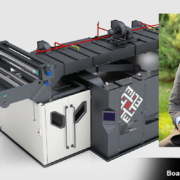
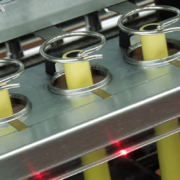
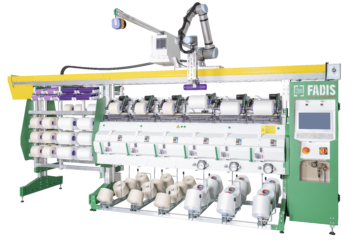
Fadis invests approximately 7% of its turnover in research and development, not only to continually enhance existing machinery but also to drive new innovations. For instance, recent developments include the Leo Robot – The Cobot at Your Servıce, an innovative automation for loading and unloading packages that allows to automate any winding process and to use different take up tubes by type and size, both cylindrical and flanged. This system makes it possible to increase efficiency and allows the machine to work autonomously even during the night shift, increasing its efficiency up to motre than 60% and guaranteeing the repeatability of the results.
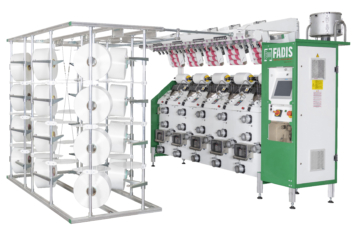
Additionally, Fadis has introduced machinery specifically designed for the processing of technical yarns, as well as Easy Load, a new machine dedicated to the efficient unwinding of yarns. These innovations are aimed at addressing evolving market needs and improving operational efficiency.
Türkiye: One of the Key Powers of Global Textile Production
What is the current importance of Türkiye and the Turkish textile industry for Fadis? Do you have plans to expand sales, technical service, partnerships, or investments in Türkiye?
 For Fadis, Türkiye and the Turkish textile industry represent a key market and remain one of the most significant players both globally and within the textile sector.
The significance of the Turkish market is highly valued, as Türkiye consistently stands at the forefront of global textile industry development and innovation. Its ongoing leadership and dynamic growth make it a pivotal force shaping the future of textile manufacturing worldwide.
Fadis continues to closely monitor the market, providing ever-increasing attention and support to our vast customer base. This commitment ensures that we remain responsive to our clients’ evolving needs and maintain strong, long-lasting relationships built on trust and service excellence.
Sustainable Production with Recyclable Machines
How does Fadis adapt to sustainability and digital transformation? Could you share your initiatives related to energy efficiency, carbon footprint reduction, smart machines, digital monitoring systems, and Industry 4.0 applications?
For 2026 and beyond, Fadis will continue to prioritise product development in areas such as energy efficiency, flexibility, automation, and customised yarn solutions. In particular, the company remains strongly committed to energy saving and sustainability: during the year, two new photovoltaic systems will be installed, complementing the one that has been in operation since 2011. This ongoing investment in renewable energy reflects FADIS’s focus on reducing environmental impact while enhancing operational efficiency and innovation.
Additionally, more than 80% of our machines are fully recyclable, underlining our commitment to environmental sustainability. They are already equipped to be remotely interfaced and monitored, offering advanced connectivity for our clients. We have also developed an innovative dashboard that enables real-time monitoring of all operating parameters, production data, and energy consumption, providing our customers with comprehensive oversight and control over their manufacturing processes.
“We Offer Customized Solutions That Precisely Match Each Customer’s Specific Needs”
What will be Fadis’s main product development priorities in 2026 and beyond? Which areas—such as efficiency, flexibility, energy savings, automation, or customized yarn solutions—will you focus on?
 For 2026 and the years ahead, Fadis’s main product development priorities will centre increasingly on automation, as we aim to support our customers in boosting their operational efficiency. Our focus is on delivering machinery that not only offers advanced automation features but also consumes less electricity compared to other available options, thereby contributing to greater energy savings and sustainability in our customers’ operations.
Another key pillar of our philosophy is a tailor-made approach – we are dedicated to providing customised solutions that closely match the specific requirements of each client and respond swiftly to changing market demands. This commitment to flexibility ensures that our machinery and technologies can adapt to evolving production processes, yarn types, and industry trends, helping our customers remain competitive in a fast-moving global landscape.
In summary, our ongoing investments and innovations will continue to prioritise efficiency, flexibility, energy saving, automation, and bespoke yarn solutions, reflecting our determination to deliver tangible value and long-term success for our partners.
What major changes do you foresee in global textile machinery markets in the coming years? How is demand evolving in regions such as Europe, Asia, the Middle East, and Africa, and how are Italian textile machinery manufacturers positioning themselves in these markets?
In the coming years, the global textile machinery markets are expected to undergo significant changes driven by advancements in automation, digital transformation, and sustainability initiatives. Increasingly, manufacturers will prioritize energy-efficient and smart machinery that can be seamlessly integrated into digital monitoring systems, allowing for real-time data analysis and improved operational control. There will also be a stronger emphasis on reducing environmental impact through the adoption of renewable energy solutions and the development of recyclable machinery components. Additionally, flexibility and customization will become even more important, as companies seek machinery that can adapt to rapidly changing market demands and new types of yarns and production processes. These trends reflect a broader industry shift towards Industry 4.0 applications and sustainability, positioning textile manufacturers to remain competitive in a dynamic global landscape.
Italian textile machinery manufacturers are strategically positioning themselves in these markets by emphasizing their strengths in automation, energy-saving technologies, and customized solutions. They are leveraging their reputation for high-quality engineering and innovation to meet the specific requirements of diverse regional customers. By investing in sustainable practices, digital monitoring systems, and Industry 4.0 applications, Italian companies are able to offer advanced, flexible machinery that aligns with current global trends and regional priorities, ensuring their continued competitiveness and relevance in these dynamic markets.
“ITM 2026 Is a Vital Platform for Developing Partnerships and Showcasing the Latest Technological Innovations”
2026 will be an important year for the ITM 2026 Exhibition. How is Fadis preparing for ITM 2026? What would you like to share about ITM’s contribution to both the Turkish textile industry and global markets?
As 2026 marks a significant year for the ITM 2026 Exhibition, Fadis is actively preparing to showcase its latest advancements in automation, energy efficiency, and digital transformation at ITM 2026. Our focus will be on demonstrating innovative machinery designed to enhance operational efficiency, sustainability, and flexibility—values that are at the core of our ongoing product development strategy. We are dedicating resources to present new solutions that feature advanced automation, reduced energy consumption, and seamless integration with digital monitoring systems, all tailored to address the evolving needs of the textile industry.
ITM 2026 plays a pivotal role not only for the Turkish textile industry but also for the global textile machinery market. The exhibition serves as a vital platform for exchanging knowledge, fostering partnerships, and showcasing the latest technological innovations.