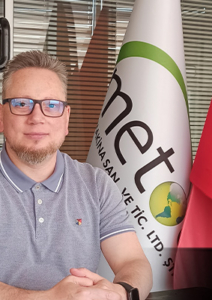
“Our Customer Satisfaction Rate Is At 98%”
Interview: Tuğba KARADEMİR
Viquins stands out as one of the pioneering brands leading the transition in textile production from manual inspection to data-driven, autonomous, and predictive quality management through its artificial intelligence–supported visual quality control systems.
As expectations for speed, efficiency, and sustainability continue to rise in the textile sector, quality control processes are also undergoing a fundamental transformation. By integrating artificial intelligence, deep learning, and real-time data analytics into production lines, Viquins offers manufacturers not only quality assurance but also an operational and commercial competitive advantage through its intelligent visual inspection systems. We conducted a comprehensive interview with Oktay Kabaktaş, Co-Founder of Konduran A.Ş., covering topics ranging from Viquins product portfolio and 2025 performance to its position in international markets and its ITM 2026 goals.
How would you define Viquins’ main product groups and areas of expertise in the textile sector?
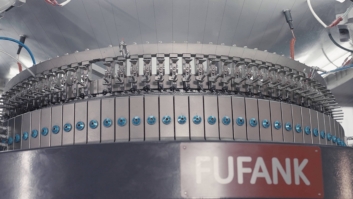 As Viquins, we focus our expertise in the textile sector on AI-supported automated visual inspection and real-time quality control systems. We structure our product portfolio specifically according to different stages of production, fabric types, and production speeds.
Our systems, consisting of high-resolution cameras, specialized lighting units, and deep learning–based software, can detect sewing defects, color variations, pattern distortions, and surface defects with high precision.
Looking at our sectoral areas of expertise, the VEGA model stands out in nonwoven production with density measurement and anomaly detection. In knitting and weaving, our ERA and TERA models are actively used in reference projects. YAZEK QC v5.0 is positioned between the weaving machine and the winding unit, enabling real-time detection of defects during production. In end-of-line quality control, our MEGA model performs final quality inspection of semi-finished and finished products, activating alarms, recording, or stopping functions for defective items. In color control and analysis, we achieve up to 98.5% accuracy through real-time measurements in accordance with CIE 2000 and CMC 2:1 standards.
With all these systems, we transform quality control processes into, so to speak, a “digital eye and an analytical mind,” aiming to reduce waste rates from 15% to as low as 3%.
The Era of Autonomous Quality Management in Textiles with Viquins
What do the visionary solutions and new models you have developed in recent years provide for textile manufacturers?
 As Viquins, we have transformed quality control from a manual, operator-dependent process into a digital operation managed by artificial intelligence.
Our new-generation solutions include YAZEK QC v5.0 with 4K imaging and AI analysis capabilities; MEGA, which can distinguish 9 different defects with 98% success in end-of-line quality control; production-type-optimized ERA, TERA, VEGA, and LUNA models; and the VAIS 2 software, capable of performing anomaly and density analysis at speeds of up to 100 m/min.
Thanks to deep learning (CNN) algorithms, infrared camera support, logic filters, and advanced color analysis technologies, precision is maintained even at high production speeds. In return, manufacturers achieve significant reductions in waste rates, a 70% decrease in the need for manual inspection, up to 30% savings in quality control time, and a long-term 10-year—support guarantee.
How did 2025 go for Viquins?
In 2025, we continued to increase efficiency in textile production facilities by maintaining sales of our AI-supported quality control solutions and implementing new system installations. This year was particularly marked by R&D- and software-focused growth for Viquins
We focused on high-value-added software solutions rather than hardware. Predictive maintenance, machine learning integrations, and the first field applications of the VAIS 2 platform were implemented during this period. Especially in knitting, weaving, and nonwoven fields, the reduction in manual inspection needs significantly increased demand for our solutions.
AI-Supported Quality Control Raises Standards in Textile Production
How do your digitalization and artificial intelligence solutions provide competitive advantages for manufacturers?
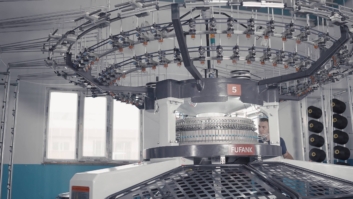 Viquins responds to the textile sector’s demands for speed, efficiency, and automation with AI- and deep learning–based automated visual inspection solutions. We transform the traditional quality control approach into an end-to-end digital ecosystem.
Our systems operate 24/7 without interruption, minimizing human error. With real-time data flow, detection success rates of up to 98% even at high speeds, and compliance with international color standards, we provide manufacturers with both cost advantages and operational speed. This structure also directly strengthens manufacturers’ brand reliability.
Which models stand out for different production types?
We have a broad product family optimized for different production disciplines in the textile sector.
VEGA stands out in nonwoven production, ERA and TERA in knitting, YAZEK QC v5.0 in weaving, and MEGA in end-of-line control. These systems reduce waste rates while decreasing the need for manual inspection by an average of 70%.
Can you provide information on different usage scenarios of Viquins systems?
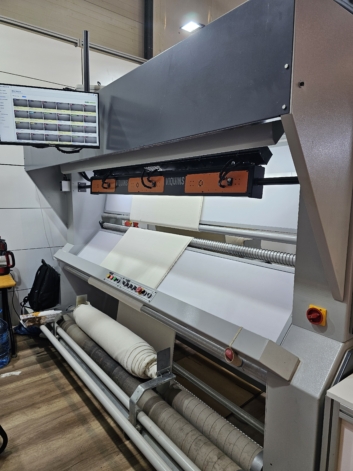 Viquins systems are not only quality control tools; they offer a comprehensive quality management ecosystem that can be integrated into every stage of production. They can be effectively used in many scenarios, including real-time defect detection during production, post-production and end-of-line inspection, fabric density measurement, and color analysis.
YAZEK QC v5.0, used during production, detects liquid stains, holes, weaving defects, and splice points in real time and can stop production when necessary. In end-of-line inspections, MEGA ensures final quality approval, while VEGA provides contactless and high-precision analysis in nonwoven production with infrared camera support. Additionally, through color control and performance reporting, we establish a data-driven decision-support infrastructure.
How do you evaluate Viquins’ position in the international market?
By combining our domestic production approach with global standards, we hold a strong position in international markets. Thanks to our web-based systems, production lines and quality data can be monitored from anywhere in the world. Our customer satisfaction rate is at 98%. With performance that reduces waste rates from 15% to 3% and a 10-year support guarantee, we are positioned as a reliable technology partner.
Which technologies will you highlight at ITM 2026?
At international showcases such as the ITM 2026 Exhibition, we plan to present our entirely new-generation artificial intelligence solutions and integrations. Under the heading “Future Developments,” our medium- and long-term goals are presented as follows. At the fair, we will highlight machine learning–supported next-generation quality control solutions, predictive maintenance and IoT integrations, and advanced software and API infrastructures. We will also present 4K imaging–supported color and tone analysis solutions for denim production to visitors.
What is your roadmap for 2026 and beyond?
Our goal for 2026 and beyond is to transform quality control from a structure that merely detects defects into a predictive, fully integrated system that produces decision support. We aim to create a fully autonomous quality management ecosystem in which defects are predicted in advance through self-learning AI algorithms, cause–effect relationships are analyzed, and quality data is digitally secured.