“Türkiye Therefore Remains Central To Our Regional Strategy”
Interview: Tuğba KARADEMİR
BB Engineering maintains its strong position in the global market with innovative solutions that combine sustainability, energy efficiency, and production flexibility in filament yarn manufacturing. With its engineering approach focused particularly on recycling and digitalization, the company responds effectively to the evolving demands of producers.
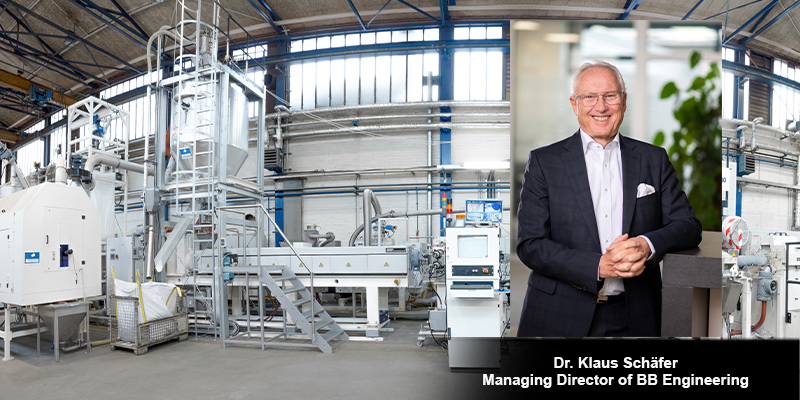
The year 2025 was recorded as a successful business year for BB Engineering. Dr. Klaus Schäfer, Managing Director of BB Engineering, shares how the company integrates efficiency, quality, and sustainability in filament yarn production through its JeTex® and VarioFil® systems. In this interview conducted for our Tekstil Teknoloji magazine, the impact of global uncertainties on the business world, strategies for the Turkish market, and recycling-focused innovations are also discussed in detail.
As we look back at the past year, how would you evaluate BB Engineering’s overall performance? What were the key developments that defined the year for your company in terms of markets, projects, and strategic focus?
We had a successful business year in 2025 and are very satisfied. However, the unstable global political situation is impacting our business, too: We feel that many customers are cautious when it comes to investments.
“Our Machinery is Generally Designed For Long-Term Efficiency”
Systems such as JeTex® and VarioFil® have strengthened BB Engineering’s position in filament yarn production technologies. How do these solutions reflect your approach to combining performance, flexibility, and sustainability in engineering?
 Our machinery is generally designed for long-term efficiency in many regards. High durability, energy-efficient operation, low downtime, and reduced waste contribute to a low total cost of ownership over the machine’s lifecycle. For example the COBRA filter, one of our latest development, is a continuous large-area fine filter comes with an automated switch-over and self-cleaning function. This means uninteruppted production, very long service life, less material loss and better filtration performance.
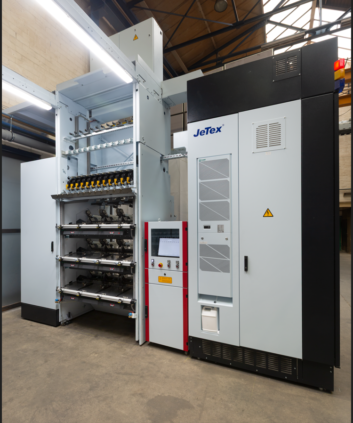
As you already mentioned, our JeTex air texturing system is also a great example of flexibility and low OPEX. It is effeicient in every respect. High production speed combined with low energy consumption and the permanent focus on your product’s quality while offering a broad range of effects. By simlpy using different feedstock, nozzles, or adapting process parameters producers can quickly change the texturizing effect and thereby generate a variety of products and applications.
In the same way I want to mention our VarioFil compact spinning line. This system offers simple operation, fast production speed, and efficient energy management, to name just a few factors. And our engineers are always looking for ways to make our products even better. Last year, we introduced our new spin pack “ValuePack”, which combines benefits of both sand pack and 3LA pack. Thereby, we achieved a significantly better homogeneity in terms of temperature and viscosity and improved spinning performance and yarn quality. At the same time, VarioFil is more flexible than most other systems on the market. We offer configurations and conversion packages for various polymers and yarn types. PET recycling is also possible with this line.
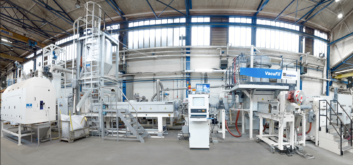
If manufacturers want to go one step further in terms of sustainability, our VacuFil recycling line is certainly of interest. VacuFil enables various process flows, even fiber-to-fiber. This allows yarn producers to recycle their own production waste into high-quality rPET. This is not only sustainable and cost-saving. It also enables them to expand their own product portfolio to include rPET products, thereby responding to legal and market requirements.
“Our Machines are Characterized By Low OPEX and High Availability”
From your perspective, how have customer expectations evolved in recent years, particularly regarding efficiency, product quality, and operational flexibility? How is BB Engineering responding to these changing demands?
 Due to higher labor costs, efficiency is becoming more important than in good times. Especially in times of low demand, we observe that high-quality machines and yarns are the last to be shut down. Our machines are characterized by low OPEX and high availability. Flexibility has always been our core competence and is particularly advantageous in changing markets. By switching production, markets with higher demand can be tapped. We continue to work on improving the quality of our machines in terms of efficiency, product quality, and flexibility.
Türkiye remains one of the most dynamic textile manufacturing hubs globally. How do you evaluate the Turkish market today, and what role does it play in BB Engineering’s regional strategy?
Türkiye plays a strategically significant role for our company and is one of our key markets ever since. Unfortunately, to be realistic, the current environment is more challenging than in previous years.
Türkiye’s textile industry is highly export-oriented and faces increasing pressures from energy costs, currency fluctuations, and global market uncertainties, including changes in international trade conditions. At the same time, sustainability and recycling are gaining importance, and Turkish producers are carefully evaluating investments to maintain efficiency and long-term competitiveness.
We feel this as a technology partner as well. However, we see this as part of a normal market cycle rather than a long-term structural change. Türkiye therefore remains central to our regional strategy. We value our long-standing partnerships and are confident that, once conditions stabilize, the market will regain momentum. From our daily cooperation with customers, we experience a very professional and solution-oriented approach – even in challenging times.
“We Have Therefore Placed A Strong Focus on Textile Recycling in Our R&D Activities in Recent Years”
Innovation has always been a core element of BB Engineering’s identity. Which technological or engineering trends do you believe will have the greatest impact on filament yarn production in the coming years?
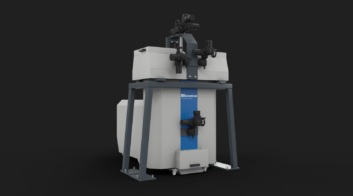 Rather than “trends” we see fundamental developments that are reshaping filament yarn production. Digitalization surely remains a key lever. Real-time data analysis and intelligent process control enable greater process transparency and stability. In filament spinning, where even minimal deviations affect yarn quality, data-driven optimization and closed-loop control systems significantly improve reproducibility, reduce waste and increase overall equipment efficiency.
Automation is equally important. Rising quality requirements and cost pressure demand highly efficient, largely self-regulating production lines. Against the backdrop of cost pressures, energy efficiency is a decisive competitive factor. With energy representing a substantial share of production costs, optimized extrusion technology, efficient drive systems and intelligent heat management play a central role in reducing specific energy consumption. At BB Engineering, we consistently design systems that combine economic efficiency with measurable sustainability improvements.
Another key topic that will continue to challenge our industry is textile recycling. This development is driven not only by sustainability goals, but also by the limited availability of raw materials. At BBE, we have therefore placed a strong focus on textile recycling in our R&D activities in recent years. Processing recycled PET requires adapted extrusion, filtration, and melt conditioning technologies to ensure stable viscosity and consistently high yarn quality. BBE has comprehensive expertise in all of these areas and is able to provide highly effective solutions tailored to our customers’ needs. In our technical center, we continuously conduct trials and achieve excellent results – including in demanding fiber-to-fiber recycling applications.