Ceramic Technology That Powers Leading Textile Machinery
Interview: Tuğba Karademir
Rauschert brings together quality, efficiency, and sustainability in production with its high-performance ceramic components and water recycling technologies developed for textile machinery. Its solution portfolio—ranging from Stay-Clean surface technology to Inopor® ceramic membranes—delivers tangible advantages across a wide spectrum, from yarn production to textile finishing processes.
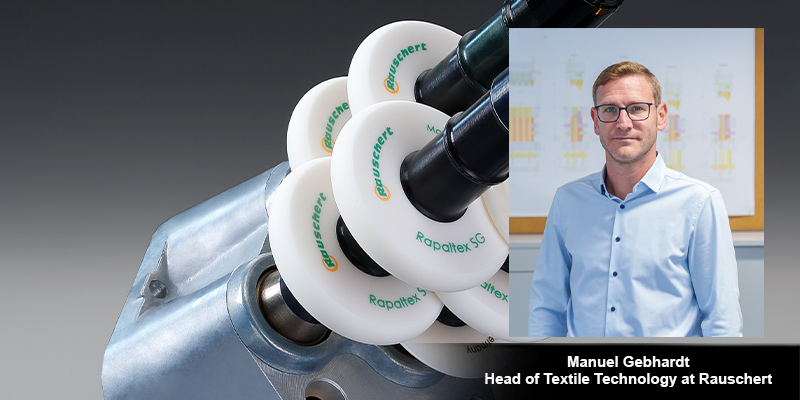
In textile machinery, performance is measured not only by speed, but also by durability, process stability, and resource efficiency. Stay-Clean surface technology, zero-defect twist stoppers, and 95°C water recycling: Rauschert’s ceramic components tackle real production challenges. We spoke with Manuel Gebhardt, Head of Textile Technology, about what makes Rapaltex® and Inopor® essential for high-performance in textil machinery. Gebhardt also shared insights with our Tekstil Teknoloji magazine on collaborations in the Turkish market and the company’s strategic objectives for ITM 2026.
How would you describe Rauschert’s journey in the textile industry and the core principles behind its success in this field?
 Our success comes from understanding what textile machinery manufacturers actually need: components that last longer, run faster, and cause fewer problems.
German engineering means we control every step. We select the materials, develop the processes, and test everything before it ships. This isn’t just about meeting specifications, it’s about making components that work reliably in real production environments.
We also listen. We work directly with machinery manufacturers to solve specific problems. At the same time, we are in close contact with end users and actively gather their feedback. Especially in markets like Türkiye, we regularly visit final customers to understand their production challenges first-hand. Sometimes that means customizing a component. Sometimes it means developing something entirely new. Either way, we deliver solutions that improve their machines.
Your broad product portfolio ranges from technical ceramics to textile technologies. How does this diversity shape your innovation strategy and customer-oriented solution development processes? What are your key strategies for maintaining high precision and process reliability in textile applications?
Take DTY production. You need high-performance ceramic components for the texturing unit. For dyehouse operations, you also need efficient process water treatment and recycling. We can support both areas with specialized ceramic solutions.
“Snow Formation Is Prevented Thanks to the Rapaltex® Stay-Clean Surface.”
Which critical challenges in yarn production are addressed by products such as Twist Stopper and Rapaltex®? Could you share the tangible advantages these solutions provide in terms of production efficiency, yarn quality, and process stability?
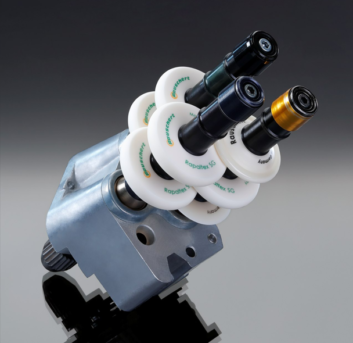
 In DTY production, you face two main problems: keeping the discs clean and preventing component failure. Our products solve both.
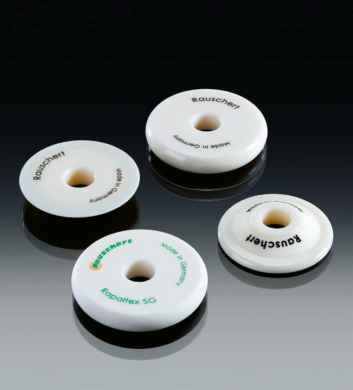
Rapaltex® friction discs have a Stay-Clean surface. This prevents polymer deposits from building up, which means no snow formation. The discs stay effective for years without replacement. They also handle heat better than polyurethane discs because aluminum oxide ceramic conducts heat away from the yarn. This lets you run at higher speeds without damaging the yarn.
The results are measurable: better tensile strength and elongation in the finished yarn. Longer maintenance intervals. Higher production speeds. And consistent quality across all positions.
Our twist stopper delivers zero defects. It uses a metal-ceramic construction with diamond-polished surfaces and precision ball bearings. The speed variation between positions is minimal, which means uniform yarn quality. It’s also easy to mount, dismount, and clean.
Thread guides complete the system. They provide precise yarn guidance with low coefficient of variation. They last longer than alternatives, especially with solution-dyed yarns. Together, these components maximize uptime and minimize waste.
Together, these components create a complete system that maximizes productivity, minimizes waste, and ensures consistently high yarn quality.
“We Filter High-Temperature Process Water with Ceramic Membranes and Return It Directly to Production”
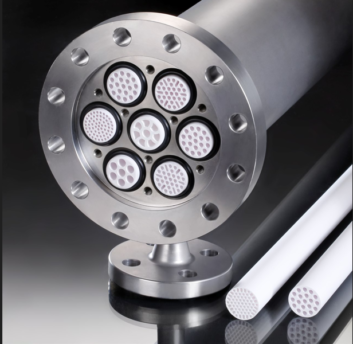
How does your Inopor® ceramic membrane technology make a difference in terms of water and energy efficiency in the textile industry? What kind of feedback do you receive regarding its environmental impact and contribution to sustainable production?
Textile production generates large volumes of process wastewater. Inopor® ceramic membranes enable efficient treatment and recycling of process water, reducing both costs and environmental impact. Through ceramic membrane filtration, we achieve process water recycling with significant energy savings. In textile finishing processes, we filter and treat process water at elevated temperatures and return it directly to production. Unlike polymer membranes, ceramic membranes withstand harsh chemicals and high temperatures without degrading. This creates a closed-loop system that dramatically reduces fresh water consumption, chemical usage, and energy costs. CO₂ emissions and wastewater volume drop as well. The high pH and temperature resistance of ceramic membranes makes them particularly suitable for textile applications where process conditions vary, for example caustics recycling at the Mercericing process in cotton production line.
Customer feedback has been very positive. Manufacturers appreciate not only the environmental benefits but also the reliability and chemical resistance of ceramic membranes compared to polymer-based alternatives. At our production site in Veilsdorf, Germany, we operate an Inopor® application laboratory where we test membranes for various applications and conduct laboratory and principle tests for our customers. Our expert team supports clients from the initial project concept through to full system implementation.
“We Expect To Be Able To Reduce Gas Consumption And CO₂ Emissions By Up To Around 30%”
Launched in 2024, the Consintec project aims to develop CO₂-neutral and natural gas–independent sintering technology. What role does this project play in Rauscherts long-term sustainability strategy? What concrete benefits are expected in terms of energy efficiency and production processes?
 Consintec is a government-funded project where we are developing more efficient sintering processes for ceramic manufacturing. By optimizing how we schedule production and control thermal afterburning, we expect to be able to reduce gas consumption and CO₂ emissions by up to around 30%. It’s part of our broader commitment to reducing the environmental impact of our own operations, which ultimately helps us deliver more sustainable products to customers.
“Türkiye Has a Highly Sophisticated Textile Market Focused on Sustainability and Efficiency.”
How would you define the strategic importance of the Turkish market for Rauschert? Which technology- and sustainability-driven opportunities do you see in the Turkish textile industry, and how are your cooperation processes with local customers progressing?
Türkiye has a highly developed textile industry with sophisticated manufacturers. They are focused on sustainability and efficiency, which aligns perfectly with what we offer.
Since early 2024, we’ve partnered with local Turkish partners to offer on-site testing in Türkiye. Turkish customers can test our Inopor® membranes with their actual process water and chemicals without shipping samples to Germany. We’re currently setting up pilot projects with several interested manufacturers.
We provide reference reports with Capex and Opex calculations so customers can see exactly what they’ll save. For process water recycling, the payback period is typically quite attractive, even more when we recycle high-temperature and chemically reusable process water. The Turkish industry is serious about building a “Green Textile Industry,” and we’re ready to support that with proven technology.
The response from the Turkish market has been encouraging. Manufacturers recognize that sustainability is not just about environmental responsibility, it is increasingly a competitive advantage and a requirement for accessing European and international markets.
“ITM Is a Platform Where Real Production Challenges Are Addressed and Solutions Are Discussed”
Which innovations and solutions do you plan to highlight as Rauschert at the ITM 2026 International Textile Machinery Exhibition? How do you define the importance of this exhibition in terms of your global brand positioning and your strategic goals in the Turkish market?
ITM 2026 represents an excellent opportunity for us to strengthen our relationship with the Turkish textile industry and showcase our comprehensive solutions portfolio. If a manufacturer is struggling with snow formation on friction discs, we can show them Stay-Clean technology. If they need to reduce water costs, we can walk through the Inopor® economics. ITM is where those conversations happen, and that is why we will be there.
The strategic importance of ITM for us cannot be overstated. The Turkish textile industry is not only substantial in its own right, but it also serves as a gateway to broader regional markets. Turkish manufacturers are sophisticated customers who demand quality, innovation, and proven performance-exactly what Rauschert delivers. By maintaining a strong presence in Türkiye, we demonstrate our commitment to the region and our understanding of local market needs.