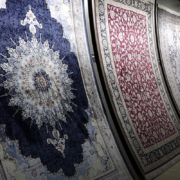
Textile Exports Gain Momentum in July
Despite challenging global market conditions in the first seven months of 2026, Türkiye’s textile and raw materials sector maintained its export performance, with notable increases observed in technical textiles, yarn, and woven fabric groups. In July, sector exports rose by 8.9% compared to the previous month, reaching $1.038 billion.
Despite uncertainties in global trade, cost pressures, and competitive conditions, the Turkish textile and raw materials sector continued its export activities in the first seven months of 2026. According to the export assessment for the January-July 2026 period prepared by the Istanbul Textile and Raw Materials Exporters Association (İTHİB), the sector’s monthly exports rose to $1.038 billion in July. The 8.9% increase in exports from $953 million in June is a significant development supporting expectations for the second half of the year.
Exports Increased in July
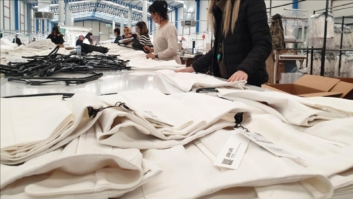 The monthly export performance of the textile and raw materials sector fluctuated throughout 2026. Sector exports, which stood at $907 million in January, rose to $1.005 billion in February, but fell to $924 million in March. Exports reached $1.031 billion in April, then dropped to $832 million in May. In June, exports increased to $953 million, and in July they reached $1.038 billion.
This increase in July represents an 8.9% monthly rise, demonstrating that the sector maintained its export capacity despite the fluctuations experienced throughout the year.
Technical Textiles Increase Their Impact on Exports
When product groups are examined, technical textiles continue to strengthen their position as one of the high value-added export areas of the Turkish textile sector. In July 2026, technical textile exports reached $215 million, showing a 7.9% increase compared to the same month of the previous year. In the January-July period, technical textile exports increased by 1.8% to $1.39 billion. This performance shows that technical textiles are not only an alternative to traditional textile products, but have also become a strategic production area that supports the export value and competitiveness of the sector. Technical textiles, which have a wide range of uses from automotive to medical, from construction to agriculture, from filtration to hygiene products, are also important in terms of strengthening Türkiye’s position in global markets.
Increase in Yarn and Woven Fabric Exports
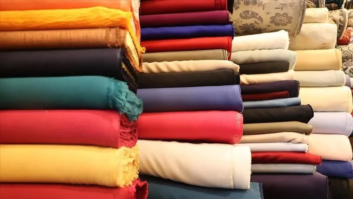 In the January-July period, an increase was recorded in the export of woven fabrics and yarn, as well as technical textiles. Woven fabric exports increased by 2.8% to $1.373 billion, while yarn exports rose by 2.2% to $1.319 billion. Yarn and woven fabrics, in particular, are among the key indicators of Türkiye’s strong production infrastructure in the textile value chain. The increase in exports in these product groups indicates that Turkish producers maintain their advantages in supply capacity, product variety, and fast delivery despite intense price competition in global markets.
Decline in Home Textile Exports
The sector did not show the same performance across all product groups. In the January-July period, home textile exports decreased by 10.1% to $853 million, while knitted fabric exports increased by 2.3% to $721 million. Fiber exports, on the other hand, increased by 2.9% to $376 million. This picture reveals that the export performance in the textile sector differs among product groups. In particular, the increases experienced in areas requiring higher added value and technical expertise can be considered one of the important indicators of the sector’s adaptation process to changing global demand.
European Market Maintains Strong Position
European countries continue to hold significant market weight in Turkey’s textile exports. In the January-July period, textile exports to Germany reached $367 million, exports to Italy $398 million, and exports to Spain $354 million.
The USA also ranked among Türkiye’s important textile export markets. In the first seven months of the year, exports to the USA reached $491 million, while exports to Egypt amounted to $500 million. Exports to Iran were $278 million, to the UK $250 million, to Morocco $217 million, and to Portugal $175 million. Exports to China reached $169 million.
These country-based figures show that, in addition to Europe, the USA, North Africa, and the Middle East markets also play an important role in Türkiye’s textile exports. The high export values achieved in markets such as Egypt and the USA reveal that the sector maintains its presence in different geographies alongside traditional European markets.
Differentiation in Export Markets
 When the July data is evaluated on a country basis, different trends are noticeable. In July, textile exports to Egypt increased by 9.7% compared to the same month of the previous year, rising to $82 million, while exports to the USA decreased by 6.4% to $66 million.
Exports to Italy decreased by 1.6%, while exports to Germany increased by 31.5%. Exports to Iran increased by 10.4%, while exports to the UK decreased by 4.4%, exports to Spain decreased by 10.3%, and exports to Morocco decreased by 5.9%. A remarkable increase of 46% was recorded in exports to Portugal. Exports to China also increased by 7.3%.
This diversification once again highlights the need for the Turkish textile sector to diversify its export markets, and reveals the importance of companies acting flexibly according to changing demand conditions and regional opportunities.
Signals of Employment Recovery
Total employment in the textile and apparel sectors is also among the indicators closely monitored in terms of developments in the sector. According to the data in the report; employment in the textile sector was approximately 344 thousand people in 2026, while employment in the apparel sector was approximately 494 thousand people, and the total employment of the two sectors was recorded as approximately 838 thousand people.
The decline experienced after periods when the total employment of the textile and apparel sectors exceeded 1 million people shows the impact of the cost and competition pressures faced by the sector on employment, while it is seen that the recovery in production and exports is also important in terms of employment.
Critical Period for the Second Half of the Year
Data for the first seven months of 2026 show that the Turkish textile and raw materials sector is trying to achieve a balanced performance among different product groups and markets under challenging global conditions. The fact that exports exceeded 1 billion dollars in July, the increases recorded in basic product groups such as technical textiles, yarn and woven fabrics, and the increase in capacity utilization indicate that the sector maintains its strong production infrastructure.
In the coming period, high value-added production, technical textiles, product and market diversification, sustainable production technologies, and productivity-focused investments are expected to be decisive factors in the export performance of the Turkish textile sector. Maintaining the export momentum achieved in July throughout the remaining months of the year is critically important for the sector’s performance by 2026.