“Performance Brands Need to Defend Real-World Claims, Not Lab Shortcuts”
Interwiew: Tuğba KARADEMİR
Textile testing technologies are undergoing a transformation driven by sustainability regulations, rising quality expectations, and the need to more accurately measure product performance under real-life conditions. James Heal highlights the increasingly important role of automation, image-based analysis, and multi-condition testing technologies in this transformation.
 As quality and performance expectations across the textile industry continue to rise, testing and quality assurance processes are also being reshaped. Sustainability regulations, brand-level compliance requirements, and the need to demonstrate product performance under different conditions are taking laboratories beyond simply producing results that meet established standards. Against this backdrop, automation, image-based measurement, and testing under different conditions, including wet and dry environments, are gaining increasing importance.
With more than 150 years of experience in textile testing and quality assurance, James Heal is responding to these changes with next-generation testing technologies. The company is advancing moisture management testing through comprehensive imaging with WickView, automating abrasion testing with Martindale Motion, and enabling wet abrasion testing that more closely reflects real-life conditions with AquAbrasion. James Heal is also developing solutions for increasingly important areas such as fibre shedding and microfibre release. In this interview, Chief Commercial Officer at James Heal, discusses the current transformation in textile testing technologies, the capabilities offered by the company’s latest solutions, and the evolving testing and quality assurance needs of the industry beyond 2027.
How do you assess the global textile industry and, in particular, the textile testing and quality assurance market in 2026? What are the main changes you are observing in manufacturers’ and brands’ testing requirements?
The market is being reshaped by regulation more than by raw demand growth. Sustainability legislation, moisture and durability standards, and brand-level compliance requirements are driving testing volume, not fashion cycles. We’re also seeing a geographic shift: production and testing demand are moving with tariff and trade-policy changes, meaning labs need to prove compliance across more jurisdictions than before, not just meet a single national standard.
“Sustainability Testing is Becoming a Core Requirement for Laboratories”
Textile manufacturers are facing increasing demands for higher product quality, durability, sustainability and performance. How are these changing expectations influencing the development of textile testing technologies?
Sustainability testing has moved from a niche request to a core lab requirement. We are seeing the strongest growth in moisture management, wet and dynamic abrasion, and fibre-shedding measurement, all areas where brands need repeatable, image-based, or gravimetric data rather than a simple pass/fail. Buyers increasingly want instruments that generate shareable, video-backed evidence, not just a number on a certificate.
James Heal/PPT Group has recently expanded its portfolio with technologies such as WickView, Martindale Motion and AquAbrasion. What are the key features of these latest solutions?
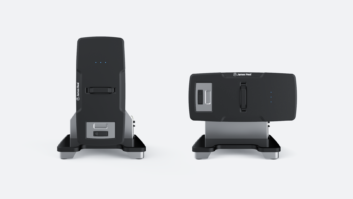 Each addresses a gap traditional methods could not close. WickView replaces basic time-and-distance wicking measurement with multi-directional imaging, even on dark or patterned fabrics. Martindale Motion automates our 80-year-old abrasion platform for unattended, overnight testing at scale. AquAbrasion, the first wet abrasion tester of its kind, answers a simple but overlooked question: if a garment is worn in the rain, why test it dry?
An Image-Based Approach to Moisture Management Testing with WickView
WickView supports both vertical and horizontal moisture management testing and is designed around the new AATCC TM217-2025 test method developed in collaboration with AATCC. How does this new approach improve the accuracy and real-world relevance of moisture management testing?
Older methods measured wicking with basic distance and time. TM217-2025, developed by AATCC in consultatoin with James Heal/PPT Group, uses dual-camera imaging to track moisture in all directions, on both fabric faces, capturing shape, speed, and true wetted area. That gives brands a far more realistic read on how a garment performs against sweat or rain in actual wear, not just in a simplified lab proxy.
Durability and abrasion resistance are becoming increasingly important for performance wear, outdoor apparel, technical textiles and other demanding applications. How is the Martindale range evolving to meet these new requirements?
Martindale Motion builds directly on our original 1609 platform, but automates it: nine independently lifting test heads, preset patterns, and unattended overnight operation, compared with the manual, one-station-at-a-time operation conventional testers still require. Paired with AquAbrasion for wet conditions, the range now covers both dry and wet abrasion, which technical and outdoor apparel increasingly require side by side.
How is James Heal addressing the growing need for fibre-shedding and microfiber-release testing?
Our GyroWash, originally a colour-fastness instrument, is now the equipment of choice behind several major standards in this space, the Microfibre Consortium’s test method, ISO 4484-1, and AATCC TM212. We’ve also partnered directly with brands, including Under Armour, to bring their own fibre-shed methods to market. Standardisation matters here because brands need results that are comparable across suppliers and regions, not just internally consistent.
Imaging and Multi-Condition Testing Will Shape the Future of Testing Technologies
Which testing technologies and applications do you believe will become particularly important in the coming years?
Imaging-based and multi-condition testing, wet and dry, hot and cold, will keep displacing simple pass/fail methods, because performance brands need to defend real-world claims, not lab shortcuts. We are building our development roadmap around that: solutions that combine automation with richer, shareable data, so a single test generates evidence a brand can stand behind publicly.
Finally, how do you see the future of textile testing technologies in 2027 and beyond? And how do you assess the testing and quality-control needs of textile manufacturers in Türkiye?
We expect continued investment in automated, image-based instruments across our range, and in sustainability-linked testing as regulation tightens further. Türkiye remains a critical manufacturing hub for global apparel brands, and the same pressures we see globally, moisture, durability, and fibre-shedding compliance tied to brand-level sustainability commitments, apply directly to Turkish manufacturers supplying international markets.