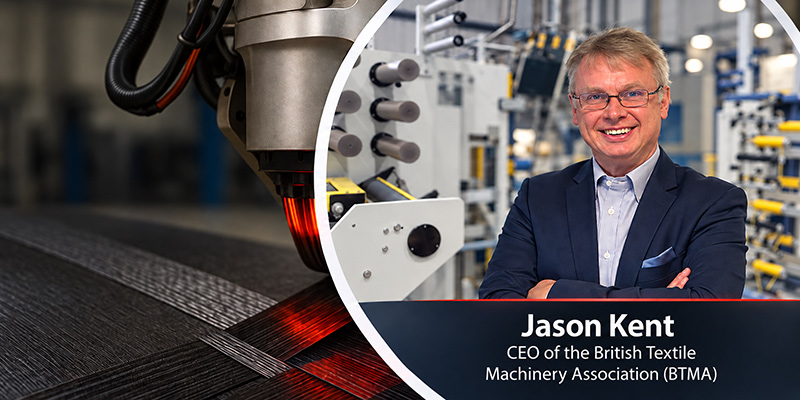
“Türkiye is a Natural Market for British Textile Technologies”
BTMA CEO Jason Kent said that Türkiye’s strong and highly integrated textile infrastructure offers significant opportunities for British textile machinery and technology manufacturers, adding that investments in productivity, automation, quality, process control and more efficient use of resources will further strengthen cooperation between the two countries.
Jason Kent, CEO of the British Textile Machinery Association (BTMA), assessed the transformation taking place in the global textile machinery industry and the solutions developed by British manufacturers through next-generation technologies. Highlighting that Türkiye has long been an important market for British textile machinery and technology suppliers, Kent noted that the country’s strong and integrated production structure, covering almost every stage from fibre, yarn and fabric to dyeing and finishing, apparel, home textiles and technical textiles, creates significant opportunities. He also pointed out that Turkish manufacturers’ strategic proximity to Europe’s major consumer markets represents an important competitive advantage, emphasising that continued investment in technologies aimed at improving productivity, automation and quality, while reducing energy, water and raw material consumption, will be critical to maintaining this advantage.
“BTMA Members Have Been Very Active Over the First Half of the Year”
In a period marked by global uncertainties and fluctuating demand, how would you assess the first half of 2026 for the British textile machinery sector?
Our members have been very active over the first half of the year, introducing and promoting new technologies at important events including JEC World in Paris, Techtextil in Frankfurt and, of course, ITM in Türkiye. The British textile machinery sector today is characterised by highly specialised SMEs, many of them world leaders in quite specific areas of technology. As a result, their markets are often driven less by overall textile machinery investment cycles and more by customers seeking solutions to particular challenges in productivity, quality, automation and resource efficiency. We are seeing continued investment in increasingly automated systems for the production of technical fibres and fabrics, the introduction of AI and machine learning into process control systems and continuous advances in materials testing. Technical textiles and composites are also providing significant opportunities for our members in high-value applications.
British textile machinery manufacturers enjoy a strong global reputation for advanced technology and high quality. What are the key factors driving this competitiveness today?
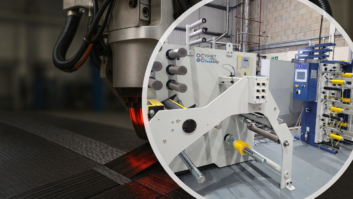
Cygnet Texkimp has meanwhile developed new technology to greatly assist sophisticated processes such as automated fibre placement (AFP) and automated tape laying (ATL) employed in the aerospace industry.
A number of BTMA members enjoy leading positions in testing, instrumentation and machine control and continue to develop new technologies, either in-house or increasingly through joint projects. Some of the most recent developments are really going beyond what has previously been possible.
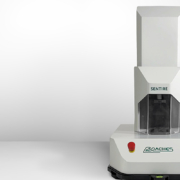
They include the Sentire fabric handle tester which has just been launched by Roaches International, VeriVide’s expanding UltraView range of visual LED colour assessment instruments and Shelton Vision’s AI-boosted WebSpector automated fabric inspection system, which can now recognise and adapt to complex patterns such as camouflage.
A key strength of the majority of BTMA companies is the many decades of know-how they have acquired in industrial settings. Martindale testing, for example, needs little introduction to textile manufacturers, having been established as an industry standard for abrasion and pilling testing since its initial introduction in the 1940s.
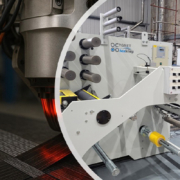
James Heal’s development team has now taken a fresh look at this classic instrument and the result is the new Martindale Motion, a redesigned nine-station instrument with the flexibility to run each station independently for carrying out different textile tests simultaneously.
Global export markets are currently undergoing a significant transformation. Beyond traditional markets, which new regions are becoming strategically important for British textile machinery manufacturers?
In regional terms, a significant recent development from the UK’s perspective is the UK-India Textile Machinery Coalition we launched in May. The UK-India Free Trade Agreement, signed in July 2025, has implications that extend across sourcing, competitiveness and long-term trade dynamics. At its core, the deal removes or reduces tariffs on the vast majority of clothing and home textiles, with duties of around 8-12% on Indian exports to the UK effectively eliminated. This gives Indian manufacturers significantly improved price competitiveness in one of the world’s most valuable consumer markets.
For machinery and technology suppliers, the important consequence is the investment that will be required as Indian textile manufacturers seek to increase productivity, quality and capacity while meeting increasingly demanding international specifications.
The UK-India Textile Machinery Coalition has been established to build stronger links between the two industries and identify areas where British specialist technologies can support this development. India already has an enormous textile manufacturing base and we see considerable scope for deeper cooperation as it continues to modernise and move into higher-value production.
“We Are Very Hopeful About the UK-Türkiye Free Trade Agreement”
How do you assess today’s Türkiye-British cooperation in this field? In which areas do you see new opportunities for further collaboration in the coming period?

James Heal’s development team has now taken a fresh look at this classic instrument and the result is the new Martindale Motion.
The UK-Türkiye Free Trade Agreement has, of course, maintained preferential trading arrangements between the two countries since the UK’s departure from the European Union. When the agreement was signed, the UK government specifically highlighted more than £1 billion of British machinery exports to Türkiye as among the trade benefiting from the preferential arrangements, while Türkiye is simultaneously a major supplier of textiles and apparel to the UK.
The two governments are now negotiating an enhanced Free Trade Agreement intended to broaden and deepen the relationship further, with talks covering areas including goods market access, investment, digital trade, procurement and sustainability. We’re very hopeful about where this will lead.
Türkiye has long been an important market for British textile machinery and technology suppliers, but the relationship has evolved significantly as the respective industries have changed.
BTMA companies are particularly strong in areas including process control and automation, testing and quality assurance, colour management, drying and moisture control, coating and finishing, specialist fibre processing and, increasingly, technologies aimed at reducing energy, water and raw material consumption.
Türkiye provides a natural market for many of these technologies. Its large and highly integrated textile and apparel industry encompasses virtually every stage of production, from fibres, yarns and fabrics through dyeing and finishing to garments, home textiles and a growing range of technical textile applications.
At the same time, Turkish manufacturers occupy a strategically important position close to the major European consumer markets. Their ability to offer shorter lead times and highly integrated production has become an important competitive advantage, and maintaining it requires continuing investment in productivity, automation, quality and more resource-efficient manufacturing.
Geopolitical uncertainties, rising energy costs and ongoing supply chain challenges continue to put pressure on the textile machinery industry. How are BTMA member companies responding to these changing market conditions?
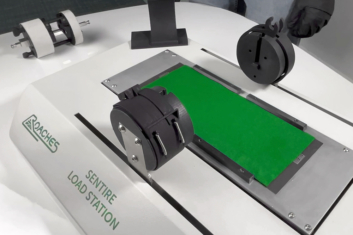
The Roaches International Sentire fabric handle tester.
Our members have learned to be particularly nimble in reacting to ever-changing market conditions over many decades. As has been remarked, “uncertainty is the new certainty”, but looking back over the decades this has pretty much always been the case.
The highly specialised nature of many BTMA companies is an advantage in this respect. They are generally not competing in high-volume commodity machinery markets but supplying technologies that address very specific manufacturing requirements, often working closely with customers to develop the right solution.
Their markets are also extremely international and increasingly diverse. Technical textiles, composites, medical applications and other advanced materials are creating opportunities alongside conventional textile manufacturing, while upgrading and improving existing production equipment is becoming increasingly important.
This ability to work across different applications and markets, while maintaining close relationships with customers, allows relatively small specialist companies to adapt quickly as investment priorities change.
What trends do you observe in recent R&D investments? Which projects stand out in the fields of clean production technologies and the use of recyclable materials?
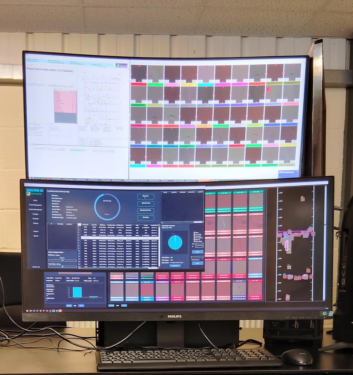
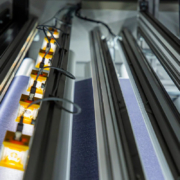
Shelton Vision’s AI-boosted WebSpector automated fabric inspection system.
One key area of activity for a number of BTMA members is composites. High-value industries such as aerospace, defence, renewable energy, automotive and the medical sector are areas of considerable opportunity, and all are recognising the value of high-strength composites where lightweighting, performance and material efficiency are critical.
An important factor underpinning the success of our companies here is the strong collaboration between industry and the many universities and institutes in the UK. Machine builders can also be important in driving material developments as well as technologies.
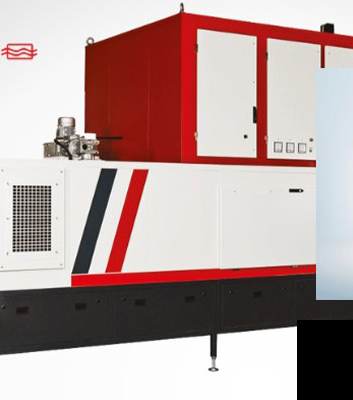
High-speed fibre placement and advanced autoclave technologies underline the depth and diversity of engineering excellence across our membership. What is particularly encouraging is the way these developments can deliver measurable benefits in efficiency, material utilisation and performance, while being rooted in long-term investment, collaboration and skills within the UK.
Digitalisation, automation, artificial intelligence, IoT and data analytics are increasingly transforming textile machinery. How rapidly are these technologies being adopted by BTMA member companies?
Yes – it’s already happening. I have mentioned Shelton Vision’s AI-boosted WebSpector already, but it’s really a landmark in highlighting the role AI is now playing.
The ability to detect and classify even the tiniest faults in both plain and fully patterned fabrics moving at industrial speeds is a significant breakthrough. Shelton Vision’s latest technology incorporates machine learning to provide a defect detection level of above 98%, and Deep Learning AI to provide up to 100% defect classification and grading accuracy.
The important point is that AI and digitalisation are being specifically applied where they can solve very practical manufacturing problems – improving consistency, reducing waste, increasing productivity and allowing much more information to be extracted from production processes.
I think we will increasingly see these capabilities embedded within textile machinery and process control rather than regarded as separate digital technologies.
Sustainability has become a key factor in textile machinery investments, particularly as manufacturers face increasing pressure to reduce energy, water and raw material consumption. How are BTMA member companies responding to these demands?
Sustainability is increasingly inseparable from productivity and operating cost. Technologies which reduce energy, water, chemicals or raw material consumption can provide manufacturers with both environmental and very direct economic benefits.
This is particularly relevant in areas such as drying, moisture control, coating and finishing, where accurate process control can prevent unnecessary consumption of energy and materials. Advanced testing and inspection systems also have an important role because identifying problems earlier in production can prevent significant quantities of fabric, energy and processing time being wasted.
Another important consideration is the ability to upgrade and improve existing machinery. Extending the productive life of capital equipment through new controls, instrumentation and process technologies can often provide substantial efficiency improvements without requiring complete replacement of a production line.
For British specialist suppliers, the opportunity is increasingly about helping manufacturers extract more value from every unit of energy, water and raw material they use.
Technical textiles, nonwovens, recycled fibres and alternative raw materials are creating new opportunities for machinery manufacturers. Which of these emerging markets do you believe offer the greatest growth potential for UK textile machinery companies?
We are very active in these fields, from the careful handling of ultra-high-value yarns to the forensic inspection of finished fabrics.
The manufacture of medical sutures, for example, is a very specialised process and, because these items are implanted directly into the human body, every stage of production is tightly controlled to ensure safety, sterility and reliable performance. The UK’s Fibre Extrusion Technology is a world leader in both the fibre selection and production technologies behind this industry.
Cygnet Texkimp has meanwhile developed new technology to greatly assist sophisticated processes such as automated fibre placement (AFP) and automated tape laying (ATL) employed in the aerospace industry. These technologies can significantly reduce material waste, improve repeatability and deliver structural performance beyond what traditional hand lay-up methods can achieve.
These are good illustrations of where British companies are increasingly positioned. They are often operating at the point where textiles, advanced materials, precision engineering and automation come together, and where the value of the material or end product makes accuracy, control and reliability particularly important.
“We Launched the Future Leaders Committee”
What are your expectations for the global textile machinery sector in 2026 and beyond? What strategic priorities and goals will guide BTMA and British textile machinery manufacturers in the coming years?
The strength of the British textile machinery sector increasingly lies in specialist, high-value technologies backed by deep engineering knowledge. Our priority is to ensure that companies can continue developing that expertise, accessing international markets and responding to new opportunities in areas ranging from conventional textile production to technical textiles, composites and advanced materials.
But we also need to ensure we are doing enough to support the future of the industry, not just commercially, but in terms of people, skills and leadership.
With this in mind, we have this year launched the Future Leaders Committee, aimed at high-potential, mid-career professionals within our member companies.
The programme has been structured to develop leadership, governance and strategic capability through formal training and enable its members to gain exposure to industry-wide challenges and opportunities, while also acting as an advisory committee providing fresh perspectives and future-focused insight to the organisation.
The programme has been curated directly from the expertise of our members and the first course was a big success.
In further support to companies, the BTMA Industry Placement Bursary Scheme is designed to help member companies take on student placements, graduates and apprentices, while strengthening the future skills pipeline of the textile machinery and services sector.
Our new Curious about Textiles short course has meanwhile been developed to support new entrants to BTMA member companies, as well as providing a refresher for others working in this vibrant sector.
Ultimately, maintaining the UK’s position in specialist textile technology depends on combining the engineering knowledge accumulated over many decades with new people, new technologies and new markets. That is where we see the future of the British textile machinery industry.