A Rising Voice from Malatya: Textile Is Not Ending, It Is Transforming
The 4th stop of the workshop series titled “Search for a New Positioning in the Textile and Apparel Sector,” organized in cooperation with the Fashion and Apparel Federation (MHGF) and Ekonomi Newspaper, was in Malatya.
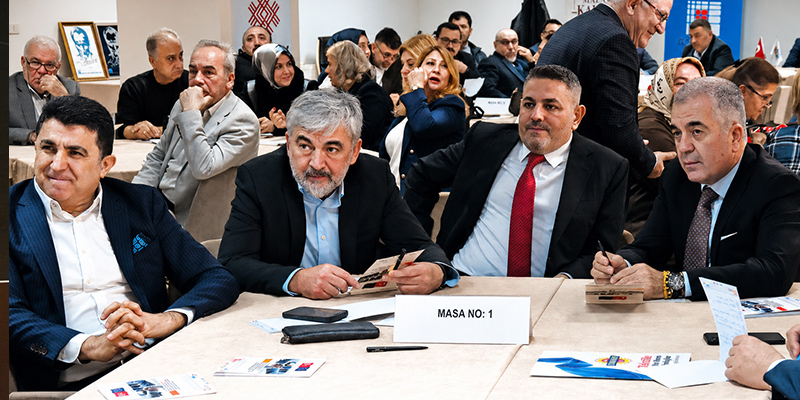
Hosted by the Malatya Textile and Apparel Association (MATEK) and the Malatya Chamber of Commerce and Industry (MTSO), the meeting brought together sector representatives, academics, and public institutions, creating an important platform for ideas. During the workshop, the current problems of the textile and apparel sector were comprehensively discussed, and evaluations were also conducted on a strategic roadmap for the future.
 While the meeting was moderated by Hakan Güldağ, Chairman of the Board of Ekonomi Newspaper, many leading figures of the sector shared their views. In the evaluations made, the critical role of the textile and apparel sector for the Turkish economy was once again emphasized. MHGF President Hüseyin Öztürk stated that the sector is not only an area of production; it also plays an important role in the development of industrial culture and urbanization, and especially in increasing female employment. Öztürk expressed that the textile, apparel, leather, and footwear sectors together constitute approximately 10% of the national income, and stated that the sector will continue its existence in the future by transforming, as it has in the past.
However, the challenges faced by the sector were clearly revealed during the workshop. MTSO President Oğuzhan Ata Sadıkoğlu pointed out that global competition has become increasingly intense, especially due to countries with low labor costs. Stating that labor costs are at much lower levels in countries such as Egypt and Bangladesh, Sadıkoğlu expressed that Türkiye is struggling to compete under these conditions. Specifically for Malatya, he said that migration and housing problems experienced after the earthquake seriously affected employment, reducing the number of workers from 21,000 to 15,000. He also emphasized that the decline in exports and the increase in production costs have put pressure on the sector. Despite this, it was underlined that the textile sector is too important to be abandoned due to its investment size and employment capacity.

The main purpose of the workshop was determined not only to identify problems but also to produce solutions. MATEK President Mehmet Tüm stated that the sector is going through a difficult period, but that this process also presents an important opportunity for transformation. He emphasized that it is necessary to act with common sense to increase competitiveness, shift to value-added production, and make Malatya a much stronger textile center.
One of the most striking outcomes of the meeting was the fact that the problems faced by the sector are not independent of each other. It was stated that issues such as cost, employment, logistics, incentive systems, and competition form a structure that feeds each other, and that solutions can only be achieved through a holistic approach.
Cost pressure was one of the most prominent topics in the workshop. Participants stated that costs are not limited to labor expenses; energy prices, dependence on imported raw materials, difficulties in accessing finance, and high tax burdens also have significant impacts. In this context, suggestions such as reducing tax and premium burdens on employers, increasing access to low-interest financing, and supporting domestic raw material production were brought forward. Additionally, encouraging renewable energy investments and preventing informal production were highlighted as important steps that could help balance costs.
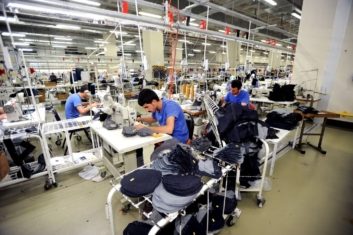 Employment was another critical issue. Participants expressed that the sector is increasingly facing a shortage of qualified labor and that young people are not turning to the textile sector. To solve this problem, it was emphasized that vocational education should be restructured, practical training models should be expanded, and students should be involved in production processes at earlier stages. It was also stated that incentives should be increased to make working in the sector more attractive and that labor policies should be reviewed.
Deficiencies in logistics infrastructure were also among the factors directly affecting competitiveness. In production centers like Malatya, high transportation costs cause companies to face disadvantages in international markets. Therefore, suggestions such as developing railway transportation, implementing high-speed train projects, and offering sector-specific discounts in public cargo services were discussed.
The lack of production areas and infrastructure was also evaluated as an important problem. Participants stated that companies wishing to grow have difficulty accessing affordable industrial areas. To solve this issue, it was emphasized that production-oriented industrial zones with ready infrastructure should be established and integrated production ecosystems covering all components of the supply chain should be created.
 Criticism of the incentive system was another important topic of the workshop. It was stated that current incentives do not fully meet the needs of the sector and should be made more flexible and accessible. In particular, incentive models focusing only on new machinery purchases were found to be restrictive for businesses.
It was also strongly emphasized that the “destructive competition” approach in the sector should be replaced by a value-added production model. It was stated that a design-oriented, technology-supported, and branding-based production approach should be adopted. Investments in technical textiles, R&D, and innovation were highlighted as critical for the future of the sector.
The necessity of a mindset transformation was also underlined during the workshop. It was stated that the state should take on a more active guiding role in the sector, local brands should be supported, and Malatya’s production identity should be strengthened.
Digitalization and sustainability were among the most important themes shaping the future of the sector. It was stated that automation investments, data-driven production processes, and environmentally friendly practices would both increase competitiveness and strengthen the reputation of the sector. This transformation was also noted as an opportunity to increase young people’s interest in the sector.
In the general evaluation, it was emphasized that the Malatya textile sector is going through not only a physical but also an economic and structural reconstruction process after the earthquake. Participants reached a consensus that, along with short-term supports, medium- and long-term reforms should be implemented simultaneously.
As a result, the workshop revealed that despite the challenges, the textile and apparel sector has not lost its future, but that this future is only possible through transformation. It was emphasized that the sector must move away from a low-cost production model and shift toward a value-added, innovative, and sustainable structure. The views expressed in Malatya provided an important perspective for the repositioning of the sector across Türkiye.