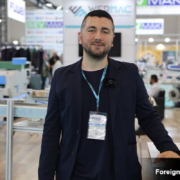
IHKIB: The Ready-to-Wear Sector May Gain New Export Momentum in 2026
Mustafa Paşahan, Vice Chairman of the Istanbul Apparel Exporters’ Association (IHKIB), stated that the ready-to-wear sector has led Türkiye’s exports for many years and pioneered numerous initiatives, adding: “We hope that our sector will gain new momentum in exports starting in 2026.”
Paşahan said that if steps are taken to restore competitiveness, the ready-to-wear sector could enter a recovery period in exports from 2026 onward.
In his remarks on sectoral developments and expectations for the coming year, Paşahan emphasized that ready-to-wear and apparel, with their value-added production, employment, and exports, are among Türkiye’s strategic sectors.
Highlighting that the sector has gone through a challenging period over the past three years, Paşahan said: “Our exports have been declining since the beginning of 2023, initially due to the contraction in global demand. Over the past two years, however, our competitiveness has weakened because Türkiye has become more expensive than its competitors as a result of the high interest–low exchange rate policy.”
Paşahan noted that production costs in the sector are 60–65% higher in dollar terms compared to Asian competitors and 15–20% higher than in many European countries, adding that prices could not be maintained and customers were therefore lost.
Stating that exports amounted to USD 15.5 billion in the first 11 months of this year, Paşahan said: “Our exports declined by 6.9% compared to the same period last year. We expect to close the year with exports of around USD 17 billion.”
“We Must Create an Environment That Will Restore Our Competitiveness”
Paşahan pointed out that the contraction in the sector has also negatively affected employment, stating: “Employment in ready-to-wear and apparel production declined to 520,973 as of September 2025. We hope that our ready-to-wear sector—which has led Türkiye’s exports for many years and achieved many firsts—will gain new momentum in exports starting in 2026. However, in order to halt the current trend, we must create an environment that will restore our competitiveness.”
He stressed that achieving this momentum requires balancing the exchange rate and inflation, reducing additional taxes imposed on textile raw material imports, providing employment support to all companies without discrimination, extending premium support to labor-intensive sectors, and reducing interest rates on rediscount credits to 15%.
Referring to expectations regarding the foreign exchange conversion support, currently at 3%, Paşahan said: “We can say that increasing the foreign exchange conversion rate to 10% in sectors like ready-to-wear that generate a current account surplus would make a very significant contribution to the sector’s recovery.”
“We will Complete 2025 with 24 Delegation Programs Attended by 614 Companies”
Despite all challenges, Paşahan noted that they continue to bring companies together with customers and seek new markets without losing morale, adding that they are running an intensive program of fair participations and trade delegations.
Stating that they participated in 21 fairs with 770 companies last year, Paşahan continued: “We plan to complete 2025 with participation from 623 companies at 19 fairs. Last year, 486 of our companies took part in our delegation programs. In total, our companies held 5,548 business meetings with 4,093 companies. We will complete 2025 with 24 delegation programs attended by a total of 614 companies. On the other hand, we continue our efforts on the twin transformation without slowing down. As IHKIB, we see the twin transformation as a strategic goal. For this transformation, we effectively utilize the EU’s Instrument for Pre-Accession Assistance (IPA) funds. With EU funds, we both establish permanent institutions for the sector and enhance the capabilities of our existing subsidiaries.”
Recalling that they focused on design under IPA-I and established the Istanbul Fashion Academy (IMA), Paşahan explained that with the IPA-II project called Metamorphosis, they put the Digital Transformation Center at the service of the sector and turned IHKIB’s subsidiary Ekoteks into one of the world’s leading laboratories.
“We will Increase the Competitiveness of Our Companies with a 36-Month Project”
Paşahan stated that with the IPA-III project launched in November and led by IHKIB, they are focusing on green transformation, noting: “The project, financed within the framework of EU–Republic of Türkiye financial cooperation and supported under the Competitive Sectors Program implemented by the Ministry of Industry and Technology, has the Istanbul Textile and Apparel Exporters’ Associations (ITKIB) as the final beneficiary, while IHKIB undertakes the role of project coordinator.”
He added that the IPA-III project, with a total budget of EUR 7 million, brings together the textile, chemical, and logistics sectors, which are the most critical links in the ready-to-wear value chain.
Providing further details, Paşahan said: “We will carry out the IPA-III project together with TIM and IHKIB, as well as ITHIB, the Istanbul Chemicals and Chemical Products Exporters’ Association (IKMIB), and the International Transporters’ Association (UND). During this process, we will strengthen companies’ capacities to measure and reduce their carbon and water footprints. With this project—the most comprehensive study of its kind in our country and lasting 36 months—we will increase the competitiveness of our companies. In this way, we will put into practice some of the transformation priorities outlined in the Ready-to-Wear Sector Sustainability Strategy Action Plan.”