
“Despite A Challenging Year, Textile Machinery Exports will Exceed $1 Billion In 2025, with A 10% Increase”
Interview: Dilek HAYIRLI
Despite rising costs, a shrinking domestic market, and global uncertainties, the Turkish textile machinery sector demonstrated strong performance in 2025, maintaining its export-oriented stance. Exports, which reached $969 million in the January-November period, are expected to exceed $1 billion by the end of the year. TEMSAD President Adil Nalbant said, “Despite all these changing conditions, our manufacturers have made R&D investments and continued to maintain their presence in export markets.”
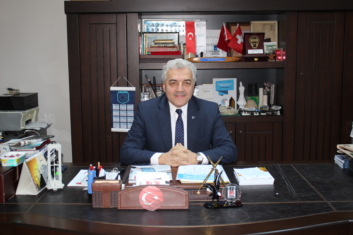
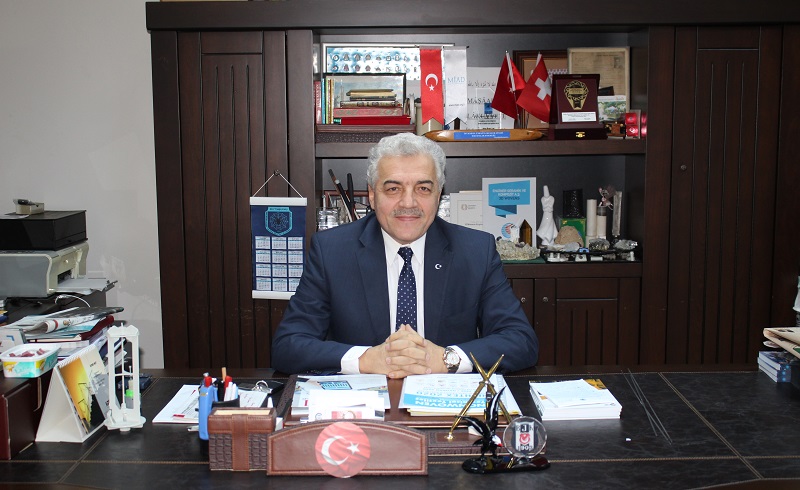
TEMSAD President Adil Nalbant
Despite rising costs, a shrinking domestic market, and global uncertainties, the Turkish textile machinery sector managed to maintain its export strength in 2025. Continuing its expansion into emerging markets, the sector achieved exports of $969 million in the January-November period, representing a 9.3% increase compared to the previous year, and demonstrated its potential to close the year with exports exceeding $1 billion. In an interview for our special issue on the Turkish Textile Machinery Industry, Adil Nalbant, President of the Textile Machinery and Accessories Manufacturers Association (TEMSAD), comprehensively assessed the industry’s performance in 2025, global competitive conditions, and future vision.
“Our Manufacturers Continued to Invest in R&D”
How was the year 2025 for Turkish textile machinery manufacturers? Could you particularly evaluate it in terms of machinery production, sales figures, and export performance?
The Turkish textile machinery sector, like many other industries, faced significant challenges in 2025. Rising production costs adversely affected our global competitiveness. In particular, the contraction experienced in the textile and ready-to-wear sectors in Turkiye had a negative impact on domestic sales within our industry.
Despite these challenges, our sector has continued to preserve its strength in export markets while expanding into emerging textile regions. In the January–November period of 2025, textile machinery exports reached USD 969 million, representing a 9.3% increase compared to the same period in 2024. This growth was driven not only by the export of newly manufactured machinery, but also by the ongoing relocation of textile and apparel manufacturers to Egypt, as well as the export of second-hand machinery from textile and apparel factories that have shut down in Turkiye to other textile-producing markets.
 Textile machinery imports, on the other hand, declined by approximately 20% in 2025 compared to the January–November period of 2024, amounting to around USD 1.1 billion. Based on these figures, it can be projected that total exports for 2025 may exceed USD 1 billion with an approximate 10% increase, while imports are expected to decrease by nearly 20%, settling at around USD 1.2 billion.
Increases in energy, raw material, and labor costs could not be fully reflected in machinery sales prices, making it increasingly challenging for manufacturers to maintain competitiveness. For many years, the sector was broadly characterized as “more affordable than Europe and higher quality than China.” However, today, production costs have unfortunately reached levels comparable to those in Europe. Meanwhile, China has maintained its price advantage while also making significant strides in quality and standards, emerging as a formidable competitor beyond traditional expectations.
Despite these changing conditions, Turkish textile machinery manufacturers continued to invest in R&D, maintain their presence in export markets, and pursue emerging opportunities in developing textile regions with determination and resilience.
“Turkiye Position as the World’s 5th Largest Textile Exporter”
How have global economic fluctuations affecting the whole world and Turkiye, as well as challenges such as rising raw material and energy prices, impacted Turkish textile machinery manufacturers? How have companies adapted to these situations?
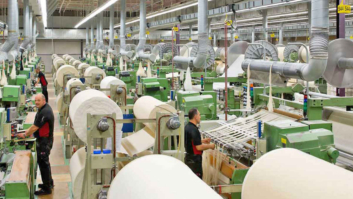 We are leaving behind the year 2025 under the influence of numerous global and domestic factors, including stagnating global demand, war-driven economies, the search for a new global order and balance by countries regarded as major powers, the rapid rise of China and other Asian countries across all sectors and their potential impact on global dynamics. Domestically, policies aimed at restoring balance among exchange rates, interest rates, and inflation have had adverse effects on manufacturers, such as the suppression of exchange rates and persistently high interest rates, alongside a sharp contraction in domestic demand and volatile external demand.
These factors have challenged not only Turkish textile machinery manufacturers but also European producers, with similar difficulties observed across all countries experiencing financial strain.
As is well known, Turkiye is among the world’s leading textile and ready-to-wear manufacturing and exporting countries. According to 2024 data, out of the global textile export volume of USD 350 billion, Turkiye accounted for USD 11.6 billion with a 3.3% share, ranking as the world’s fifth-largest textile exporter. In the ready-to-wear and apparel segment, Turkiye ranked sixth globally, with exports of USD 19.7 billion and a 3.2% share within a global export volume of USD 620 billion. However, based on the latest available data this year, a significant decline in capacity and employment is evident, along with a drop in Turkiye’s global market share to below 3% for the first time in many years. Moreover, the combined share of the textile and ready-to-wear sectors in Turkiye’s total exports has fallen below 10%.
During this period, rising production costs and prevailing exchange rate policies have led some textile and apparel manufacturers to relocate their operations—primarily to Egypt, as well as to countries such as Morocco, Tunisia, and Uzbekistan—or to cease operations altogether. These relocations and closures have mainly affected product groups commonly defined as “basic textiles.” In contrast, the increase in technical textile production and exports in Turkiye indicates that the sector is undergoing a structural transformation.
“We Believe This Difficult Period will Not Be Permanent”
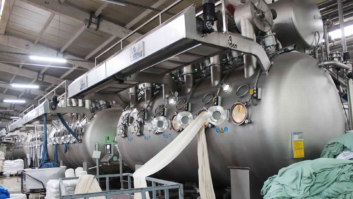 This situation clearly shows that both the textile sector and the textile machinery sector are going through a very difficult period. However, we believe that this process will not be permanent; that our sectors will adapt to the new conditions and maintain their strong structure, taking into account the changing characteristics and new needs. Because our country has a very deep and long-standing textile history. The experience gained in textiles has evolved into machine production, and the accumulated knowledge gained in domestic machine production processes is an extremely important asset for us. Instead of disregarding these achievements, we need to create the appropriate ground and conditions to add new qualities and value-added production.
“Our Top Machinery Export Countries in 2025: Egypt, Pakistan, India”
Could you please share which countries Turkish textile machinery is most exported to and which types of machinery are in highest demand? What strategic changes do recent market contractions or growth opportunities require for Turkish manufacturers?
In 2025, compared to 2024, the countries where we achieved the highest increase in textile machinery exports were Egypt, Pakistan, and India. In these three markets, machinery sales were higher than in the previous year. In addition, markets such as Uzbekistan, Bangladesh, Russia, and Iran continued to maintain their importance. The North African region—particularly Morocco, Tunisia, and Algeria—as well as Portugal and Russia, stand out among the target regions that hold strong potential for our sector and where we aim to further expand our exports.
We can state that our exports to these markets mainly consisted of dyeing and finishing machines, denim machinery, printing machines, as well as quality control and fabric spreading and cutting machines. Moreover, textile machinery spare parts continued to be one of the key export items to these countries. Growth opportunities remain present in certain markets. In order to strengthen our competitiveness in these regions, the prominence and market acceptance of our new technologies that deliver energy savings and enhance production efficiency are among the critical factors for increasing sector exports.
How far ahead are Turkish companies in terms of sustainability and environmentally friendly production? What steps need to be taken in this area?
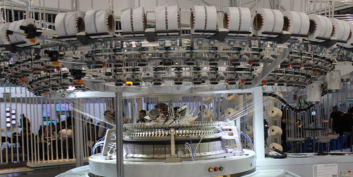 As is well known, dynamics in the textile industry are largely shaped by the preferences and strategic directions of global buyers. Within this framework, green transformation and sustainability will continue to remain among the key agenda items of our textile sector. We are firmly committed to promoting and increasing the adoption of technologies that contribute to sustainability and enable clean production throughout the textile industry’s manufacturing processes.
In this context, last year we held a joint consultation meeting with the executives of textile sector associations under the umbrella of the Turkish Exporters Assembly (TIM). During the meeting, we shared the contributions of our sector to sustainability and presented the innovative solutions and technologies developed by 25 of our member companies in this field through dedicated presentations to the relevant authorities.
In addition, we held meetings with group executives regarding the integration of our textile machinery technologies into the system established by INDITEX for its global suppliers. We continue to support the integration of Turkish textile machinery manufacturers into the platform managed by IVY DECARB, which oversees this process.
Our member companies have achieved significant progress in the areas of energy and water savings, as well as production efficiency. Offering substantial advantages compared to their global competitors, these companies are well positioned to continue creating value both within Turkiye’s textile industry and across their target export markets.
What global trends and technological transformations do you think will most affect the textile machinery sector in the coming years? How might these trends create change in the sector, from production processes to export strategies?
In the coming period, we can say that technologies that contribute to sustainability and focus on efficiency will continue to determine the trends in the sector. In addition, automation systems and any innovation that can reduce the need for labor are attracting even more attention, especially in this period when the textile and ready-made clothing sectors are under cost pressure.
Furthermore, artificial intelligence-supported quality control systems stand out among the technologies that will make a significant difference in the sector thanks to their ability to reduce error rates in production, increase efficiency, and prevent waste.
“Textile Investments are on the Rise in Morocco, Portugal, Russia, and the US”
What are Turkiye’s target markets for textile machinery exports in the coming period? What areas should our manufacturers focus on to increase our competitive advantage?
While Bangladesh, India, Pakistan, Uzbekistan, Iran, and Egypt continue to maintain their importance among our target markets, we can observe a growing trend in textile investments in countries such as Morocco, Portugal, Russia, and the United States. These regions present new opportunities for textile machinery manufacturers.
Enhancing our competitive advantage primarily requires production costs to become more controlled and manageable. In order for the products and newly developed technologies of our companies—who are able to preserve their production strength without compromising quality under all conditions—to be marketed effectively in target markets, it is essential to establish a manageable price perception and ensure that financing instruments are competitive when compared to those offered by other countries.
In this context, provided that a suitable foundation and a favorable economic environment are in place, we can state that our machinery—capable of competing with Europe in terms of quality and standards—will be able to achieve a much more advantageous position in global markets.
What are TEMSAD’s projects to increase the visibility of Turkish companies at national and international exhibitions and events?
As TEMSAD, we continue our activities in the field of trade fairs. As you are aware, ITM 2026—the largest international textile machinery exhibition held in Turkiye—will take place at TUYAP from June 9 to 13, 2026. Reflecting the strong potential of Turkiye and the surrounding region, this exhibition will serve as a key meeting point for new technologies and emerging industry trends.
We also continue to participate in sector-specific exhibitions in our target markets abroad together with our members. In key markets such as India, Bangladesh, Pakistan, and Russia, we support member participation by offering price advantages at these exhibitions. In addition, in cooperation with the Machinery Exporters’ Association (MAIB), we purchase promotional stands and stand alongside our members at relevant fairs, carrying out promotional and visibility activities.
“2026 will Be a Year of Balance, We will Continue the Struggle”
What are your predictions and expectations for the textile machinery sector in 2026 and the near future?
We can say that 2026 will continue with similar monetary policies to 2025. In this context, we foresee that macroeconomic conditions will be similar to 2025 due to suppressed exchange rates and balanced interest rate policies, and policies focused on reducing inflation. Therefore, we believe that 2026 will be a year of balance, a year in which we will struggle to maintain our strength in production and exports.