

Iskur Denim Achieves the Difficult
Iskur Denim proves its significance and skill to the world by producing particular denim fabrics, which are technically very difficult to manufacture. The company’s recent projects include R&D endeavors regarding anti-bacterial and anti-virus products.
Iskur Denim combines the power of its machine park and its technical knowledge in denim fabric production with the experience of its creative team and continues to provide demonstrations with two extraordinary collections at two different ends, which are pretty difficult to produce for denim companies. The company manufactures 18 million meters of denim fabric annually.
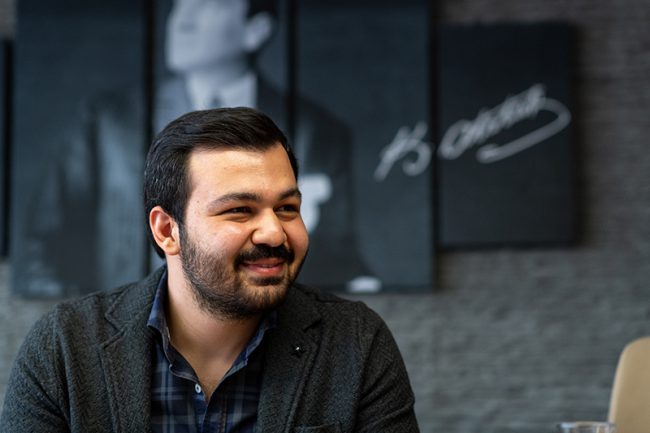
We conducted an interview with İsmail Kurtul, Chairman of the Board of Directors for Iskur Denim, for the “Denim Technologies Special File” that we are preparing specifically for this month’s issue of Textile Technology magazine. Kurtul provided us information regarding the works and projects of İskur Denim.

Can you please share with us information about the properties and contents of denim fabrics that you produce? Do you have particular production techniques to develop these fabrics?
In Iskur Denim, which is a fully integrated facility, the yarns dyed in the indigo dyeing machine, which has a capacity of 36 ropes, are woven in our weaving facilities and original looking fabrics are obtained in specially designed finishing machines. We develop and later-on implement future-oriented technologies and processes for all integrated businesses in our R&D center, which is established in cooperation with the university. In the collection of İskur Denim, we have fabrics manufactured in 100 percent cotton, stretch, super stretch, containing natural fibers, and produced with Re-Cycled yarn.
What is your manufacturing facility’s share in annual export in denim fabric production? Primarily, to which countries do you export denim fabric?
The monthly export sales of Iskur Denim, which started production in 2015, reached 30 percent of its total monthly sales in a short amount of time. Among our primary export countries are; Germany, Italy, Russia, the USA, and Tunisia (Netherlands).
When did you start your R&D activities? Do you have new projects for denim fabric production?
Foreseeing that the textile industry will only be sustainable through high technological products, İskur Group started its R&D center endeavors in 2016. In 2018, it established its R&D center with 31 researchers from different disciplines. 6 of the projects, which are carried out in cooperation with reputable universities abroad and domestically, are supported by TUBITAK (The Scientific and Technological Research Council of Turkey).
What kind of actions do you provide for environmentally friendly production, especially in dyeing and washing processes?
Sustainable investments have always been significant and essential in investment decisions for İskur Group. With this investment perspective, a project was developed with the WAW – We Are Water motto within İskur Denim. The amount of water used in indigo dyeing has been reduced by up to 95 percent. Indeed, this reduction provides integrity with all other sustainability endeavors. İskur Denim, which produces 18 million meters of denim fabric annually, saves 144 thousand tons of water in a year as a result of fabrics dyed utilizing this technology. With 144 thousand tons of water, 760 thousand square meters of cotton fields can be irrigated and 228 tons of cotton can be produced.
Due to which features does Iskur Denim differ from other denim fabric manufacturers?
Iskur Denim has determined its place in the market in a short time by maintaining a fast service in addition to producing quality products that are young, dynamic, and can combine technology with traditional products.

Can you please elaborate on Iskur Denim’s recent plans and goals?
We aim to develop innovative products that will meet the demands in the market that possess the working principles that will adapt to the new order, which we are referring to as the new normal, due to the worldwide pandemic outbreak, which has been on the agenda of our lives recently. In our R&D center, important projects are being studied which will enable our products, which are produced by all of our companies, to be developed with capabilities to adapt to the new norm. These projects will definitely include our anti-bacterial and anti-virus products.
Interview: Kübra Karaca


