“Our Goal is Not to Follow to Transformation in the Industry, to Shape It as It’s Architect”
Interview: Tuğba KARADEMİR
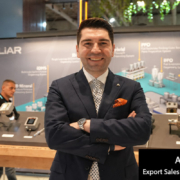
ELiAR International Sales and Marketing Leader Ata Turgutalp made important evaluations on digitalization, artificial intelligence integration, and sustainability goals in the textile sector: “Producing value-added products is the key not only for today but also for the future.”
Automation, digital transformation, and sustainability concepts are gaining more importance in the textile sector day by day. ELiAR, one of Turkiye’s leading technology companies, has achieved a strong position in the global market with its electronic control devices, mechatronic systems, and software solutions developed over more than 40 years of experience. We spoke with ELiAR International Sales and Marketing Leader Ata Turgutalp about the latest developments in textile technologies, the company’s 2025 vision, and investments that will shape the future.
Where do you position yourselves as ELiAR in light of both technological developments and global economic trends for 2025 and beyond? What is your five-year vision?
The pandemic process divided the sector into pre-pandemic and post-pandemic. Post-pandemic consumption trends changed, and the central banks’ loose monetary policies created temporary vitality. Companies made serious investments, but then a sharp decline occurred. This showed us how important it is to produce value-added products.
Founded in 1984 by university friends with the dream of creating value, our company, a start-up, still focuses on R&D and innovation with the same spirit. With our nearly 200 employees, we develop value-added, innovative products. With this vision for 2025 and beyond, we will continue to move forward confidently despite fluctuations in the world conjuncture.
“We Focus on Technology Rather Than Price in Competition”
As a Turkiye-based technology company, what strategy do you follow while competing with global players?
 This is a very important question. Today, the world has practically become a “global village.” The textile sector is also one of the largest industries in the world in terms of value-added and revenue. Therefore, we compete with many companies producing machines and investing in the same field from Asia to Europe, from America to countries you would never expect.
The area we struggle most is price competition. Because comparing products only through price does not reflect the real value in the sector. For this reason, we differentiate ourselves based on technology and the quality of the solutions we provide. We always communicate to our customers our technological advantages, innovative approach, and solutions developed specifically for their needs. Our strategy is built on making competition technology-focused rather than price-focused.
“So Far, We Have Exported to 46 Countries”
Which countries are you strong in exports? Do you have new market strategies?
We focus our activities on three main product groups: electronic control devices, mechatronic systems, and software solutions. We have been serving the industry for nearly 40 years with electronic control devices. Our mechatronic systems, especially with automatic dosing solutions, constitute approximately 80% of our trade volume. On the software side, our product called “Digital Factory” allows dyehouses to analyze end-to-end, transparently calculating the cost and carbon footprint of every meter of fabric.
So far, we have exported to 46 countries. Approximately 60% of our revenues come from exports, and 40% from the domestic market. The most important thing for succeeding in these markets is to transfer the success model we obtained in Turkiye directly abroad. The foundation of this model is providing the right service, offering solutions at the right time, and integrating directly into the customer’s production process. Because automation systems are not just a machine sale; they play a critical role like the heart and circulatory system of the factory.
Among our main markets, Turkiye and Uzbekistan stand out. In addition, India, Bangladesh, Pakistan, Egypt, and Portugal are also regions where we are strategically strong. In these countries, we established local structures consisting of experts who know automation and dyeing technologies, not just technical service. Because permanent success is not possible without localization.
Our strategy is to advance in the markets we enter not with single sales but with a long-term and sustainable presence. Thanks to this understanding, we continue to provide reliable and innovative solutions to our customers for 41 years.
“Our Investment is Still Very New, but We Are Already Doing Remarkable Work in the Region”
You made a recent investment in the Netherlands. Can you provide detailed information about this investment?
 Yes, we made a significant investment in the Brainport Industries Campus in Eindhoven, the Netherlands. ELiAR has been a company based on R&D, innovation, and academic collaboration since its foundation. Since 2015, we are a Turkiye-approved R&D center and rank among the top firms with the highest R&D expenditures in electronics. In exports, we have a structure producing products valued at 45–60 dollars per kilogram, well above Turkiye’s average.
We made this investment with two main goals. First, to develop our R&D and university collaborations on an international scale. Second, to provide a “experience center” for our customers on the sales and marketing side. In this center, we exhibit the textile technologies of the future and show our customers our vision for the sector 10 years ahead.
Brainport is an ecosystem hosting leading global technology companies. We are also in close contact with the world’s leading companies here, sharing knowledge and technology. Our investment is still very new—about a year old—but we have already started doing remarkable work in the region.
Do you have projects for integrating new technologies such as AI into your automation systems?
AI is on everyone’s agenda today; we started working in this area about 7 years ago. Initially, we used it to monitor the health of our systems, increase flow, and perform predictive maintenance. Today, these applications are active.
Recently, we use AI directly for solutions that add value to our customers. For example, with AI tools we developed, our customers can make batch-based comparisons and see how much improvement can be achieved in each dyeing process. Thus, first-time-right dyeing rates increase, and processes are optimized.
Additionally, we have AI-assisted tools for commissioning and service processes. With these tools, our customers can put systems into operation and resolve service needs more independently and quickly. This reduces dependency on our headquarters and makes processes more efficient.
Our area of expertise is painting processes, and we have a wealth of process knowledge accumulated over approximately 40 years. The data accumulated through our control devices and software allows our customers to perform historical analysis, improve processes, and look to the future more confidently with AI-assisted tools.
“We Offer Solutions That Are Both Environmentally Friendly and Cost-Effective”
How do your automation and software solutions integrated into textile dyeing processes provide concrete benefits in production efficiency, color accuracy, and resource optimization? Could you detail a few examples? What feedback do you receive from customers?
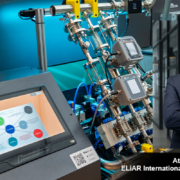
 We have many applications, but to give a few examples: our smart sensors make a significant difference. Our spectrophotometric absorbance, pH and conductivity sensors, and the software algorithms behind them allow machines to operate in “autopilot” mode. This prevents human error and makes the process more reliable.
According to feedback from our customers, even just accelerating processes provides a cost advantage of approximately 10–15%. In addition, our automatic dosing systems allow about 8-10% savings in chemical usage compared to conventional methods.
As a result, we provide solutions that are both environmentally friendly and highly cost-efficient. Thus, our customers can increase production efficiency while using their resources more sustainably.
How do you connect your integrated systems with Industry 4.0? How can companies adapt to digital transformation using these systems?
Industry 4.0 and digitalization are among today’s most current topics. However, compared to other sectors, the textile sector is still in the crawling phase. For example in sectors like automotive, digitalization is much more advanced, while textiles still maintain a labor-intensive structure.
We can evaluate the Industry 4.0 journey as a five-step process. Most textile factories are still at the first step, the automation level of machines and processes. Here, we not only ensure devices work automatically, but we also develop software solutions that monitor the progress of processes with correct dosing parameters according to recipes and oversee the entire factory.
Turkiye has made significant progress in this field. Currently, there are many textile companies reaching levels three and four, and we have been advancing with these companies for approximately 30–35 years. Not only in products but also at the consultancy level, we share knowledge to accompany their digitalization journey. The experience we gained in Turkiye also makes us strong on the world stage. In markets such as Pakistan, Bangladesh, Egypt and India, where companies are still at the beginning, we provide support by transferring the experience we acquired in Turkiye.
Take, for example, an integrated facility that produces yarn. There are facilities in Turkey that cover many stages starting from cotton to fabric. Do you apply digitalization only in the dyeing department, or do you offer a software solution that covers the entire process from the entry of the raw material into the factory to the shipment of the final product
Our expertise for many years was process control, especially in wet processes in dyehouses. However, from 2021 onward, we took a new step according to the sector’s evolving needs and customer demands. Companies we have worked with for years indicated that if anyone could do it, it is ELiAR, pointing to a solution that ensures end-to-end traceability. These suggestions encouraged us to invest in the Digital Factory concept.
The Digital Factory covers the entire process from warehouse entry of raw fabric or yarn to shipment. Material tracking via RFID, data collection from machines, and analysis systems automate production processes end to end. Therefore, we can speak of two separate areas of expertise: our deep expertise in wet processes and the Digital Factory solutions we have developed in recent years.
This new area was initially new for us, as it is globally. However, thanks to our long-standing experience in the sector, we successfully developed it. Feedback from customers currently using it clearly demonstrates the benefits, and we analyze these reports to continuously improve.
Which technological trends do you think will dominate textile automation in the coming years? How does ELiAR aim to guide the industry with new products and systems?
In the future, robotic technologies with thinking and learning capabilities, as in other sectors, will be decisive in textiles. We are intensively continuing our work in this area. For example, today, we can transfer a chemical from point A to point B via pipeline. Tomorrow, this could be done with robotic systems or more advanced automation tools. This is a simple example but important in demonstrating the speed of industrial transformation.
There are very rapid developments in control equipment and mechatronic systems. Our approach is to closely follow innovations worldwide and in other industries and adapt them to the textile sector as soon as possible. In the coming period, we foresee the widespread use of production processes managed by self-learning and decision-making systems supported by robotic solutions. ELiAR’s goal in this transformation is not only to adapt but to be a company that leads the industry.
“We Automate All Processes and Conduct Analyses Independent of Human Intervention”
Sustainability and environmentally friendly production are gaining importance. What are your activities in this field as ELiAR and what kind of feedback do you receive from your customers?
Although sustainability may seem a relative concept, its real embodiment is possible only through transparency. To achieve this, we automate all processes and conduct analyses independent of human intervention. This allows us to measure objectively how sustainable we are.
In the textile sector, water consumption and waste production are very high. Additionally, the energy consumption during global textile recycling and the burning of products increase greenhouse gas emissions and directly contribute to the climate crisis. At this point, we are at the center of sustainability. As a company, we are committed to the United Nations Sustainable Development Goals and design and implement our systems accordingly. We minimize the energy consumption of the products we produce and optimize processes. Some of the electricity in our headquarters and factory comes from solar panels.
An important point is the sustainability benefits our products provide to customers: reducing water consumption, preventing unnecessary chemical usage, and allowing all processes to be tracked transparently. Within this scope, we cooperate with many major brands and international companies, running joint projects with sustainability directors. Our investment in the Netherlands also significantly contributes to monitoring trends and collaborations with brands more effectively.
Can you talk about the engineering infrastructure forming ELiAR’s expert team? How does the innovation culture you built inside the company progress for your employees?
One of ELiAR’s most important elements is transferring the R&D culture to subsequent generations without losing the inherent Start-Up spirit. This is a task we received from our founders. We created a very free environment within the company; especially our young engineers can design and develop new projects in free environments where they can express themselves and meet their expectations.
The reason we invested here is to support this freedom and creativity. Our working environment is both professionally and socially very fun and motivating. When you visit our R&D center, you can see spaces where engineers can reveal their talents. This allows our innovation processes to progress sustainably and efficiently. ELiAR achieves this success thanks to its valuable engineering team.
What career vision does ELiAR offer for young engineers and recent graduates? What advice do you have for young engineers and entrepreneurs aiming for careers in automation and software development? How are your collaborations with universities progressing?
At ELiAR, many employees start as interns and build long-term careers at the company; some have been with us for 15–20 years. Young engineers can work in an environment where they do not feel pressured, can express themselves freely, and focus solely on their work. Even though job descriptions are clear, employees in R&D have the freedom to produce new projects. This serves as an excellent school for those wishing to improve themselves and demonstrate engineering skills.
For new graduates, we provide an environment to research and explore in their areas of interest and curiosity while stepping into the sector and professional life. Collaborations with universities continue actively in R&D projects, internships, and training programs, supporting young talent’s adaptation and development in the sector.
Which trade fairs will you participate in soon?
Fairs are indispensable for us. In the upcoming period, we will attend the ITMA ASIA fair in October, and our expectations from this fair are very high: opening to new markets and meeting with customers in our main markets excites us greatly.
Besides that, the ITM Exhibition is also on our agenda for the next year. Regionally, we will also attend fairs in Bangladesh, Pakistan, India and Egypt. However, major fairs like ITMA and ITM are our favorites. On these platforms, as always, we will present our innovations and showcase them to our valuable partners.