Southeastern Türkiye’s Textile Exports Rise by 3.3%
Textile exports from the Southeastern Anatolia Region increased by 3.3% in the first half of the year, approaching $1 billion. According to data compiled by Anadolu Agency (AA) from the Southeastern Anatolia Exporters’ Associations (GAIB), the region exported 388,439 tons of textile products to 185 countries during the January–June 2026 period.
The sector generated $991.835 million in export revenue during the six-month period. While export volume remained at the same level as the previous year, export value increased by 3.3%.
United Kingdom Becomes the Largest Export Market
Due to developments in the Middle East, textile exports to Iraq declined by 11.8%, totaling $142.333 million. Meanwhile, the United Kingdom became the region’s largest textile export market, with exports rising by 2.1% to $152.029 million.
A remarkable increase was also recorded in exports to Syria, which ranked third with a 41.9% increase, reaching $125.485 million. Among product groups, fabrics generated the highest export revenue, increasing by 3.4% to $467.378 million, followed by yarns, which rose by 4.1% to $431.205 million.
Gaziantep remained the region’s leading exporting province, accounting for $779.981 million of total textile exports.
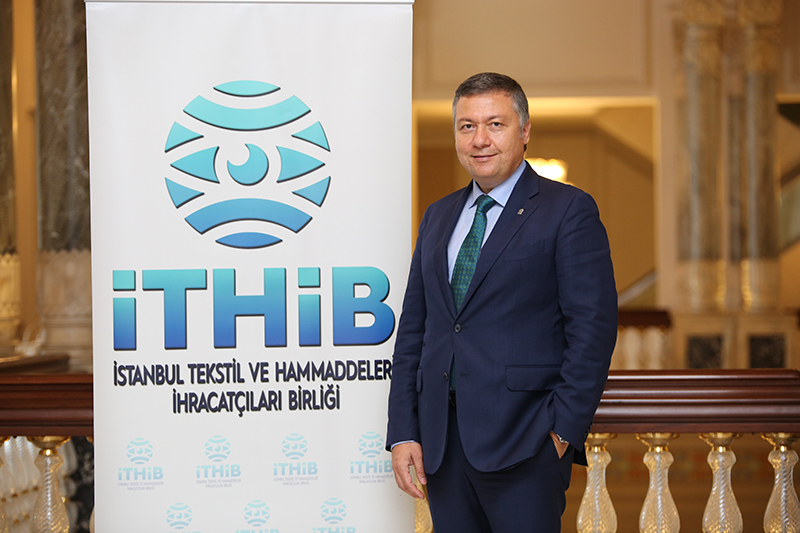
Speaking to Anadolu Agency (AA), Mete Akcan, Chairman of the Southeastern Anatolia Textile and Raw Materials Exporters’ Association, said that manufacturers continue to make significant efforts despite increasing cost pressures, fierce global competition, and ongoing pricing challenges in international markets.
Akcan noted that export performance experienced periodic fluctuations during the first six months of the year and added: “The current situation clearly demonstrates that our industry must move beyond traditional production and competition models. Rather than viewing this period as a source of pessimism, we see it as an opportunity for long-term strategic transformation and renewal. Achieving a sustainable position in global markets no longer depends solely on increasing production volume, but on strengthening our capabilities in high-value-added, sustainable, and design-oriented manufacturing.”