The Global Weaving Machine Market Will Reach $10.1 Billion by 2033
The accelerating wave of automation in textile production, rising global demand for technical textiles, and the modernization of production facilities have set the weaving machine sector on a strong growth trajectory. The global weaving machine market, valued at 7.2 billion U.S. dollars as of 2026, is expected to reach 10.1 billion U.S. dollars by 2033, recording a compound annual growth rate (CAGR) of 5.1% during the forecast period.
According to data from the International Textile Manufacturers Federation (ITMF), the transition to high-speed and energy-efficient weaving technologies is accelerating. ITMF reports that global shipments of shuttle-less looms increased by 32% in 2025. During the same period, deliveries of air-jet weaving looms rose by 10%, while water-jet loom deliveries posted a record increase of 56%. The federation’s May 2025 data showing a global textile capacity utilization rate of 72% confirms sustained investments in advanced infrastructure and smart production systems.
The Asia-Pasific Region is Maintaining Its Global Leadership
 As regional balances and technological preferences are reshaped across the global weaving machine market, the Asia-Pacific region is maintaining its global leadership, anticipated to achieve a 50% market share in 2026 thanks to its strong manufacturing capacity, rapid adoption of automation, and expanding apparel and technical textile production. In contrast, North America stands out as the fastest-growing region, driven by advanced automation investments, reshoring initiatives, and rising demand for high-performance technical textile products.
When examining technological distribution and application areas, air-jet weaving looms are projected to be the leading segment on the equipment side, accounting for 39% of total market revenue in 2026 due to their superior production speed and high efficiency. On the application side, the apparel and fashion sector maintains its position as the primary domain where machinery is most heavily utilized, with a share exceeding 48% driven by global consumption and fashion trends. Meanwhile, the shift toward eco-friendly fabric production, smart factory transformations, and technical textiles is creating critical worldwide growth opportunities for automated and sustainable next-generation weaving systems.
Primary Growth Driver: Rising Demand for Technical and Industrial Textiles
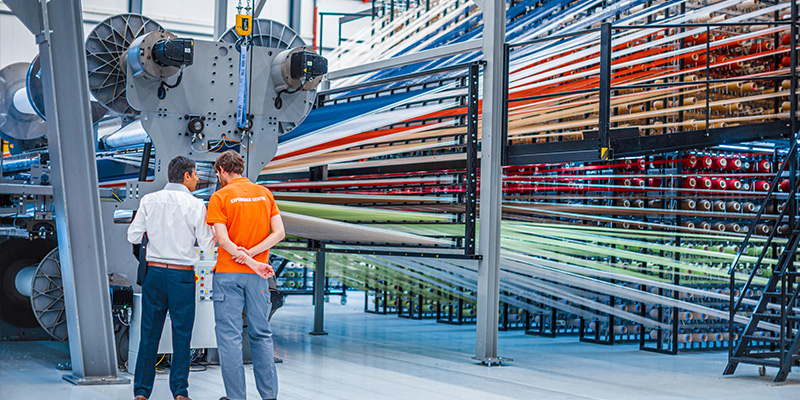
 The weaving machine market is gaining momentum from the demand for technical textiles across the automotive, healthcare, aerospace, filtration, and construction sectors. The requirement for lightweight, durable, and heat-resistant fabrics used in electric vehicles, protective workwear, and industrial filtration systems is driving up demand for air-jet and rapier looms.
According to ITMF data, approximately 97% of global weaving loom deliveries in 2025 took place in the Asia and Oceania region. The surge in the production of geotextiles, medical fabrics, and smart textiles is accelerating facilities’ transition away from traditional shuttle systems to energy-efficient shuttle-less systems.
Key Market Restraints: Skilled Labor Shortages and Technological Complexity
Next-generation weaving machinery requires advanced technical expertise in software programming, precision calibration, predictive maintenance, and computerized process control. This poses operational challenges, particularly for small and medium-sized enterprises (SMEs) in developing regions.
Infrastructure expenses brought by IoT-based control units, automated defect-detection mechanisms, and digital monitoring platforms slow down the adoption of these technologies among cost-sensitive manufacturers.
Manufacturing Transformation: Smart Factories and Digital Integration
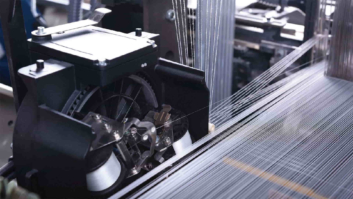 Faced with rising labor costs and workforce shortages, manufacturers are turning toward smart weaving lines equipped with IoT sensors, AI-based quality inspection systems, predictive maintenance, and real-time production analytics. Expanding smart factory investments, particularly in China and India, are creating a long-term market for energy-efficient weaving machinery fitted with robotic material handling and cloud-based monitoring infrastructure.
High Speed and Operational Efficiency in Machinery
Equipment diversity and sectoral application areas in the weaving machine market demonstrate distinct specialization in line with production requirements. Air-jet weaving looms stand out in the manufacturing of polyester, nylon, blended fabrics, and lightweight industrial textiles due to their low maintenance requirements, high speed, and superior operational efficiency, with manufacturers like Toyota Industries steering this field through energy-efficient solutions featuring automated monitoring. Water-jet weaving looms, establishing themselves as the fastest-growing segment alongside the rise in synthetic fiber and filament yarn production, deliver maximum efficiency in sportswear, lining, and various technical applications thanks to low-energy systems developed by brands such as Tsudakoma Corp.
On the application side, the apparel and fashion segment—supported by high-speed technologies from industry giants like Picanol—continues to form the core backbone of the market through design flexibility and mass-production capability. Concurrently, high-performance fabric demands from the automotive, aerospace, and healthcare sectors render technical and filtration textiles the most dynamically expanding application field. Innovative manufacturers like Staubli Group play a critical role in modernizing high-tenacity fabric manufacturing through advanced weaving preparation and automation infrastructure developed for this specialized domain.
Regional Developments and Market Trends
Regional developments and trends across the global weaving machine market are shaped by varying dynamics in accordance with local industrial strategies and sustainability policies. In the North American market, the U.S. and Canada stand out with moves to increase domestic production across the automotive, aerospace, healthcare, and defense industries, a trend that fuels investments in rapier and automated systems while consolidating the market presence of manufacturers like Itema S.p.A.; on the Canadian side, environmental regulations and sustainability-oriented modernization efforts guide investments. While stringent sustainability regulations and Industry 4.0 adoption define the European market, Germany stands out with solutions from brands like Lindauer Dornier GmbH, a robust engineering infrastructure, and smart factory transformation; the United Kingdom focuses on reducing production costs through medical and technical textile investments. In the Asia-Pacific region, which commands half of the global market, China retains market leadership through its massive manufacturing base and digitally connected smart facilities, whereas India is accelerating the transition from traditional looms to energy-efficient, shuttle-less automated systems thanks to the Production-Linked Incentive (PLI) scheme and technical textile promotion programs.
Competitive Landscape and Recent Industry Developments
In a market dominated by international manufacturers such as Picanol, Itema S.p.A., Toyota Industries, Lindauer Dornier GmbH, Tsudakoma Corp., and Staubli Group, competition is intensifying around IoT integration, energy efficiency, sustainability, and after-sales digital services.
Recent commercial and technological developments in the sector embody this transformation:
Zhejiang Wanli Textile Machinery (April 2026): Launched the WL680 Series Ultra-Start Rapier Weaving Machine, featuring intelligent automation, variable-speed weaving control, and an energy-efficient drive system for apparel, industrial, and technical textile applications.
Staubli (October 2025): Introduced the SAFIR PRO S37 automatic drawing-in machine at the ITMA Asia Singapore 2025 exhibition, bringing a high-speed automation solution to the industry for filament yarn, technical textile, and energy-efficient fabric production aimed at the Southeast Asian market.