Turkish Signature in Uzbekistan’s Luxury Fabric Drive
Mersan Makina’s singeing and sanforizing lines play an important role in Uzbekistan’s textile industry’s transition from raw material- and yarn-oriented production to higher value-added and export-oriented fabric production.
 In recent years, Uzbekistan’s textile industry has been undergoing a new transformation process, increasing its production volume while also turning towards value-added products. One of the important stages of this transformation is investments in finishing and dyeing facilities. In particular, raising fabric quality to a level that meets the expectations of export markets has become a determining factor in manufacturers’ technology investments. At this point, the presence of Turkish machinery manufacturers, and particularly Mersan Makina, in the region is also becoming increasingly stronger.
In 2025, Uzbekistan’s textile industry generated production worth 134 trillion som (approximately USD 11.2 billion), while the sector attracted USD 2.1 billion in foreign direct investment and achieved USD 2.5 billion in exports. The government’s export target for 2026 has been announced as USD 3.3 billion. There is also an important change in the nature of this growth. In the first five months of 2026, finished textile products accounted for 50.8% of exports, while manufacturers are turning towards different fibres such as linen, silk and viscose alongside cotton fibre. The 24.3% increase in finished garment production in 2025 is also among the indicators of this transformation.
As value-added production develops, fabric surface quality is also becoming increasingly important. Particularly in knitted and woven fabrics, the removal of fibres formed on the surface directly affects not only dyeing and printing quality but also the final appearance and handle of the fabric. The singeing process is one of the technologies that stands out at this stage.
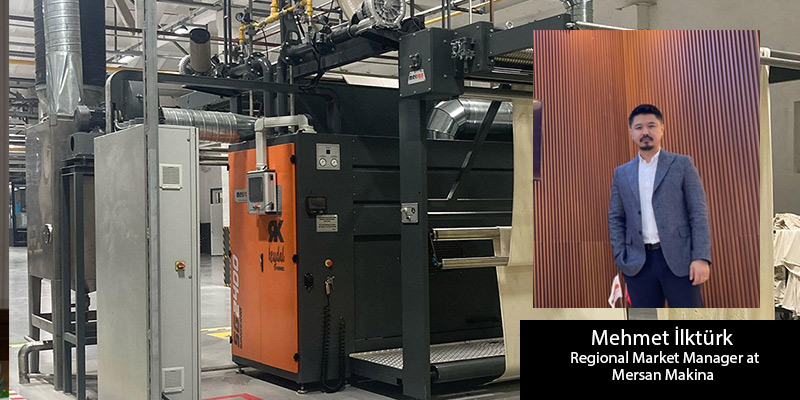
Mersan Makina continues its activities in the region not only through machinery supply, but also through after-sales service, technical support and long-term customer relationships. We discussed the company’s activities in the Uzbekistan market, investment trends in the region and the growing importance of singeing technology with Mehmet İlktürk, Regional Market Manager at Mersan Makina.
Despite global crises and geopolitical fluctuations, you have maintained your presence in the Uzbekistan market without interruption. How have you achieved this stability?
 It is clear that the war and economic fluctuations have not made things easier for manufacturers in the region — as a matter of fact, high financing costs and increasing logistics expenses for foreign markets are also openly being discussed within the sector itself. In such an environment, customers are looking for a supplier who will not simply sell the machine and disappear, but one who will ensure that the wheel of production does not stop even for a moment. Our greatest strength is our agile, solution-oriented approach, our speed in after-sales service, and our willingness to take ownership of every production crisis as if it were our own problem. For dyehouses, a “stopped line” means missed deliveries and penalties.
Which technologies are standing out in the investment trends of dyehouses in Uzbekistan?
There is a clear economic strategy behind this trend. Uzbekistan aims to move beyond the export of raw cotton and yarn and increase exports of finished, higher value-added fabrics and garments. The rising share of finished products in exports is also one of the important indicators of this transformation.
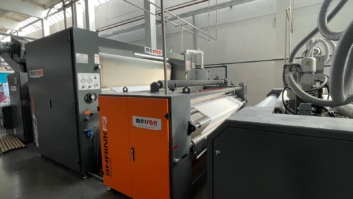
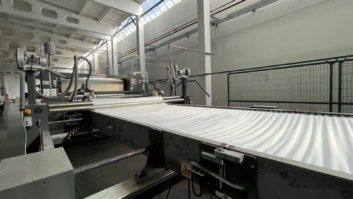
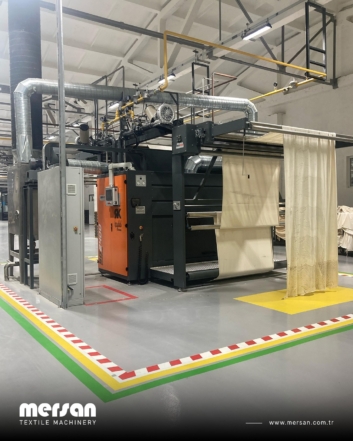
However, if you are selling to quality markets, “acceptable” fabric is not enough; you need “flawless” fabric. We respond to this demand with two families of lines. On the singeing side, our SG 2400 machines for knitted fabrics and the SGD 3500, which we developed for woven fabrics, are produced in different working widths, providing an exact fit for the fabric width of each plant. On the sanforizing side, we offer two different solutions for two different needs: our OWKF-E605, a three-felt open-width sanforizing machine with a 605-diameter cylinder, which is the largest in its class — taking production speed and dimensional stability to the highest level. Our OWB-616 Individual Rubber Sanforizing machine, on the other hand, takes care of the handle aspect of the process: through the controlled compacting effect of the rubber belt, it gives the fabric that full, soft and premium hand feel. In other words, a dyehouse can obtain both shrinkage control and the “feel” sought by quality buyers from us under one roof.
Singeing and biopolishing (enzyme) processes are frequently compared. What is the importance of singeing for the Uzbekistan market?
 This issue has become increasingly important in recent years, both technically and economically. Biopolishing aims to reduce hairiness on the fabric surface through biological and chemical methods. However, factors such as process time, chemical use, water and energy consumption, as well as its effects on fabric strength, are among the points that need to be taken into consideration.
In addition, the same result cannot always be achieved with every fibre group. In regenerated cellulosic fibres such as viscose, modal and Tencel, as well as in linen and fabrics containing filament blends, the enzyme process alone may not provide the desired surface quality.
This point is also important with regard to the new fibre groups towards which Uzbekistan is turning. As the use of different fibres increases during the country’s transition towards value-added production, the importance of surface finishing technologies is also increasing. Singeing technology can respond to this need, particularly in terms of removing unwanted fibres from the surface and achieving a cleaner fabric surface.
Is this success limited only to knitted fabrics, or are you seeing similar demand on the woven side as well?
It is definitely not limited to knitted fabrics. Our SGD 3500 singeing line also operates with high efficiency in woven fabric applications and is among the solutions preferred by manufacturers in the region. Today, we have Mersan lines actively operating in both knitted and woven fabric dyehouses. Our new projects and orders are also continuing. Being able to offer solutions for both segments provides us with an important advantage in responding to the needs of our customers across different production groups.
Is the investment momentum in the region continuing with new projects? Could you tell us about your projects for the coming period?
We continue our activities in the Uzbekistan market. Mersan technologies are actively used in leading facilities in the region. Today, we have more than 40 customers and more than 80 machines. Companies such as Elegant Garment, Lux Yan Textile LLC, SAFF Textile, Zelal Textile and Bunyodkor LLC are also among our references in the region.
In addition, our SGD-3500 woven fabric singeing machine will soon be commissioned at one of the leading dyehouses in the sector.
Uzbekistan’s goal of increasing the share of finished products in its exports in the coming period is also raising manufacturers’ quality expectations. In this process, surface quality, dimensional stability and the final properties of the fabric are becoming increasingly important. As Mersan Makina, we are pleased to be part of this transformation with our technologies and experience in the region.
We are proud to represent the engineering and manufacturing strength of the Turkish machinery industry in Uzbekistan’s textile sector and contribute to the quality-oriented transformation of manufacturers in the region.