“Türkiye Is No Longer a Low-Cost Manufacturing Country; We Will Win the Game Through Value, Not Price”
Mustafa Paşahan, Chairman of the Istanbul Apparel Exporters’ Association (İHKİB), stated that the sector will reshape its competitive strategy in the medium and long term by focusing on value-added production. Paşahan also said, “In the new era, we will stand out with our identity as a key inventory-producing country.”
İHKİB announced its new roadmap for strengthening the competitiveness of the apparel industry during a press conference held with members of its board of directors.
Emphasizing that Türkiye should no longer compete through a low-cost manufacturing model but rather through high value-added production, Paşahan stated: “Türkiye is no longer a cheap manufacturing country. We will win the game through value, not price.”
P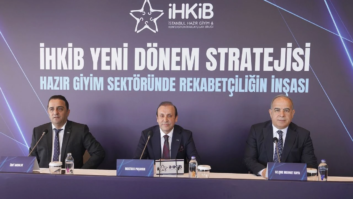 aşahan noted that the apparel industry is one of the strategic sectors of the Turkish economy thanks to its high employment capacity and strong contribution to exports. “Women account for 55% of employment in our sector, and we provide jobs for a total of 493,000 people. In 2025, we achieved exports worth 16.8 billion dollars. The sector generated a foreign trade surplus of 12 billion dollars in 2025. These figures clearly show how important the sector is,” he said.
Paşahan explained that although they do not want to constantly bring incentive and support packages to the agenda, increasing such support would rapidly improve the sector’s performance. “In the medium and long term, we must focus on value-added production. Türkiye is no longer a low-cost manufacturing country. We will win the game through value, not price,” he added.
Referring to existing support mechanisms, Paşahan highlighted that textile and apparel investments across all regions of Türkiye are benefiting from 6th Region incentives for three years, helping preserve existing capacities. He stressed that Türkiye cannot compete with Asian countries based on cheap labor and pointed out that production and supply chains in Europe are undergoing a radical transformation.
“We Will Become the Address of Affordable Luxury, Speed, and Quality”
Paşahan stated that Europe remains a major market for the sector and noted that a new era of longer-lasting and smarter production has begun there. He continued: “We have an advantage in this regard. We have the capability to provide circularity and take-back systems for used garment imports. We are entering a rapid transformation process in which we will produce smaller quantities of higher-quality, longer-lasting, and higher-priced products. In short, we will become the address of affordable luxury, speed, and quality. Due to upcoming legislative changes, Europe will no longer be able to eliminate excess stock, which will increase demand for fast and controlled production rather than large-volume orders. Part of production will now be guaranteed, while the rest will depend on performance. Those who are fast and flexible will win. This is where we will come into play. In the new era, we will stand out with our identity as a key inventory-producing country.”
“A Master Plan Compatible with the Current Realities of Global Trade Is Needed”
Paşahan emphasized that no matter how high-quality production is, it is not enough on its own and that companies must also create a strong brand story. He announced that a branding committee has been established.
Stating that strengthening the global perception of “Turkish Apparel,” carrying out aggressive promotion and communication activities in international markets, and creating direct engagement opportunities with global buyers would help bring Turkish brands to the global showcase, Paşahan said:
“A master plan compatible with the current realities of global trade is needed for the apparel sector. We must fully utilize the opportunities of trade diplomacy to prevent the potential damage that the European Union’s free trade agreements with India and MERCOSUR countries may cause to the sector in the coming years and to ensure that apparel remains within the scope of ‘Made in EU.’”
Paşahan also underlined the importance of SMEs for the development of the sector and stressed that support mechanisms should continue in order to help these companies move to the next level.
He added that efforts are underway to enable Turkish companies to benefit from the Ministry of Trade’s support programs for overseas brand acquisitions, saying: “The support provided is extremely valuable for the apparel industry. Such incentives for brand acquisitions are also highly important for our sector.”