We Will Increase the Production of Our Environmentally Friendly and Energy Efficient Machines in 2025
Interview: Tuğba Karademir
TTE Textile Technologies, which mainly produced modification systems for ring spinning machines during its establishment, today offers auxiliary and protective machinery and system solutions at many stages of the short fiber yarn business, as well as its metal gripper product group. The company, which carries out its production activities in four different units in Kayseri, draws attention to its wide range of products.
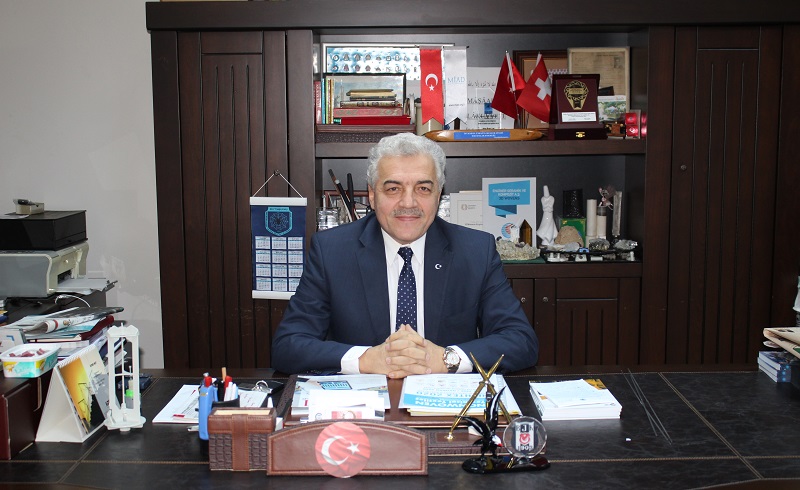
We conducted an interview with Recep Yılmaz, the owner of TTE Textile Technologies, for the special issue of ‘Turkish Textile Machinery Industry’. Yılmaz shared the company’s founding adventure, export markets, sustainable and environmentally friendly products, as well as his evaluations for 2024 and targets for 2025.
“We Develop Special Strategies for the Countries We Export to”
You export to more than 10 countries. As the diversity in export markets increases, how do you deal with the cultural and economic differences of these countries?
 Yes, as a company that exports to more than 10 countries, understanding cultural and economic differences and adapting to these differences is a very critical issue for us. Since each market has its own dynamics, it is not possible to address all markets with a single strategy. For this reason, we develop special strategies for the countries we export to and take care to offer special solutions to the needs of the markets. For a target market, we analyze the demands of that country in the textile sector, its economic situation, production habits and cultural values. For example, while energy efficiency and sustainability are at the forefront for one country, solutions to increase production capacity may be more in demand in another country. We care about working with local business partners in the countries we export to.
What observations have you made about the differences in demands in country-based export markets? For example, what do markets such as Brazil and Uzbekistan mean for producers in Turkey?
These markets have their own dynamics, and their demands vary considerably due to their geographical location, production capacity, and economic conditions. Brazil, for example, is one of the largest economies in Latin America, with a large textile industry. However, energy efficiency and sustainability issues are becoming increasingly important in this market. Manufacturers in Brazil are turning to innovative technologies and more efficient production machinery to reduce energy costs and comply with environmental regulations. For manufacturers in Turkey, this market has great potential, especially in terms of offering high-quality and environmentally friendly textile machinery.
Uzbekistan, on the other hand, draws a completely different profile: Uzbekistan is a country known especially for its cotton production. Therefore, yarn production and processing are of great importance in this market. However, in recent years, the government of Uzbekistan has begun to modernize its textile industry to focus on the production of value-added products rather than the export of raw cotton. This creates a great opportunity for Turkish manufacturers in areas such as high-tech spinning machines, and weaving and dyeing systems. In addition, Turkey’s geographical proximity to Uzbekistan and its cultural ties allow for easier relations in this market. Such markets are very valuable in terms of demonstrating the flexibility and innovation capabilities of the Turkish textile machinery industry.
“The challenges we faced encouraged us to come up with more efficient and environmentally friendly solutions”
You mentioned that your metal gripper systems are labeled as energy-free products. What were the challenges you faced in the development of such sustainable technologies?
The fact that our metal retaining systems operate without energy consumption is a result of our company’s sustainability-oriented approach. The development of such innovative technologies has led to several challenges in both technical and production processes. However, these challenges have also encouraged us to create more efficient and environmentally friendly solutions.
Designing a system without energy consumption required developing purely mechanical solutions that could replace traditional electrical systems. This presented a major design challenge, especially in terms of efficiency, durability and functionality. We have carried out extensive engineering work to ensure that the system we have developed is both a long-lasting and low-maintenance solution. Issues such as energy saving and sustainability have not been fully embraced in the past years. Therefore, convincing our customers and partners of the long-term benefits of these systems was a time-consuming and challenging process.
When designing a system that does not consume energy, it is critical to ensure that the performance of the product does not decrease and that its safety is guaranteed. We have experienced many testing and optimization processes to ensure not only energy efficiency, but also to ensure that the system can operate safely.
“The integration of AGVs into production processes in the textile industry increases operational efficiency”
How can the use of unmanned transport vehicles such as AGVs revolutionize production processes in the textile industry? What needs to be done to integrate this technology into more businesses?
In recent years, we have seen an increasing demand for AGVs in the textile industry, where resource efficiency has been overvalued. Such technologies make material handling and logistics processes on production lines more efficient, faster and safer. The integration of AGVs into production processes in the textile industry offers opportunities to reduce costs and optimize labor productivity while increasing operational efficiency.
While sensor and software structures that provide high flexibility in the AGV department are developing, the fact that new production machines in the textile sector are open to communication provides great convenience for the integrated operation of the systems. We consider machines that are open to communication as machines that can talk, and the technical features and data flows of these machines significantly reduce the initial investment cost of investing in automation. In new investments in the sector, it will create significant advantages to start by planning that AGV will be integrated into the system at the beginning, not later.
In after-sales services, you provide free service to your customers, especially by updating old machines. What kind of effects does this approach have in terms of customer loyalty? What is the feedback you have received?
We are very rare as a company that can provide this kind of service in the sector. However, this service is certainly a very effective approach to increasing customer loyalty. With this service, we ensure that our customers’ existing machines are more efficient and long-lasting. Customer loyalty is one of the most important factors in areas such as the textile industry, where competition is quite intense today. Therefore, such value-oriented services we offer after sales play a big role in building long-term relationships. In technology-driven industries such as textile machinery, customers often opt for the latest and most efficient technologies. Updating old machines ensures that our customers’ devices are constantly running at peak performance. Providing free service by updating old machines not only increases customer loyalty, but also allows us to build long-term and trusting relationships with customers.
You take care to ensure that your products are user-friendly in the commissioning and maintenance processes. Are there any new steps you have planned in the future to increase these facilities?
We take great care to ensure that our products are user-friendly in commissioning and maintenance processes, because user experience is a critical factor in terms of both efficiency and customer satisfaction. The fact that users can use our machines more easily and perform maintenance operations quickly and efficiently enables businesses to progress uninterruptedly in their operational processes.
In the future, we aim to increase the provision of remote support via digital platforms to further simplify the commissioning and maintenance of our machines. These systems will allow us to remotely monitor the status of the machines, making it possible to intervene immediately in case of any malfunction. In addition, with remote maintenance and problem-solving processes, we can minimize the time users spend in the field.
Another method we are working on is Augmented reality (AR) technology. Thanks to AR, it can help to perform maintenance processes faster and without errors. Users will be able to receive maintenance instructions and technical support information about the machines directly with virtual visuals. We think this technology will provide a user-friendly experience by providing step-by-step guidance, especially in complex operations.
The year 2024 has exceeded your expectations, despite the challenges across the country. What kind of strategy do you plan to follow for 2025 to make this success sustainable?
2024 has been a year in which we have exceeded our expectations despite the challenges across the country. We are planning several strategic steps to make this success sustainable and take it even further in 2025.
We will continue to focus on sustainable production processes in the coming years. By 2025, we will increase the production of our environmentally friendly and energy-efficient machines, helping our customers to produce with a lower carbon footprint with these innovative solutions. By continuing to develop innovative and energy-efficient technologies, we will put environmental sustainability at the heart of our business model.
In parallel with technological developments, we are deepening digitalization. Integrating Industry 4.0 solutions into our machines is of great importance to provide more efficient and independent performance measurements in production processes. By 2025, we will increase the remote visibility of our machines and maximize customer satisfaction with data analytics and artificial intelligence-based solutions. In addition, we will further strengthen our customer-centric approach by increasing the accessibility and speed of after-sales services through digital platforms.
How do you make a difference in the sector in terms of R&D and innovation? What technological innovations do you plan to bring to market in 2025?
R&D and innovation are of great importance for our company to maintain its leadership in our industry. Developing machines that will increase employee productivity and machines that can produce sustainably is at the heart of our strategy in this area.
By 2025, we will make our machines smarter, allowing operators to spend less time and work more efficiently. Smart production systems will have features such as the ability of machines to monitor themselves and intervene automatically when needed. These features will allow operators to deal with only critical situations that require intervention, so more production can be done in less time. In addition, with the integration of our machines, we will reduce the labor intensity of the employees by providing efficient workflows.