Textile Worker Women’s Gift to All Women of the World: March 8, International Women’s Day
News/Interview: Özge Çağıl Sütcü
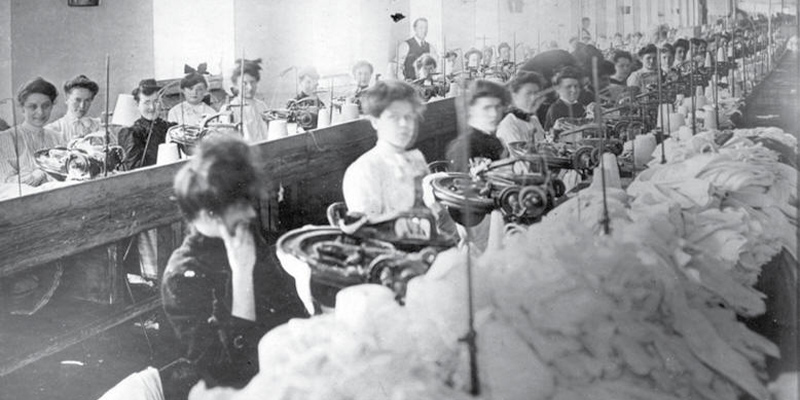
The emergence of March 8, International Women’s Day, celebrated almost everywhere in the world, is based on a tragic event that happened exactly 167 years ago. The heroes of the event were 129 women workers who started a strike for their rights in the weaving factory where they worked in America and as a result burned to death…
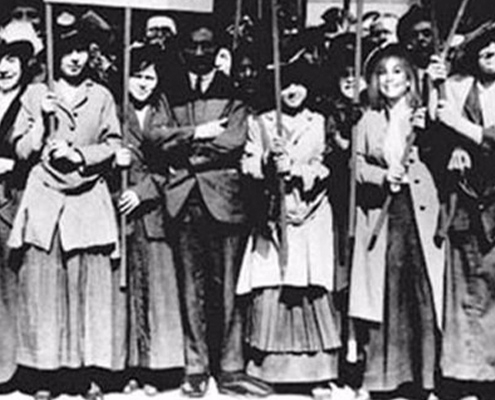
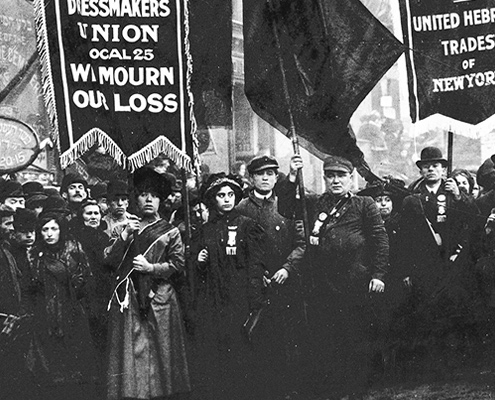
On March 8, 1857, 40,000 women workers went on strike in a weaving factory in New York City in the United States. The purpose of this strike, supported by 40,000 women workers in the city, was to demand better working conditions for women workers. The women workers were locked in the striking factory by the police, and a fire of unknown origin broke out during the strike, and 129 women workers stuck inside were burned to death. Tens of thousands of people attended the funeral of the workers, and a social movement began. It was only 54 years later that March 8 was officially commemorated as International Women’s Day in memory of the workers.
So how did International Women’s Day, an international day commemorated every year on March 8 and defined by the United Nations, become official? March 8 became official in 1977 when the United Nations General Assembly recognized March 8 as “International Women’s Day”.
In Turkey, the history of women’s movements dates back to before the Republic, and the first celebration of March 8 in Turkey dates back to 1921. After 1975, mass celebrations began, but the celebrations, which were interrupted by the September 12 coup d’état, have continued in Turkey and in many countries around the world since 1984. As Tekstil Teknoloji magazine, we interviewed the women executives of the textile industry on this important day, which has a great meaning for the textile industry. The common opinion of the women executives, with whom we talked about the difficulties of being a woman in the industry, working conditions, women’s rights and employment, is to increase the employment of women in the industry and to have equal rights with men. Our message for this special day as Tekstil Teknoloji magazine: We wish women all over the world to have freer working conditions, not to be excluded because of their gender and most importantly to be seen as worth living.
“Sometimes I Mounted Parts in the Machine, Sometimes I Assembled”
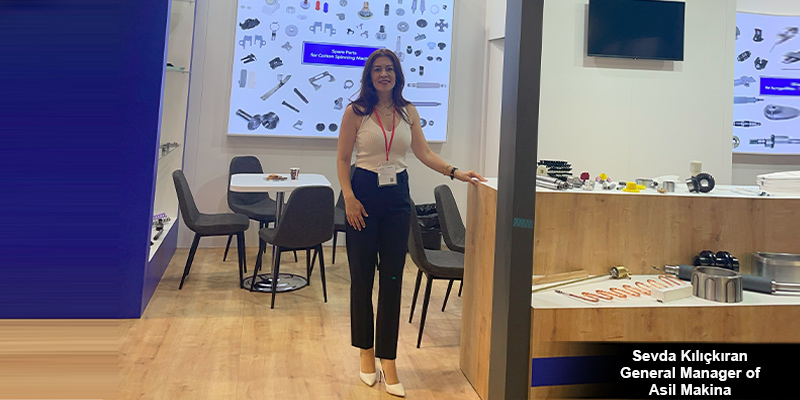
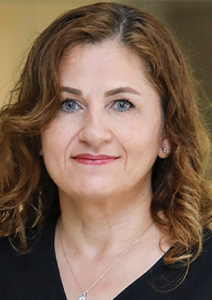
Sevda Kılıçkıran, General Manager of Asil Makina: “Even though my father only wanted me to look at finance and foreign trade, I tried to learn every detail about the workplace. I attended many trainings on production, management, foreign trade, marketing. Sometimes I mounted parts in the machine, sometimes I assembled.
Can you evaluate what kind of changes in the working conditions of women workers have taken place since then?
In the past, the primary reason for women to participate in working life was to bring additional income to their families. Today, as their level of education increases, there are more women in the workforce for reasons such as having a profession, securing their future, and self-realization, in addition to making economic contributions.
Due to the fact that women are physically fragile and have characteristics such as maternity and fertility, women should have privileges in business life unlike men. Although in many countries the lack of physical superiority of women is ignored due to equality between men and women, it is very good that in our country, protective measures are taken to protect women with laws regarding maternity and fertility.
Unfortunately, we still don’t see enough women managers in the textile machinery sector. How did your career journey in the machinery sector begin? Are there any challenges you face as a woman manager?
As you know, the number of both blue-collar and white-collar women employees in the machinery manufacturing sector is very low. The number of managers is quite low. My start was actually when I started working in the family business. My father wanted me to start working with him after school and to promote our products in foreign markets. I completed my education in Business Administration and International Business. I started working in 2009. I spent the first five or six years learning production and management by exporting. However, after 2015, I started to have a better command of the business, to be fully competent in both production and administration, and to acquire permanent customers in foreign markets.
No matter how much my father wanted me to work in the company, he only wanted me to look at accounting, finance, foreign trade and develop in these areas. But I tried to learn every detail about the workplace. I obtained SRC certificate, dropped export materials at the customs, bought goods and products from suppliers. I attended many trainings on production, management, foreign trade and marketing. One day I connected parts in the machine, another day I assembled parts. Another difficulty I experienced apart from being a female employee was the fact that I was the daughter of the company owner. People had prejudices against my knowledge and skills. However, after five or six years, my efforts began to be seen by employees, suppliers and customers and my management started to be accepted.
When you are in the machinery production sector, no matter what happens, first of all, the prejudices against the female manager, that she would not know the job well, would not understand it, would not be able to establish authority, would not be able to maintain the system unfortunately it happens.
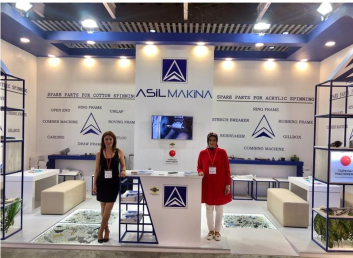
“We Send Our Female Employees to Trainings Related to Their Departments and Skills”
As a female employee and manager at Asil Makina, how do you evaluate the working conditions of your female employees? Do you have any privileges for your female employees? Do you support women employment?
Since Asil Makina operates in the machinery sector, the number of women working in production is still very low compared to the number of men. We have female employees working in the administrative department and we send them to trainings related to their departments and the skills they want to develop from the day they start working. Even if the skills that the person adds to themselves benefit the company they are currently working for, the skills will stay with them for life. We strive for women to be individuals with forward-looking goals, rather than just doing their current jobs and living a monotonous working life. With the competencies and skills they gain, their responsibilities in the workplace increase, while at the same time we increase their authority and position.
Do you have any current or planned Social Responsibility Projects? Do you work with associations or NGOs or would you consider doing so?
I became a member of the The Union of Chambers and Commodity Exchanges of Türkiye (TOBB) Women Entrepreneurs Board and the TOBB Young Entrepreneurs Board, where we started work and projects for women to take a more active role in the industry with trainings and seminars for women and young entrepreneurs.
“Women’s Presence and Success in the Industry is Recognized and Appreciated”
How do you evaluate the place of women in business life, especially in the textile industry? What are your recommendations for new female employees?
Everyone has a prejudice about the machinery manufacturing sector, thinking that ‘this is a man’s job’. My advice to women is not to be afraid of entering the sector. Many companies can now distinguish between those who work and those who don’t, between those who labor and those who don’t. Women’s presence and achievements in the industry are now recognized and appreciated. My advice to women and entrepreneurs who will enter business life is to set goals for themselves, develop their knowledge and skills in line with these goals and work hard to achieve these goals. They will surely be rewarded for their efforts.
“All individuals should be treated fairly in education and working life according to their qualifications”
How does March 8th International Working Women’s Day raise awareness around the world? What should be done to strengthen and encourage women’s place in business life?
First of all, society should be educated; the participation rate of women in the labor force should be increased. Barriers to women’s education should be removed and women entrepreneurs should be encouraged to achieve economic freedom. I have referred to it again in another interview before. At the beginning of Virginia Wolf’s book ‘A Room of One’s Own’, it is stated that ‘if a woman is to write fiction, she must have money and a room of her own’. For centuries, it has always been thought that men are more successful in art branches such as painting, music and literature, as well as in business life, production and management, and that these are men’s jobs. When women were raised in the family, they were treated differently from their brothers, and some still are. Families first put obstacles in the way of women studying, working and acquiring skills while raising their daughters. It is important that these obstacles are removed and that all individuals, men and women, are treated fairly in education and working life according to their qualifications.
Do you have a special message for March 8th International Working Women’s Day?
I congratulate all women, who make every moment of life more special and beautiful, and who are the most important building blocks of society, especially the family, on March 8, International Working Women’s Day.