We Have to Produce Smartly and Export Branded Products
Ahmet Öksüz, Chairman of the Board of Directors of İTHİB, emphasized the transformation in the sector by saying, “We should not be content with classical methods to achieve our goals. Value-added production, investment in technical textiles, branding, and sustainability-oriented transformation are now the new norms in our sector. We no longer have to just produce, but also produce smartly and export branded products.”
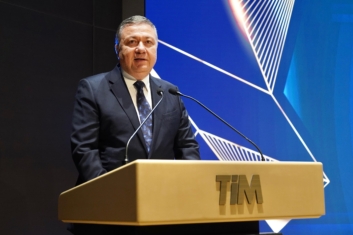
Ahmet Öksüz, Chairman of the Board of Directors of İTHİB
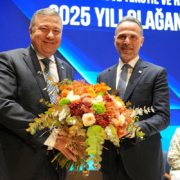
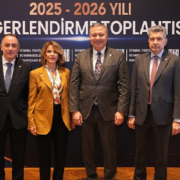
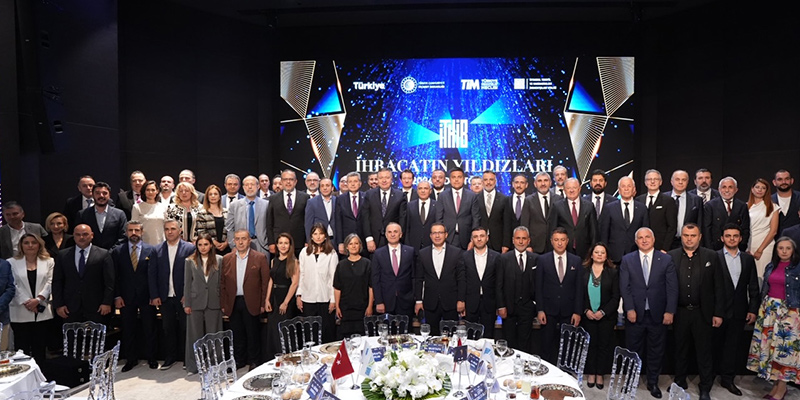
Despite the difficult economic conditions, global contractions and increasing production costs, the textile industry completed 2024 with exports of 11.5 billion dollars, making a difference once again with its determination and production power. This consistent success in the sector was celebrated at a special awards ceremony organised by the Istanbul Textile and Raw Materials Exporters’ Association (ITHIB). A total of 564 exporters were recognised during the evening. Hosted by ITHIB Chairman Ahmet Öksüz, the ceremony was attended by Deputy Minister of Trade Ö. Volkan Agar and Istanbul Governor Davut Gül, as well as many other guests.
“We will Continue to Stand by Our Sector”
Noting that the textile sector has a very exceptional place in Turkey’s history, Deputy Minister of Trade Volkan Ağar said, “However, sustaining this success requires special effort and attention. Despite all the difficulties, I would like to state with great happiness that when we look at the first four months of 2025, we see that our export growth rate continues. We have full faith that, with the efforts we all put in, we will close 2025 on a positive note. The textile sector contributes not only to its own value creation, but also to the agricultural sector through its raw materials, such as cotton and yarn; to the chemical sector through its synthetic raw materials and dyes; and to the defence, aviation and health sectors through its technical textile products. The textile sector also plays an important role in the retail, logistics and service sectors. For this reason, we, as the public, will always support our textile sector.”
“We will See Much Better Days”
Under the current conditions, Istanbul Governor Davut Gül, who drew attention to the fact that it is very important to stand tall and export in a period when there is so much movement in the world, said, “But all of you have a history of twenty, thirty, even forty years. You have experienced these fluctuations in global trade at least ten times. You have seen good days, bad days, and even better days. However, we believe that we will see much better days from now on. Especially in a period when international trade and competition are so heated, our country has a chance to take a step forward in terms of its position. Our duty is to be prepared for this process. However, in a world where costs are increasing, it is unfortunately not possible to secure a sufficient share of world trade based solely on competitive power in the domestic market. To this end, we must make greater efforts in transitioning to clean energy, recycling, branding, developing models, designing and raising our profile. In order to reach a higher position in the global market, we must create value not only in workmanship, but also in all these areas. We can achieve this.”
“We Hear Turkey’s Name to the World”
Ahmet Öksüz stated that exporters have made Turkey’s name known in the export sector despite the difficult conditions, saying: “Those who survive in difficult times are not only the strong ones, but also those who adapt to change the fastest. We have recently been faced with an increasing global recession, rising costs, and falling demand. Examining global data, we can see that exports from the global textile sector have shrunk by $34 billion, while exports of ready-made clothing have fallen by $24 billion over the past three years. 2024 was also a challenging year for global trade, with limited opportunities. However, we did not give up. Despite global demand contracting, we maintained our position in the European Union and the United States of America (USA), our two most important markets last year. According to the latest figures, while the European Union’s textile imports from around the world fell by 2.7%, Turkey succeeded in maintaining its market share. Not only did our sector maintain its place in the European market, it also increased its market share. We are the eighth-largest supplier to the USA, which is the second-largest destination for our textile exports. In 2024, our textile exports to the USA exceeded $780 million. Our short-term goal is to become one of the USA’s top five textile importers.”
“We Must Encode Our Industry Again”
Ahmet Öksüz said that they foresaw the textile sector leading the way in reaching the 100 billion dollar foreign trade target with the USA, and that this would be a strategic threshold in achieving the export targets. He continued as follows: “To achieve this goal, we cannot afford to rely on traditional methods. Value-added production, investment in technical textiles, branding, and a sustainability-oriented transformation are the new norms in our sector. We must not only produce, but also produce smartly and export branded products. We believe that our sector needs to redefine itself in this new order, where conditions of competition have changed. Another key to overcoming crises is export market diversity. With this in mind, we organise trade delegations to nearby destinations and to the farthest corners of the world, as well as organising national participation in global exhibitions. Our aim is to increase not only exports, but also the visibility and effectiveness of Turkish textiles on a global scale. In the coming months and years, we are determined to maintain and build on the strong presence of Turkish textiles in many strategic markets, including China, Mexico, South Korea, Kuwait, Chile and Dubai. At ITHIB, we don’t just produce; we also guide the transformation of our sector.”
“We Must Protect Domestic Production Against Unfair Competition”
Ahmet Öksüz, who also made evaluations about the developments in Syria, said, “As the textile sector, we are closely following the developments in the region. The decision of the EU and the US to lift all economic sanctions against Syria is an opportunity for our textile and ready-made clothing sectors. Evaluating Syria well with the mutual benefit model will reduce our production costs and will be instrumental in the reconstruction and revival of Syria. It will also be beneficial in terms of putting idle capacities in Turkey into operation.”
Ahmet Öksüz, who emphasized that work should be done to protect the sector against domestic production and unfair competition, said, “This situation is now more important every passing day. The US’s announcement of additional customs duties has brought textile countries like Turkey to the position of being the target market of Asia. Within this framework, we need urgent action plans on all issues affecting domestic production, such as a more effective fight against traffic diversion, which our ministry is currently working on meticulously, and the reconsideration of ‘Free Trade Agreements’.”
Award Winners
During the night, companies that stood out with their export performance in 2024 received their awards. The top 10 companies that added value to the sector with their success are listed as follows:
- Ak-Pa Tekstil İhr. Paz. A.Ş.
- Aksa Akrilik Kimya San. A.Ş.
- Kordsa Teknik Tekstil A.Ş.
- Ormo İth. İhr. A.Ş.
- FPS Turkey Ambalaj San. ve Tic. A.Ş.
- DGS Dış Tic. A.Ş.
- Kipaş Paz. ve Tic. A.Ş.
- Zorlu Dış Tic. A.Ş
- Toraman Teks. San. ve Tic. A.Ş.
- Zorluteks Tekstil Tic. ve San. A.Ş.