“Preferential” Solution to The China and India Squeeze in Europe
As pressure from China and India continues to increase in the European market, the Turkish textile industry is turning its direction toward preferential trade agreements. ITHIB President Ahmet Öksüz said, “China and India are pushing very aggressively into Europe. In the face of this picture, an FTA with the U.S. has now become a strategic necessity.”
The growing pressure of China and India in the European market is steering the Turkish textile industry—one of the world’s most important producers and exporters—toward new and preferential trade pursuits. While the reflections in Europe of the ongoing tariff wars between the U.S. and China, as well as the Free Trade Agreement (FTA) signed between India and the EU, are further intensifying competition, sector representatives see the solution in Free Trade Agreements.
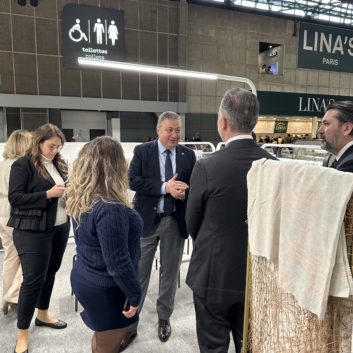
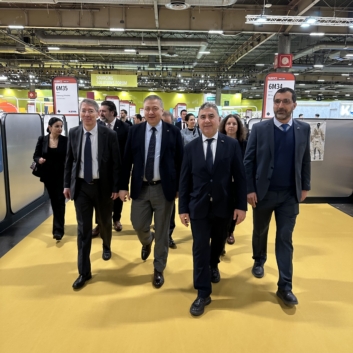 Within the scope of the Premiere Vision Fuarı, one of the world’s most important textile fairs held in Paris, evaluations regarding the sector were made with Ahmet Şişman, Vice President of the Istanbul Textile and Raw Materials Exporters’ Association (ITHIB) and presidential candidate for the upcoming term, and Ahmet Öksüz, Chairman of the ITHIB Board of Directors. Emphasizing that the Turkish textile industry has the capacity to export on a global scale, Öksüz underlined that the sector’s main market is Europe. Stating that the effects of the ongoing tariff wars between the U.S. and China have recently begun to be felt in the European market, Öksüz said that this situation has led to losses, albeit limited.
Reminding that approximately 50% of total textile exports are made to European countries, Öksüz said, “China is following an extremely aggressive policy regarding Europe. They are trying to compensate in Europe for the market share they lost in the U.S. market due to high tariffs. India is acting with a similar strategy. Both countries are seriously focused on the European market.”
FTAs Risks for Türkiye
Drawing attention to the FTA signed between India and the European Union, Öksüz stated that this development carries significant risks for Türkiye. He expressed that with the agreement, which is expected to enter into force in 2027, Türkiye’s advantages stemming from the Customs Union will largely weaken. In the face of this situation, he said the strategic importance of an FTA to be concluded with the U.S. has increased.
“Balancing the market that may be lost in Europe is possible through the U.S. Therefore, we need to accelerate the FTA process with the U.S.,” said Öksüz, noting that trade between the two countries is relatively balanced, although there is a picture in favor of the U.S. Emphasizing that the textile sector is one of the strongest instruments Türkiye holds in this process, Öksüz stated that serious efforts are being carried out for a possible agreement with the U.S. Pointing out that Türkiye accounts for only 3% of the U.S.’s total textile imports, Öksüz said this rate is insufficient. “If a bilateral trade agreement is signed, we can increase this share to 5% within as little as two years. This would strengthen our position in the U.S. market.” he said.
According to data from the Türkiye Exporters Assembly, Türkiye realized textile and raw materials exports worth 792 million dollars to the U.S. last year. With an FTA to be concluded, this figure is projected to reach 1 billion 320 million dollars within two years, with an increase of approximately 528 million dollars.
High Potential in Technical Textiles
 Underlining that Türkiye has achieved 26 billion dollars in exports in textiles and apparel, Ahmet Öksüz said, “As Türkiye, we export more than the total exports of 31 countries in our close geography, including all North African countries, Balkan countries, Syria, Iraq, and Iran. In this sense, we must not forget that we have a very strong value.”
Stating that Türkiye’s path is open in this regard, Öksüz said, “The production value of textiles and apparel in Europe is around 170 billion euros. In European textile production, the share of traditional production is not very high. They mainly produce on the technical textiles side. Türkiye also has areas that need to be developed on the technical textiles side. Because there is a very large potential here, and we can develop our cooperation with Europe in this field.”
The Share of Turkish Companies—Once Not Admitted in the 1990s—Has Reached Nearly 30% at Premiere Vision
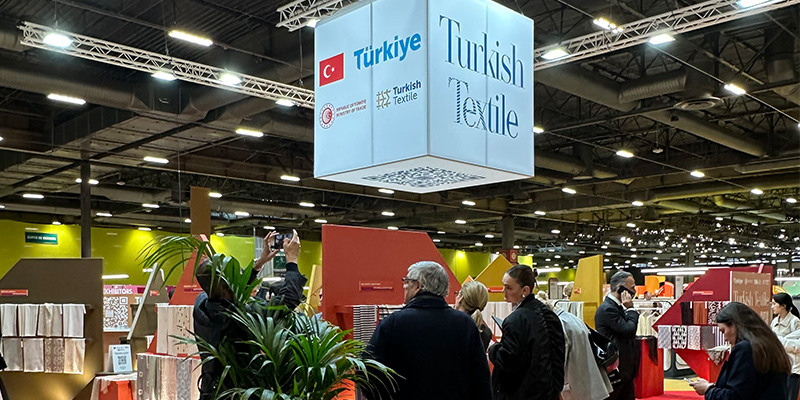
With its production and export strength, the Turkish textile industry has, in recent years, risen to the position of a leading country in fairs and organizations as well. One of these organizations is the Premiere Vision Fuarı, held every year in Paris, the capital of France. This year, 127 Turkish fabric companies participated in the fair. While the share of Turkish companies among the total number of exhibitors reached 29.5%, Türkiye ranked second after China in terms of the number of participating companies.
Recalling that Türkiye was not admitted to the fair in the 1990s, ITHIB President Ahmet Öksüz said, “Over time, far from not being admitted, we have risen to a position of being a determining country in the fair calendar. This fair, in addition to being well-established worldwide, is a long-standing event hosting many international buyers. Unlike other fairs in Europe, visitors from different regions of the world also attend this fair. Turkish companies are among the leading participating countries. Turkish companies have become the second-largest country with the highest participation at the fair. The work carried out by Turkish companies has an important place worldwide, and in every brand, there is the signature of the Turkish entrepreneur and Turkish fabric.”
China’s Share in the EU Increased by 2.7 Points in Two Years
The Turkish textile industry ranks as the second largest producer and exporter in the EU and the fifth largest in the world. While the sector holds a 3.4% share in global exports, it ranks among the top three worldwide in value-added exports. However, Türkiye, whose competitiveness has been negatively affected due to high costs, is losing strength in its largest market, the EU.
Due to tariffs, China has begun exporting a very large portion of the goods it could not sell to the U.S. to the EU at competitive prices. According to the latest data, China increased its share in the EU from 34% to 36.7% over the past two years. This corresponds to a 5% increase in quantity terms and a 6.4% increase in value terms.