A Courageous Journey from Teaching to Textile Industry…
Interview: Dilek HAYIRLI
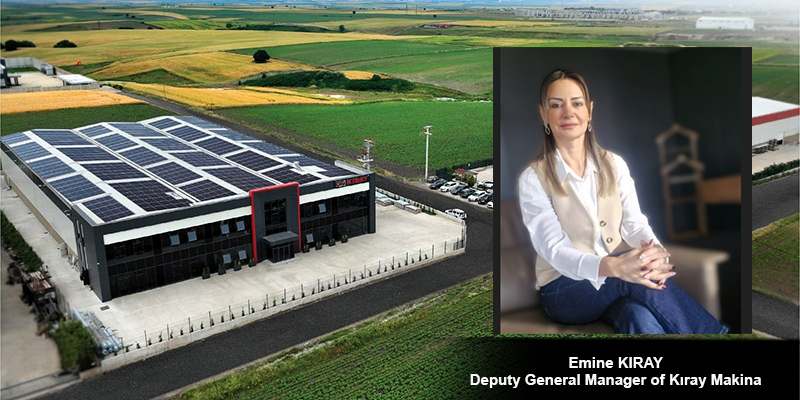
A career journey extending from teaching to the textile machinery industry, a strong balance built between family and professional life, and a calm yet determined presence in a male-dominated field… On the occasion of International Women’s Day on March 8, we conducted a special interview with Emine Kıray, Deputy General Manager of Kıray Makina. She sincerely shared her experiences in business life, the value that a woman’s perspective brings to corporate culture, and her powerful messages to young women.
Some journeys are carefully planned, while others begin naturally, following the flow of life. Emine Kıray’s story belongs to this second group. Her career, which spans from teaching to management in the textile machinery sector, is a story of transformation shaped by courage, a desire to learn, and a sense of responsibility.
Involved in the company she co-founded with her husband from day one, Emine Kıray became actively involved in its management in 2018. Today, she is not only a manager but also a leader who shapes corporate culture and takes a clear stand on valuing women’s contributions and respect.
Facing the challenges of a male-dominated industry with a professional, emotion-free perspective, Kıray emphasizes that women’s empathy, multi-faceted thinking, and communication skills make a significant difference in business life. In her view, the issue is not “positive discrimination.” but rather ensuring that women are not obstructed.
Kıray highlights that the balance between family and work is built on mutual support, and her strongest motivation is remembering what she has accomplished and fulfilling her responsibilities toward her children. She concludes with a strong belief: “If a woman wants, she can achieve all her dreams.”
Can you start by introducing yourself? How did your journey from teaching to the textile sector begin?
 I got married shortly after graduating from Marmara University. I have a seventeen-year-old son and a twelve-year-old daughter. In the fifth year of our marriage, my husband and I started our own business. At that time, I was not actively involved in the company, but I was part of all processes from the very beginning. We made decisions together and closely followed developments. As our business grew, our team expanded, and our responsibilities increased. In 2018, since my husband needed more support in management due to frequent work-related travel, I decided to leave my teaching profession and take an active role at Kıray Makina.
“Teaching Taught Me to Understand People and Be Patient”
What skills did teaching give you for your business career, and how have they contributed to the way you work today?
Teaching taught me to understand people, be patient, and maintain high motivation. The ability to produce quick and accurate solutions, work in a disciplined way, and empathize with others are the most important skills I gained. Today, these skills greatly benefit my work life. Effective communication with the team, staying solution-oriented, and managing processes in a balanced way are among the most valuable contributions from my teaching experience.
What motivated you most when stepping into the textile sector, and looking back, when did you feel “I’m glad I took this path”?
My greatest motivation has always been to work and stay open to learning. Contributing to positive results from decisions, taking risks when necessary, and seeing productive outcomes is truly rewarding. Looking back, I realize I have felt “glad” about this journey from the very beginning. If I hadn’t, I wouldn’t have been able to continue with the same desire and excitement.
“When I Face Challenges, I Choose to Stay Calm and Focus on My Work”
How did you cope with the challenges of working in a male-dominated sector? What advantages have you gained as a female manager in the textile industry?
Challenges exist, and yes, we face them from time to time. Sometimes we encounter attitudes that ignore women or refuse to speak with women trying to do their job. This is not unique to our country; it also happens in some regions where the textile industry operates. In such moments, I believe our reaction is what matters most. I choose to stay calm and focus on my work. I approach obstacles professionally rather than through the perspective of gender. Staying free of emotion helps me manage challenges more effectively and continue my path with determination.
Do you believe a woman’s perspective influences your company culture? Do you have a special approach or sensitivity toward female employees?
Absolutely. Women’s perspectives are highly creative; we can see both details and the bigger picture, and we are organized. This enriches the way we do business. Listening to diverse ideas not only leads to better results but also helps everyone feel valued. A strong team makes the company more powerful and harmonious.
At Kıray Makina, my colleagues in the units I work with daily are women. Ensuring female employees feel safe and valued is very important to us. We respect their weekend rest, and respect in the workplace is non-negotiable. We never tolerate male employees arguing with female colleagues or men who commit domestic violence. This approach is one of the most fundamental and clear principles of our company culture.
“My Work Is Important, But My Family Comes First”
How do you maintain balance amidst a busy work schedule? How supportive has your family and environment been? What keeps you going in difficult times?
My work is important, but my family is my priority. I plan my day to focus on my work while also dedicating time to myself and my family. Especially when the children were young, family support was crucial because running a business requires intense effort—it’s not a choice but a necessity. My husband and I have always supported each other, communicated, and consulted one another, which allowed us to preserve our family life.
When I face difficulties, I reflect on what I have accomplished and my goals, reminding myself of them. I’m not someone who gives in to self-pity. I also take inspiration from my husband’s attitude. After my children, I feel a strong responsibility toward him as well, which helps me recover quickly.
In your view, what is women’s greatest strength in business? How does having more women in management and the workforce transform the sector?
Everyone has their strengths, but it’s important to bring them out. Women in business use empathy, communication, and multi-dimensional thinking powerfully. This helps them keep teams together and generate creative solutions.
We still don’t see enough female managers in the textile sector. What changes are needed for more women to take leadership positions, and what steps should be taken?
This is largely a systematic and cultural issue. Women are highly talented and motivated, but they are often forced to choose between work and family or find it hard to envision themselves in senior management. The issue isn’t just management positions; it’s about women being free to participate in every aspect of production and life.
Regarding the concept of “positive discrimination,” which has been discussed frequently in recent years, I have a different perspective. Rather than granting women special privileges, it is enough not to put obstacles in their way. Even in raising our children, we suggest that certain professions “suit women,” and my teaching experience reflected this mindset. Societal transformation is essential, and it can only happen when each woman refuses imposed social limitations. Modern societies have achieved this, but the rest of the world still has a long way to go.
Mustafa Kemal Atatürk regarded women’s freedom in education and business not only as a right but as the foundation of national development: “A society consists of two genders, men and women. Is it possible to advance one part of the population while neglecting the other and expect the whole to progress? Is it possible for one half of society to remain in chains while the other rises to the skies?”
“If a Woman Wants, She Can Achieve All Her Dreams”
What would you say to young women aiming for a career in the textile industry? How would you complete the sentence: “If a woman wants…”?
The textile sector is vast and dynamic. I advise young women to thoroughly research the field and discover where they can truly be productive and happy. They will spend at least thirty years in their careers, so being happy in their work is essential. Continuously developing themselves and building confidence based on knowledge is crucial. Being natural and reliable, open to teamwork, communicating effectively, and persevering despite mistakes leads to success.
“If a woman wants, she can achieve all her dreams.” On this note, we celebrate the 8 March International Working Women’s Day of all women who strive to be their best selves in every social role and continue to create and contribute every day.