“As Trützschler, We Will Showcase Key Innovations from All Our Business Units at ITM 2026”
Interview: Tuğba Karademir
Trützschler enhances efficiency in production, improves quality, and supports sustainable manufacturing processes with its advanced technology machines, automation systems, and digital solutions offered to spinning mills. With many years of experience in both the Turkish and global markets and strong R&D investments, it continues to deliver tangible added value to its customers by making spinning preparation processes smarter, faster, and more reliable.
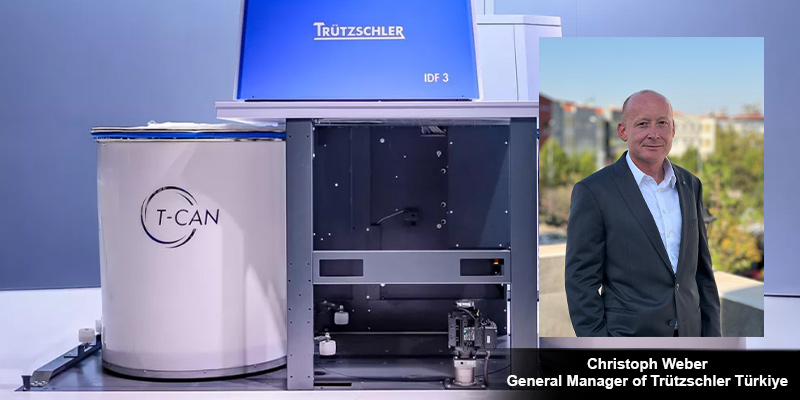
The year 2025 was recorded as a challenging year for the global textile machinery industry. Geopolitical uncertainties and volatile economic conditions led to a cautious approach toward new machinery investments. Nevertheless, Trützschler continued to support the resilience and competitive approach of Turkish spinning mills. Christoph Weber, General Manager of Turkey, shared with Tekstil Teknoloji magazine the added value provided to customers through R&D investments, advanced technology machines, automation systems, and digital solutions, as well as sustainable production approaches and preparations for ITM 2026.
“Our Customers in Türkiye Continue to Find Ways to Stay Competitive”
How was 2025 for Trützschler? How would you evaluate your performance in the global and Turkish markets?
 2025 was a challenging year for the global textile machinery industry. Geopolitical uncertainties and a volatile economic situation led to a reluctance to consume and invest into new machinery. Many global spinning mills are not working to capacity and are postponing modernization and investments. In Türkiye in particular, our customers suffered from inflation and high loan costs.
Despite these conditions, the Turkish market once again demonstrated its remarkable resilience. Our customers in Türkiye are highly adaptable and continue to find ways to stay competitive. We support them by consistently investing in R&D and by providing cutting-edge technologies along with excellent local service through our service and repair stations. We are proud to collaborate with many leading Turkish spinning mills that operate state-of-the-art Trützschler machinery. Our latest solutions, the card TC 30i, the integrated draw frame IDF 3 and our comber TCO 21XL are proving excellent performance in Turkish mills.
How do your next-generation machines and automation solutions (e.g., T CAN, TC 30i) contribute to production efficiency and quality?
 Our next‑generation solutions, such as the next-generation card TC 30i and the automated can transport system T‑CAN, play a major role in helping spinning mills increase efficiency and boost quality.
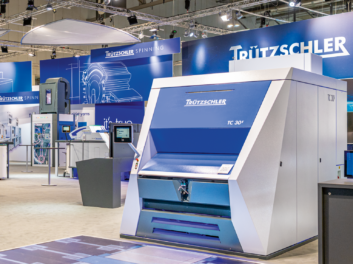
The TC 30i, launched in 2024, has already proven its performance in multiple key markets. Depending on the raw material, customers report significant productivity gains – up to 40% for man‑made fibers and around 20% for cotton – while maintaining or even improving yarn quality. The card also comes with the proven T-GO gap optimizer, ensuring continuous, automatic and ideal carding gap setting. Only Trützschler provides this intelligent feature.
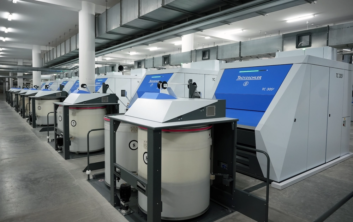
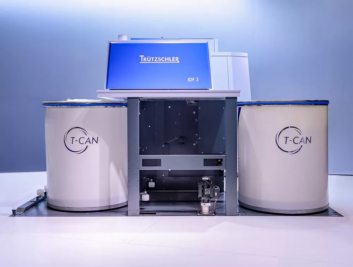
Our automated can transport system T-CAN has been developed in response to growing labor costs and labor shortages in the textile industry. T‑CAN automates the transport of sliver cans between cards, breaker draw frames and finisher draw frames by combining AGVs with a smart software interface that places each can exactly where it belongs. This minimizes manual handling and transport, ensures consistent quality through reliable material allocation, and supports continuous production even during breaks or night shifts. As a result, mills benefit from lower labor costs, higher machine efficiency, and consistent sliver quality.
What is Trützschler’s vision for digital transformation? How do IoT, data analytics, and AI-based solutions optimize your production processes?
At Trützschler, we see digitalization as a key enabler for smarter, more efficient textile production. One key trend is the increasing automation of machines, supported by artificial intelligence. We are already applying this in our products through monitoring systems and smart apps. Our automated can transport system T‑CAN is one example of how digitalization and automation go hand in hand to simplify processes and reduce personnel needs.
MyMill is our central digital innovation for spinning mill optimization. As a cloud‑based platform, it enables customers to monitor and optimize their spinning mill operations. MyMill supports internal benchmarking of shift data and machine performance, provides machine status updates, and helps users make fast, data‑driven decisions through transparent analytics and predefined reports. These powerful features help streamline daily routines like reporting duties, keep users in control with smart notifications, and highlight when action is needed.
“Sustainability At Trützschler Means Enabling Efficient Recycling”
What does sustainability and the circular economy mean for Trützschler? In particular, what tangible impacts do you aim to achieve with solutions like the ‘Online Fiber Recovery System’ and other recycling initiatives?
 For Trützschler, sustainability and circularity are closely linked to creating real, measurable value for our customers. We focus on solutions that help mills reduce raw material consumption, avoid unnecessary fiber loss and lower operational costs – for example through reduced energy consumption.
Our technological solutions for more sustainable fiber processing, such as the proven WASTECONTROL system, the sophisticated waste suction concept of our TC 30i card, or the Online Fiber Recovery Line, ensure that only impurities are removed and almost no good fiber is wasted. By preventing unnecessary fiber loss, mills can use more of their valuable raw material and protect their margins.
Energy efficiency is another important pillar. The CL‑X processes up to 2,000 kg per hour while consuming more than 30% less energy than the current benchmark – and where previously two machines were needed to clean cotton effectively, the CL‑X now handles the task alone. The TC 30i also contributes significantly: in customer applications, it achieved up to 40% higher productivity while reducing energy consumption per kilogram of output.
With TRUECYCLED we offer a complete solution for the recycling of textile waste. Our holistic approach, combined with Trützschler’s expertise for the entire process, ensures that manufacturers avoid unnecessary fiber shortening and achieve the best possible quality results. In this way, we aim to contribute to a more sustainable textile chain. In short: sustainability at Trützschler means saving resources, reducing waste and enabling efficient recycling – with solutions that pay off for our customers.
“We Continue To See Türkiye As A Powerful And Future‑Oriented Textile Hub”
How is the Turkish market positioned within Trützschler’s global growth strategy? Do you have a specific approach to local manufacturers’ demands, service, and support processes?
Türkiye remains a key market for Trützschler. The country offers important strategic advantages: its geographic proximity to major European markets, strong domestic cotton production and a modern, well‑developed textile manufacturing infrastructure. Türkiye is also known for high‑quality textile products and the strong expertise of its textile companies. Thanks to these strengths, we continue to see Türkiye as a powerful and future‑oriented textile hub.
Our long‑term cooperation with customers in Türkiye – and worldwide – is based on trust, strong partnerships and continuous investment in local presence, always driven by customer feedback and demands. We regularly evaluate our performance with the clear goal of exceeding the growing expectations of our customers and providing the best possible service. Local service and technical expertise play a crucial role in this market. A strong example is our service facility in Uşak, which includes a warehouse, a repair shop and a laboratory. It enables us to support the Aegean region even faster, where more than 800 of our cards are installed. With a dedicated local service team accompanying customers throughout the entire lifecycle of their installations, we ensure reliable and responsive support at every stage.
How is Trützschler preparing for ITM 2026? What innovations and messages do you plan to present to customers from Turkey and the region at the fair?
For ITM 2026, Trützschler will be showcasing key innovations from all our business units: Spinning, Card Clothing and Nonwovens. A key focus will be on direct spinning with the TC 30i and IDF 3. The IDF 3 delivers very good sliver quality at high production speeds and is appreciated for its easy handling. In direct spinning setups, the “dream team” of
TC 30i and IDF 3 enables high productivity, stable yarn parameters and efficient processing of blends with high short‑fiber content or recycled materials. Customers also value the ability to shorten the spinning preparation process without compromising quality.
Automation will be another focus. With T‑CAN, Trützschler is addressing the growing need for intelligent, reliable automation in spinning preparation. By automating sliver can transport with AGVs and a smart software interface, T‑CAN reduces manual handling, lowers operational costs and ensures consistent material flow. It represents a significant step toward smarter and more efficient spinning mills.
Beyond machinery, service and digital solutions will play an equally important role in our presence at the fair. We want to highlight how our service teams, with their local service and repair stations, and our digital tools like MyMill, help customers operate more efficiently, optimize their processes and get the most out of their installations.