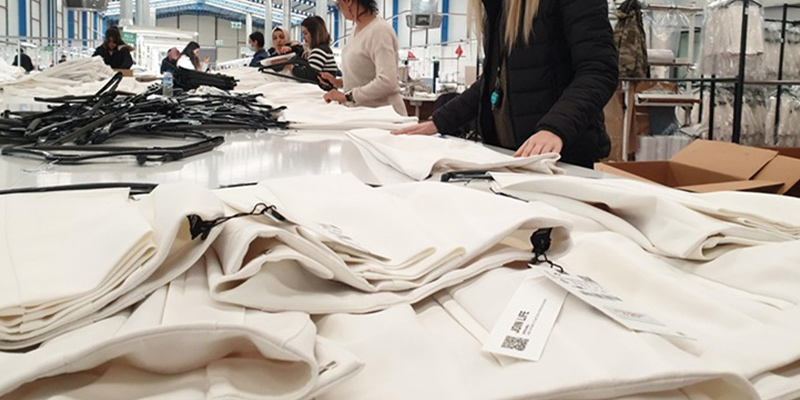
Artificial Intelligence Use in the Textile and Fashion Industry Prevents Waste
Chairman of the Textile Exporters and Employees Association (TIHCAD) Ergin Aydın said that artificial intelligence technologies provide significant time and cost advantages in the textile and fashion industry.

TIHCAD Chairman Ergin Aydın
TIHCAD Chairman Ergin Aydın stated: “With the introduction of artificial intelligence and 3D technologies, brands can now rely on a single sample for collection approval, and some can even make decisions entirely with digital prototypes without producing any physical samples.”
In today’s rapidly evolving global textile and fashion industry, where suppliers race against time to create collections and produce samples for their customers in a short period, the use of new technologies has become crucial.
Evaluating the developments in the textile sector for an AA correspondent, Aydın said that one of the most tangible benefits of using artificial intelligence technologies in the textile and fashion industry is the acceleration of product development and modeling processes.
Aydın stated that the global AI market size in textiles is expected to reach 4.9 billion dollars by 2026, adding: “It is being used in many areas, from production planning to quality control, from design to supply chain optimization. 45% of textile manufacturers benefit from these technologies to improve quality control.”
He noted that while artificial intelligence increases maintenance and automation efficiency on the production side, it is also used for demand forecasting, inventory management, and personalized marketing on the retail side.
Pointing out that the traditional collection development cycle from design to store can take 8–12 months, Aydın continued: “AI-supported digital design can significantly shorten this. For example, 3D digital design and sampling reduce the design approval process from weeks to mere hours. While sewing and sending a physical sample to a customer can take weeks, preparing and presenting a digital prototype can happen almost instantly. In the past five years, delivery times for clothing products have been cut in half, while traditional sample preparation remained slow, creating a bottleneck in the process.”
“Digital Sampling Dramatically Reduces Production Costs Per Sample”
Aydın emphasized that the use of artificial intelligence in textile product development speeds up design processes by an average of 40% and increases the time-to-market speed of collections.
He noted that digital sampling dramatically reduces production costs per sample: “Analyses reveal that digital sampling can provide up to 60% savings in development costs. The global footwear industry produces around 14 billion pairs annually, with an average of 13 samples per model. The majority of these end up as waste, putting a burden on the environment. With digital sampling, it is possible to eliminate most of these unnecessary prototypes.”
3D Technology Prevents Material Waste
 Aydın pointed out that millions of produced ready-to-wear items are discarded every year: *“Looking at the figures, one-quarter of this waste each year consists of sample products that were only seen once or twice before being shelved. This striking data shows how a physical sample-based design process causes enormous resource waste. With the introduction of AI and 3D technologies, brands can now settle for a ‘master’ sample for collection approval, and some even make decisions entirely with digital prototypes without producing any physical samples.
For example, a garment designed on digital platforms can be presented with realistic 3D visuals, from fabric drape to stitching details, so many brands approve production after seeing at most one physical sample. This approach reduces material waste while eliminating processes such as shipping samples, reproducing them for photoshoots, and thus saves both time and money. Moreover, according to data from the United Nations Alliance for Sustainable Fashion, producing a digital garment prototype results in 97% less carbon emissions compared to a physical prototype.”*
“Costs Such as Travel, Fairs, and Distribution Are Also Significantly Reduced”
Aydın noted that with technological development, wholesalers and buyers who traditionally traveled to physical showrooms to see new collections are increasingly preferring the digital showroom concept: “Geographical barriers are disappearing. A brand in Istanbul can showcase its collection simultaneously to buyers in Europe and America. Moreover, this significantly reduces costs such as travel, fairs, and distribution.”
Responding to the question of whether the effects of artificial intelligence on design are a threat or an advantage for designers, Aydın said: “It can never completely replace the creative process, but it provides strong support to designers. It can suggest new patterns, color combinations, or forms based on large data sets it has learned from, but it is still humans who will evaluate these suggestions in terms of cultural and artistic value in the fashion world. In other words, artificial intelligence can inspire designers and experiment with extraordinary combinations.”