“ITM is One of the Most Important Platforms Where We Bring Our Innovations Together with the Industry”
Tetaş Şirketler Grubu, which represents some of the world’s leading brands in textile technologies and adds value to the industry through its in-house developed solutions, participated in ITM 2026 Exhibition with its next-generation technologies. Presenting its solutions in knitting, hosiery, apparel, and automation, Tetaş showcased not only machinery from brands such as Shima Seiki, Lonati, Tajima, and Pegasus, but also its own Tesan-branded technologies.
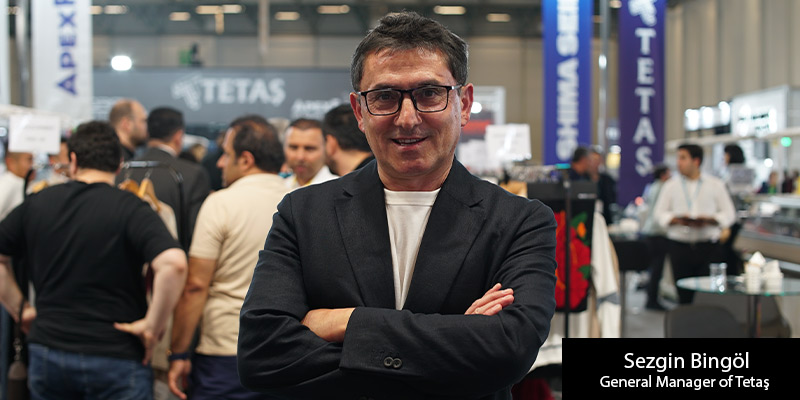
 General Manager of Tetaş, Sezgin Bingöl stated that ITM 2026 is not only a trade exhibirtion for the sector, but also an important platform where new technologies, production models, and future-oriented solutions are evaluated.
He noted that the company prepared for the exhibition over a long period and emphasized that ITM is one of the most important events where innovations are shared with the industry and direct contact is established with customers and manufacturers.
Highlighting the ongoing transformation in the textile sector both in Türkiye and globally, Bingöl stressed that overcoming current challenges requires not only focusing on problems but also developing new solutions.
New-Generation Technologies in Knitting, Hosiery and Garment
Bingöl underlined that next-generation technologies for the knitting sector attracted significant attention at ITM 2026. He stated that with Shima Seiki machines, they presented both competitive production models and advanced high-end solutions to visitors.
 Regarding the hosiery sector, he noted that alongside Lonati machines, technologies enabling high value-added production stood out. He added that they offered a wide product range capable of meeting the needs of different producer profiles.
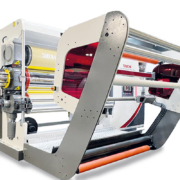
He also highlighted Tesan-branded spreading machines and cutting-room solutions developed within Tetaş, noting that AI-supported systems were among the most notable technologies at the fair.
Bingöl emphasized that artificial intelligence should not be seen merely as a technological label, but rather as a tool that improves production processes, increases efficiency, and creates competitive advantage.
He also stated that the company aims to improve production and logistics efficiency through warehouse automation and robotics solutions, and that they have developed software capable of converting 3D designs for the hosiery industry directly into machine language.
Contributing to Industry Knowledge Through a Digital Academy
 Emphasizing that knowledge sharing is as critical as technological development in industry transformation, Bingöl said that Tetaş’s Digital Academy project is an important step in this direction.
He explained that this platform, which presents solutions in knitting, apparel, and embroidery in multiple languages, provides an educational infrastructure where even individuals without prior experience in the sector can develop themselves from a basic level.
İstanbul as a Key Hub for the Regional Textile Market
Bingöl noted that ITM 2026 brings together visitors from different markets thanks to Istanbul’s international position, highlighting the exhibition’s regional impact.
He stated that due to Türkiye’s geographical advantage, many visitors come from regions such as Middle Eastern countries, Russia and Turkic Republics, making ITM an important meeting point not only for the Turkish market but also for neighboring countries.
He added that the importance of ITM in this period goes beyond commercial connections, becoming a platform where solutions to sectoral challenges and new technological approaches are discussed.
“Türkiye Must Write Its Own Story”
In his assessment of the future of the Turkish textile industry, Bingöl emphasized that Türkiye has significant advantages with its knowledge base, production infrastructure, and investment capacity.
He argued that the sector’s challenges should not be evaluated solely through costs, exchange rates, or financing issues, stressing that lasting solutions lie in value-added production, design, and branding.
“Türkiye must write its own story.” Bingöl said, adding that shifting solely to lower-cost countries is not a sufficient solution on its own.
He noted that Türkiye has a strong legacy in textiles and stressed that design, education, and technology investments must be prioritized for the sector’s future.
Highlighting the importance of building a strong educational infrastructure from vocational schools to universities, Bingöl concluded that Türkiye has the potential to produce world-class brands and that the sector’s future should be shaped in line with this vision.