The First Hybrid Knitting Machine Developed by Steiger and Cixing at ITMA
News: Özge Çağıl Sütcü
Steiger has been operating in the field of production and sales of industrial knitting machines for more than 75 years. With a headquarter based in Vionnaz Switzerland, its activity is supported by operations in China. Steiger is an expert in textile machinery for fashion and a pioneer in medical applications.
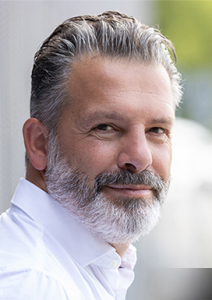
Steiger Sales and Marketing Manager Carlo Corradi made a presentation about the company’s innovations and ITMA preparations at the ITMA 2023 Press Conference organized by Swissmem.
Afterwards, he stated that they will exhibit the first hybrid knitting machine they have developed with Cixing, with whom they have been working together since 2010, at ITMA. Corradi said, “The technology of this machine’s technolog from Switzerland, while the software and hardware from China. This Hybrid machines an interesting price-quality ratio.” he commented.
Steiger’s first field, which serves four different segments in the sector, is fashion. Corradi explains the following about fashion: “This sector, this business unit is about 25% turnover. Steiger, since the beginning, focused on the technology of intarsia that’s why intarsia it’s synonym of Steiger. Today, the best brands at knitting (such as Hugo Boss, Channel, Versace, Burberry, Dior, Hermes, and MaxMara) use our machines exclusively for intarsia technology.”
Talking about the Antares knitting machine, which is an important machine for the fashion industry, Corradi explained the features of the product as follows: “Compact scalable knitting machine equipped with 3 systems, 32 horizontally and vertically motorized yarn-guides. Allows intarsia knitting with full creativity and high productivity.”
“The medical segment makes 70% of our turnover”
Corradi, describing the second segment, which is the medical segment, said, “We are really strong in this field. We could say, somewhat ironically, that our machines are making the end use of knitting healthy again. In addition, new, small, growing markets in Eastern Europe and North Africa, like Tunisia, and large manufacturers such as Germany, France, Belgium, Switzerland, and Italy use our machines. This business unit covers 70% of our turnover.”
“We are developing projects together with universities in Sweden”
Corradi stated that they also established connections with researchers in the health industry and we are developing projects together with universities in Sweden: “The third business unit is in technical segment. It’s rather a new unit but growing. We offer our knitting knowledge to researchers and small-scale industry. We listen to their ideas. We prepare the full machine software, run the trials to test customers’ materials, and final product test.” He said.
“Flat knitting machines even build, or even knit, buildings”
Saying that knitting machines are now used in every field from construction to automotive, from aviation to military, Corradi stated that they have signed many extraordinary projects so far. “We can say that flat knitting machines are even building or even knitting buildings.” said Corradi, describing some of his projects as follows: “Together with Cixing, we have developed machines that can weave carbon fibers in 3D and illuminate certain parts of the SolarStratos solar plane. First, we knitted the float part of the plane and the cover of the plane. In front of the prestigious MAXXI Museum in Rome rises an artful structure that attracts attention with its unusual shape and bright blue colour. It is a collaboration between the Block Research Group of ETH Zürich and TU Delft. The pavilion is shaped with a unique knitting work Mariana Popescu created using an algorithm and a Steiger knitting machine. With this, she demonstrates that it is possible to make efficient structures with very little building material, which also reduces CO2 emissions. Hardly any formwork is needed, resulting in virtually no construction waste. We developed Mapicc 3D for the European project to produce 3D carbon fiber knitted parts for the automotive or aerospace industries.”
“We installed solar panels that meet 92% of our electricity needs”
Corradi explained that the company, which focuses on sustainability and energy saving, has a recycling potential of 98% of the machine weight; “Today, We installed solar panels about 1280 m2, which covers today 92% of our power needs. So basically all daytime is covered by the solar energy. We enforced internal recycling policy, so basically no wastage policy and the result is that we have a recycling potential of 98% of the machine weight.
Corradi stated that they revised their machines for sustainability and low energy consumption. He underlined that their new machines consume 40% less energy compared to the old ones and offer increased performance and safety.
Corradi made the comparison between the old and new machines as follows: “Old technology reduces new technology from 41 reduced to 22 electronic boards, more than 150 cable references down to 80 etcetera. And our machines nowadays in the average have about 40% less energy consumption, from 1.4 kilowatt down to 0.83.”