“Türkiye is One Of The Most Dynamic Textile, Filament And Fibre Manufacturing Hubs”
Interview: Tuğba KARADEMİR
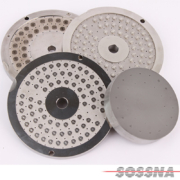
Sossna GmbH strengthens its position in the global market by combining its engineering expertise in spinneret manufacturing with profound process know-how. With its high-precision production approach, application-specific solutions, and system-oriented mindset, the company delivers sustainable performance and consistent quality standards in spinning technologies.
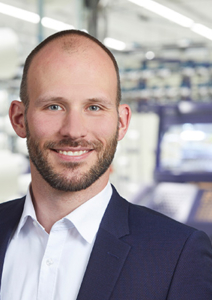
In this interview with Richard Hollweg, International Sales Manager of Sossna GmbH, we discuss the company’s engineering-driven development since 1985, its technical expertise in spinneret production, and its strategic approach to global markets. Hollweg explains the company’s system-level optimization philosophy across melt, dry, wet, and nonwoven spinning applications, while emphasizing the importance of modernization, performance enhancement, and long-term partnerships—particularly in dynamic production hubs such as Türkiye.
 Can you briefly introduce Sossna GmbH’s journey since its foundation in 1985 and how the company’s core focus has evolved over time?
Sossna GmbH was founded in 1985 in Germany as an engineering company serving the chemical fibre industry. In the early years, the focus was strongly engineering-driven—supporting customers with process and equipment know-how. A key milestone came in 1993, when Sossna delivered a turn-key spinneret production plant to China; from that point, spinnerets became the company’s main activity. Today, Sossna combines spinneret manufacturing with spinning process technology expertise, supporting customers not only with hardware but also with engineering support around pack and process performance.
“Quality is Judged By Real-World Performance in The Customer’s Spinning System”
Spinnerets are often referred to as the “heart of a spinning plant.” How does Sossna ensure precision and quality in its spinneret manufacturing process?
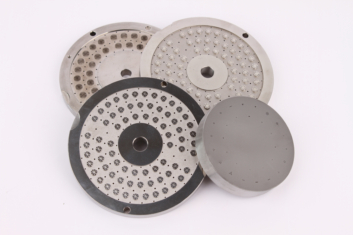
Spinnerets define filament formation and uniformity—so precision is everything. Sossna’s quality approach is built around tight tolerances on hole geometry, surface finish, and automated quality control to protect filament uniformity and stability in continuous production. Because Sossna is active in both spinneret manufacturing and spinning process technology, quality is judged not only by dimensional checks, but by real-world performance in the customer’s spinning system.
What are the key differences and advantages of Sossna’s spinnerets for melt, dry, wet and non‑woven spinning applications?
For melt spinning, Sossna focuses on high-pressure capability, thermal robustness, and consistent capillary geometry. In dry spinning, capillary and pack designs emphasize solvent-related stability and cleanability. For wet spinning, designs prioritize controlled flow and coagulation behaviour. In nonwoven applications spinnerets are oriented toward high output, stable web formation, and repeatable process performance. For all application Sossna spinnerets ensure stable throughput distribution and high uniformity.
How does Sossna work with customers on customized spinneret and spin pack designs?
Sossna works closely with customers to develop tailor-made solutions. Projects typically starts from customer ideas and ending up in samples to be tested by targeting the filament specifications. Engineering alignment covers throughput, polymer type, spinning method, hole count, profile geometry, and pressure requirements.
Can you discuss the role of Sossna’s design and process optimization services in minimizing production challenges such as high pack pressure or uneven melt distribution?
Production challenges such as high pack pressure or uneven melt distribution require a system-level view. Sossna supports customers through flow distribution optimization, pressure-drop management, and practical improvements in pack layout and capillary geometry. The goal is to enhance production stability, reduce downtime, and improve filament quality while ensuring serviceability and reproducibility in daily operation.
“We Provide Local Support Through Our International Partner Network”
With global markets becoming more competitive, what strategies does Sossna follow to expand its international presence and support local partners?
Sossna focuses on strong technical positioning, combining manufacturing excellence with process expertise. The company supports customers through international partners and representatives while maintaining centralized engineering and quality standards. Sossna believes in long-term customer relationships.
How does Sossna view the Turkish market, and what solutions or support do you offer to meet the specific needs of Turkish spinning and textile manufacturers?
Tuürkiye is one of the most dynamic textile, filament and fibre manufacturing hubs. Sossna supports Turkish manufacturers with application-specific spinnerets and spin pack solutions. Upgrade and optimization services help reduce downtime and improve uniformity, supporting the competitive positioning of Turkish spinning and textile producers.
Looking ahead, which spinning technologies or fiber applications does Sossna see as most promising for future innovation?
Sossna works closely with Institute, University and OEMs. Future innovation is expected in bicomponent and functional filaments for medical, filtration and specialty high-performance like space and military applications. Efficiency-focused retrofits and process optimization will also remain key areas, helping manufacturers improve performance without major capital investments.