“Our Customers in Türkiye and India Continued to Invest in Our I3P Platform”
Interview: Dilek Hayırlı
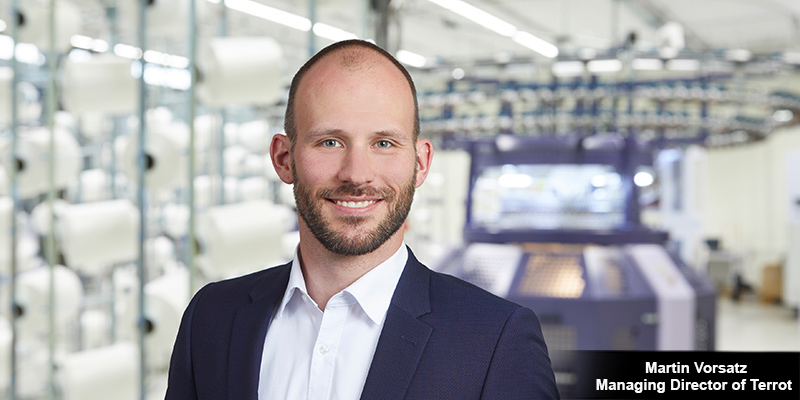
Martin Vorsatz, Managing Director of Terrot stated that while investment decisions became more cautious globally in 2025, Türkiye and India stood out with strong demand, particularly in the Double Jersey and Interlock segments, and continued to play a key role in the company’s growth strategy.
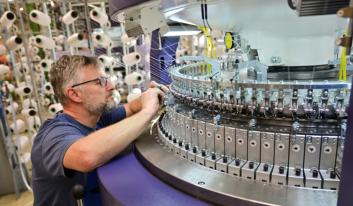
The transformation in circular knitting technologies, driven by quality, efficiency, and digitalization, continues at full speed. As manufacturers invest in more flexible, precise, and high-performance machine solutions to meet evolving market expectations, the role of technology providers has become more critical than ever. In this exclusive interview with Tekstil Teknoloji magazine, Martin Vorsatz, Managing Director of Terrot discusses how 2025 has shaped the industry, why Türkiye and India maintain their strategic importance, and the company’s next-generation solutions focused on efficiency, digital integration, and advanced engineering in circular knitting technologies.
“Demand for Double Jersey and Interlock Applications Remained Strong in Türkiye and India”
The year 2025 proved to be a challenging period for the global textile machinery industry. How does Terrot evaluate this period in terms of order intake, key markets, and customer investment trends?
2025 was a year of mixed dynamics. Order intake softened in some regions as customers postponed projects amid uncertainty around U.S. tariff policies, tight financing conditions, and more cautious capacity expansion following the volatility of the 2023–2024 cycle.
At the same time, demand remained resilient in Türkiye and India, particularly in Double Jersey and Interlock applications. Customers in these markets continued to invest in high-productivity solutions such as our I3P platform. Both countries remained strategic priority markets for us, supported by a strong pipeline and solid order momentum despite the broader industry headwinds.
Competition in the circular knitting machinery market continues to intensify. What are the key technological and engineering strengths that differentiate Terrot from its competitors today?
Our customers are constantly seeking differentiated solutions that deliver greater value. Our role is to be a true solution partner—working closely with them to advance technologies and turn new ideas into practical applications. Everything we do is underpinned by an uncompromising commitment to the highest quality standards.
What have been the most notable recent developments in your Single Jersey and Double Jersey machines? How do these innovations contribute to higher productivity, fabric quality, and process stability for users?
In recent years, Terrot has made substantial advances across both our Single Jersey and Double Jersey platforms, with a clear focus on precision, productivity, and fabric quality.
Our latest Single Jersey model, the S296-1, delivers highly precise needle and sinker control and is designed for higher operating speeds. The result is outstanding process stability, reliable high-speed performance, and consistently clean fabric surfaces—even under demanding production conditions.
On the Double Jersey side, machines such as the I3P 196 and the high-gauge UCC 572-T E28 set new benchmarks in both productivity and fabric finesse. They enable complex structures, the use of finer yarns, and the production of lightweight, high-performance fabrics—capabilities that are increasingly critical for sportswear and technical textile applications.
Another major milestone is the integration of AI-driven defect detection through our partnership with Smartex. Real-time inspection of every inch of fabric significantly reduces waste, improves process control, and ensures consistent, high-quality output—delivering a decisive competitive advantage for modern manufacturers.
New structural and platform-based approaches for large-diameter circular knitting machines are attracting increasing attention in the industry. How would you describe Terrot’s engineering vision and solutions in this field?
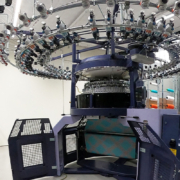
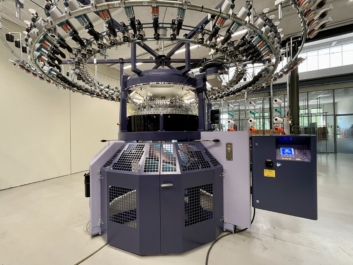 Our engineering vision comes to life in the T‑Frame platform—a completely reimagined foundation for large‑diameter circular knitting systems. With a universal, modular design, the T‑Frame delivers exceptional structural stability and ergonomic efficiency, setting a new standard for modern knitting plants. Crafted from premium welded tubular steel, the platform ensures superior rigidity and vibration stability—critical for precise, high-speed knitting. Its standardized frame accommodates multiple machine configurations, enabling our customers to adapt rapidly to evolving production demands. Thoughtfully engineered with integrated cable routing, a centralized operator display, and optimized component layout, the T‑Frame reduces mechanical complexity and simplifies maintenance. It is a future-ready foundation, designed to support the next generation of Terrot machines and maximize long-term investment value.
Digitalization, automation, and data-driven production have become central topics for the knitting industry. What kinds of smart machine concepts and process optimization solutions does Terrot offer to support customers’ operational efficiency?
Digitalization is a cornerstone of both our current and future machine strategy. All new Terrot Open‑Width machines are “Smartex‑ready,” meaning they can be equipped with Smartex Core for AI-driven defect detection and Smartex Loop for roll-level traceability. These tools provide real-time monitoring and automated quality control, significantly reducing unnecessary downtime.
Our machines also feature OPC‑UA-based interfaces, enabling seamless integration with ERP and MES systems. This allows customers to create a complete digital twin of the machine and its fabric output, empowering data-driven production optimization in real time.
For existing machine fleets, our Industry 4.0 and 5.0 retrofit packages bring older models up to modern standards with updated electronics, advanced control systems, and smart interfaces. These upgrades extend machine life while boosting both precision and productivity.
Sustainability and energy efficiency have become decisive factors in machinery investment decisions. What are Terrot’s key priorities in reducing environmental impact through machine design and manufacturing processes?
At Terrot, sustainability begins with intelligent, durable machine design. Our energy‑efficient motors and drive systems minimize consumption throughout the machine’s operational life.
Since 2014, our production site has held certification as an “energy‑conscious company” underscoring our commitment to resource‑efficient manufacturing. We continually assess and optimize workflows to reduce energy use across the entire production chain.
Terrot machines are built for longevity and upgradeability, significantly lowering environmental impact compared to short‑cycle equipment. Combined with AI‑supported defect detection, our solutions help customers cut scrap, conserve raw materials, and maintain stable, eco‑friendly operations.
“At ITM 2026, I3P 196 will Once Again Demonstrate the Region’s Strong Demand for Quality, Flexibility and Efficiency”
Türkiye is a well-established and highly competitive manufacturing hub for circular knitting technologies. How does Terrot assess the expectations of the Turkish market, and do you pursue a dedicated strategy for this region?
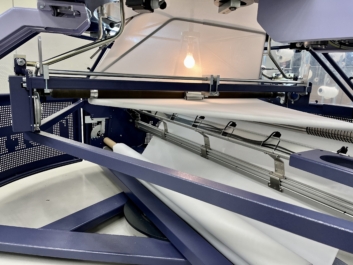 Türkiye remains one of our most strategic markets and a global hub for knitted fabric production. Customer expectations are particularly high for Interlock, Double Jersey, fine‑gauge fabrics, and Open‑Width solutions. At ITM 2026, the I3P 196 will once again stand out, demonstrating the region’s strong demand for quality, flexibility, and productivity.
We maintain a close partnership with Erko, enabling rapid communication, local support, and expert consultation. Both Türkiye and India are now among the fastest-growing regions for Double Jersey applications, and we continue to tailor our solutions to meet their evolving industry trends.
Looking ahead to 2026 and the medium term, what are Terrot’s strategic priorities? In terms of new machine concepts, technological investments, and global market positioning, what developments can the industry expect from Terrot?
Our primary strategic focus is the global rollout of the T‑Frame platform, which will form the structural foundation for the next generation of circular knitting machines. This platform is designed to deliver enhanced flexibility, performance, and user safety across all major machine classes.
In parallel, we are investing in high‑gauge technology, advanced transfer systems, and expanded patterning capabilities—particularly within the UCC series. These innovations enable production of high-performance functional fabrics and precision-engineered sportswear. Digital integration continues to be a key pillar of our strategy. We are deepening AI partnerships, strengthening MES and ERP connectivity standards, and extending retrofit programs to modernize existing machine fleets.
Finally, we are reinforcing our presence in strategically important markets such as Türkiye, India, and Southeast Asia, leveraging the global ecosystem of our parent group, Santoni. This alignment ensures sustainable, long-term growth and provides a unified platform for innovation and circular knitting excellence.