70% of the Facilities were Reactivated in the Earthquake Zone
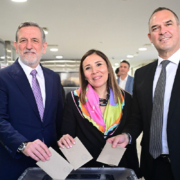
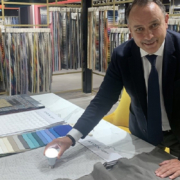
Ahmet Öksüz, Chairman of the Board of Directors of Istanbul Textile and Raw Materials Exporters’ Association (İTHİB), organized plant visits in Kahramanmaraş and Hatay with İTHİB Board Members. İTHİB Board Members visited factories in Kahramanmaraş and Hatay. Members of the Board of Directors analyzed the works carried out in the earthquake zones and the latest situation of the industry on site.
Öksüz stated that the textile industry, which was wounded after the earthquake disaster, has been working with great effort since the first day to heal its wounds; “70% of the production was reactivated in the process that developed after the earthquake. We continue to produce and bring value to Turkey.”
Ahmet Öksüz evaluated that; “Kahramanmaraş, the center of the earthquake, has an important place in the exports of the textile sector and is the largest city of our country in terms of production power. Our companies in Kahramanmaraş, the main supplier of yarn and fabric to the Turkish textile and garment industries, have been affected. However, we have been working since the first day to heal our wounds and recover. In the process that followed the earthquake, 70% of the production was restarted with the cooperation of our government and our sector. We continue to produce and bring value to Turkey in the global textile industry. As the Turkish textile industry, we are among the leading countries in the world with our modern production infrastructure and integrated production power. We have a strong production and export network in all sub-product groups of our sector. It is of great importance to support factories and producers in the earthquake-affected regions. There are still companies that cannot operate at full capacity because they cannot provide employment in the earthquake regions. Therefore, in order to increase the employment rate in the earthquake zone, it is necessary to avoid deductions from the taxes paid by workers and to develop additional incentive mechanisms to increase remigration. We need these supports to maintain our position and competitiveness in the world. We are one of the most important sectors in Turkey, not only with our production power but also with our employment capacity.

“Our Priority is to Increase Our Global Market Share”
Ahmet Öksüz reminded that the Turkish textile industry completed 2022 with exports of 12.9 billion dollars, “We are the fifth largest supplier in the world on a global scale and the second largest supplier in the EU. In the first 5 months of 2023, we exported 4.9 billion dollars. We aim to maintain our current level by exporting 13 billion dollars at the end of the year. As the textile industry, our priority is not to lose our market share in international competition and to increase our share in the global market.”
Ahmet Öksüz stated that as a sector, they are experiencing difficulties due to the increase in production costs. Öksüz; “Production costs are one of the issues that affect the textile industry the most. We have reported to our ministries that energy costs have reached a level that will stop the production of our companies. Our government has reduced energy prices to reasonable levels with improvements. In addition, the minimum wage increase is one of the issues affecting our sector. Our production costs are much higher than our competitors in Asia, North Africa and the Turkish Republics. We are unable to pass these costs on to our global customers due to a global demand slowdown.

“China’s subventions affect our domestic market production”
Stating that China experienced great impact especially in the European and US markets during the pandemic, Ahmet Öksüz said: “With the end of the pandemic, China now subsidizes its companies at very important levels in order to maintain its share in its existing markets. China’s subventions affect not only our exports but also our domestic production. China also exports a significant amount of textiles to Turkey. In 2022, unfortunately, we had a foreign trade deficit of more than 2 billion dollars. Moreover, our textile sector is a source of pride for Turkey with its foreign trade surplus; it is a sector that brings foreign currency to Turkey. In this context, our expectation from our ministries is that an urgent measure should be taken against imports to protect our employment and our production capacity established with billions of dollars of investment.” he ended his words.