
Textile Exporters from Denizli Progress Together to a Sustainable Future
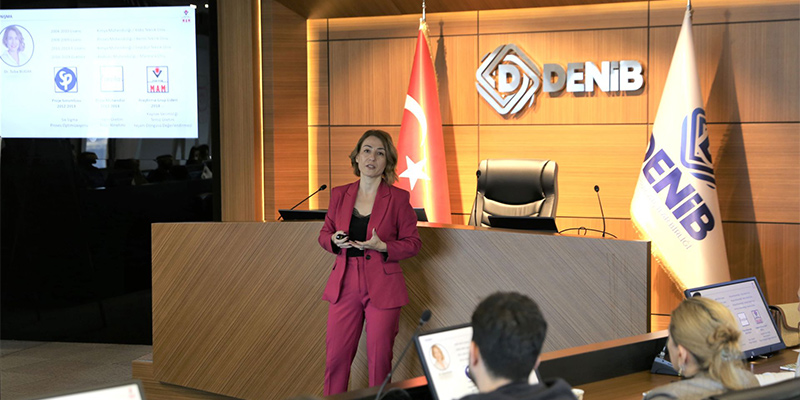
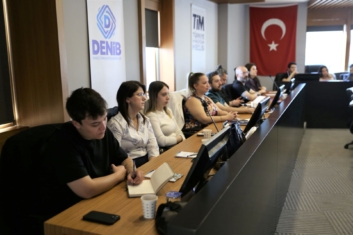
Within the scope of the 2024 Technical Support of the South Aegean Development Agency, Denizli Exporters‘ Association (DENIB)’s ‘Denizli Textile Takes the Road Together to a Sustainable Future’ project for the textile and garment sector was held in the DENIB service building in cooperation with TUBITAK Marmara Research Centre (MAM).
 Hüseyin Memişoğlu, President of DENIB, who made evaluations about the training programme of the project ‘Denizli Textile is on its way to a Sustainable Future’, said the following: “I would like to mention the important position of the textile-garment sector in our country and in our province. In Turkiye, the textile-garment sector ranks third after the automotive and chemicals sectors. Again, while the unit value of exports is 1.50 dollars across the country, it is 8 dollars in the textile-garment sector. In Denizli; textile-garment continues its leading position as the locomotive sector. While the export unit value of our province is 2.15 dollars, this value is 9.6 dollars in the textile-garment sector. In short, the textile-garment sector maintains its place at the forefront with its value-added exports. When we evaluate the export figures; In the January-September period of 2024, Turkiye-wide textile-garment exports decreased by 6.3% to 20 billion 630 million dollars. In Denizli, it was 1 billion 053 million dollars with a decrease of 2.3% in the same period.’
“Green Transformation is a Necessity, Not a Preference for Textile and Garment Industries”
Making important statements about GEKA, Memişoğlu said the following: “The themes determined this year within the scope of GEKA 2024 technical support programme are; Digital and Green Transformation, Diversification of the Economy and Women Entrepreneurship and Women Employment. The fact that green transformation is not a choice but a necessity for the textile and apparel sectors, and the high rate of female employees in these sectors were the other reasons why we wanted to take part in the programme. The textile-garment sector is used in everyone’s daily life. We encounter a wide range of sector products such as clothes, furniture, protective equipment, medical clothing. The increasing need for water and energy for textile products puts serious pressure on the environment. It is ranked as the fourth sector with high environmental impact after food, construction and transport. It also ranks high in terms of water and resource consumption. The issues we wanted to address in our project were circularity, water, resource and energy efficiency, waste management, carbon footprint measurement on the main axis of sustainability.”
Training Lasted 5 Days
Reminding that the training held in DENİB lasted 5 days, Memişoğlu said, “The first part of the training programme, which lasted 5 days in total, was completed on 23-24 October 2024 with the titles of Sustainability in the Textile / Apparel Sector, Life Cycle Analysis and Circular Business Models and Energy Efficiency, Management and Good Practice Examples in the Textile / Garment Sector. The second part of the training project is planned for 3 days in November with the titles of Water, Waste Management and Industrial Symbiosis, Renewable Energy and Carbon Reduction Certificates and Carbon Footprint Measurement and Reporting in Textile / Garment Enterprises.”


