TETSIAD: The Secret of Our Success in Exports Lies in Our Strength in Design
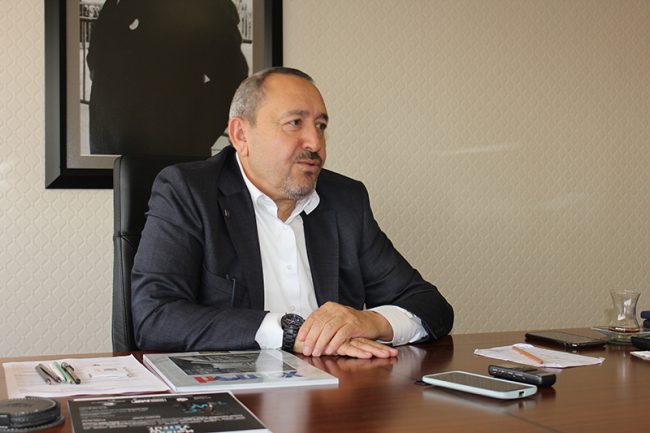
Winning the selection last year in August for Chairman of Turkey Home Textile Industrialists’ and Businessmen’s Association (TETSIAD), Hasan Hüseyin Bayram told the Tekstil Teknoloji magazine about the problems in the home textiles industry and their goals and projects.
The Turkish home textile industry has a very particular position in the world in terms of product quality, designs and high technology that have the power to set the fashion and trends. Being among the top four biggest home textiles exporters in the world in and Europe’s largest manufacturer of home textiles, Turkey made 3.3 billion dollars of exports in 2018. This figure is estimated to be around 5 billion dollars including the shuttle trade.
TETSIAD, the umbrella organization and Turkey’s face of the home textile industry in the world had an election in August. Hasan Hüseyin Bayram, who elected as a chairman of TETSIAD commented; “TETSIAD is now reborn” on the election result. Hasan Hüseyin Bayram told the Tekstil Teknoloji magazine about the problems, solutions, targets and new projects in the home textile industry.
The TETSIAD elections in August was highly contentious. You had a head-to-head election with your contender Şerafettin Demir. What was the reason for the election being so contentious and exciting?
Before, the leaders of the industry used to decide who would be the chairman of TETSIAD. We had doubts about the previous management. In order to put an end to the poor and unfair management approach at TETSIAD, I ran for chairman with the support of the majority of all institutions and organizations in our industry. However, later on factions started to emerge. A group of friends in the former management ran also for chairman. A number of mistakes were made. The congress to be held in June was postponed to August. As a result of an 8-month process for a congress, we held an election with the participation of the majority of our members. Almost 700 of our 1100 members cast votes and I was elected chairman. TETSIAD was reborn with this election and it proved its existence.
Turkey is among the four largest home textile exporters in the world. What are your expectations and forecasts about the course of exports for this year as we are coming closer to the end of 2019?
As you also noted, Turkey is the world’s fourth largest home textiles manufacturers and exporters following China, India and Pakistan. The global home textile exports correspond to a total of 95 billion dollars, 3.5 billion dollars of which is made by Turkey. Including the shuttle trade in the Laleli district, we have a home textiles exports of almost 5 billion dollars. In 2019, there was a recession in all the world economies. But we will achieve the export target of 3.3 billion dollars as we did in 2018.
We want to unleash the power of TETSIAD
At the beginning of the interview, you mentioned that there was a poort and unfair management at TETSIAD. What are the problems in the home textile industry?
Turkey’s home textile industry has a 4.5% share from the global home textile market. This is a very significant market. However, the home textile is not a renowned value of Turkey. All stakeholders think of home textiles in Turkey as apparel products like dresses, shirts and underwear. And there is a classification mistake about home textile products. For example, some customers want lead under the tulle for weight. The lead sewn on the tulle is considered to be an apparel. Linens are home textile products. When it is packaged for sale, it becomes part of the apparel group. These mistakes need to be corrected. If the Turklish industry fail to correctly identify what we produce, we cannot set a strategy for it.
As the home textile industry, we are an important industrial branch in Turkey both with production and exports. We have big factories for production and we use up to 30 meters tall huge industrial machines. Until today, all of these have been unknown, hidden and not made public. Now someone is telling this to the public. Whichever authority we go and tell about the home textile industry, their reaction is nothing more than “Is it really so?” We want to put an end to this unrecognition.
So what kind of roadmap did you prepare to achive this?
We are a huge community with a turnover of 5 billion dollars, but we still do not have a union of exporters. We came together with the members of the High Specialization Board, after which our stakeholders started the process. We will prepare our files to apply for Exporters Association. Because we want the home textile industry to be given the value it deserves. We cannot leave this great community helpless. However, there are some misunderstandings about this. Some of our friends are concerned that we would be divided and get smaller. This is a wrong point of view. The home textile industry need to be able to express itself and stand united.
Although it has been only 3 months since you have taken office, you have done good work. Can you tell us about your innovations and projects that you have achieved so far?
First of all, I should state that after the congress, our members showed great interest to TETSİAD and started to value the organization. Although we ask for 5 thousand lira for membership entry fee, we have had even more members. This made us very happy. With the encouragement of our members, we do good works. For example, the electricity bills of our members had increased considerably in recent years. We signed a deal with a utilities company. Now we provide our members with 25% cheaper electricity. We have come to the last stage to establish our visa office. Now getting a visa will no longer be a challenge for TETSIAD members. We have a fountain in Eminönü, where we distribute 40 tons of water in summer. We also opened an office next to the fountain, where our members can meet and organize their activities. They can use the office and enjoy tea and coffee service. With this occasion, I would like to invite all our members to the fountain. They can come and feel the spiritual pleasure in the fountain.
In addition, as TETSIAD, we are planning to bring foreign buyers to the exhibitions in the new period. We will provide accommodation and flight tickets for our members abroad. We want to increase the number of visitors in the exhibition.
Turkey exports home textiles to more than 170 countries. One of the priorities in the industry is to find new markets. Which countries are being targeted in 2020?
There is almost no country that doesn’t imports home textile products from Turkey. Therefore, I want to thank all of our members by way of your magazine. They’re all business people who love their country. They build factories and employ thousands of people. Then they take their suitcases and travel the world to sell their products. This is a great feat. As TETSIAD, we aim to take Turkish home textile products wherever there is life and there is a home. We established committees for this issue and our friends continue to work on new markets.
The secret of our success in exports lies in our strength in design
The world home textile market has a volume of 90-95 billion dollars. Turkey’s home textile industry has a 4.5% share from the global home textile market. What is the most important feature that distinguishes Turkey from its competitors?
Turkey stands out with the diversity of product range of home textiles, design power, personalized boutique production and fast delivery capability. The most important of these is design, I would say. There is a significant consumption of design in the world. To give an example from my own company, we sell designs to a company once, and for their second order, they ask whether we have a new design. We outscore our competitors with our designs. We recently held a meeting with the Secretary-General and Deputy Chairman of the Chinese National Apparel Industry. CEOs from nearly 25 Chinese big companies were present. The Chinese delegation wanted to get design tips from us. A company representative said they had agreed with three designers from Turkey to produce their own designs. The secret of our success in exports lies in our strength in design. We create fashion. Our Chinese and Indian competitors are studying our products in the European market and replicating them in their countries.
The secret of being so successful in design is that we live in Anatolia. People lived in this land for tens of thousands of years. Colors formed a durable heritage of culture. We actually introduce the Anatolian culture to the world with our designs. We need to protect this heritage.
We have cooperation with Kültür University for design. We will have meetings again soon. We want to take it to the level of Industrial Vocational High Schools. We should start with them to raise our youth. We will have meetings with the design department teachers at nearly 10 industrial vocational high schools. We will talk about how to better explain the design to students.
You had said that in the new period you prepared a tradeshow constitution and you will prevent the unfair gains from the Evteks exhibition. What were the problems with Evteks? Will you have any new and different projects about Evteks in the new period?
In the first years of the Evteks exhibition, a 500 sqm booth area was allocated to the company that needed 200 sqm in order to reach a larger audience. Now some of our friends say that they have to grow their booths but we do not have enough space. Some of our members find the halls 9, 10 and 11 very far and want to come closer, but we cannot help them. We have participants from members and non-members at Evteks. There is this perception for years, Evteks assigns good places to members and non-members are treated as step-children. We want to embrace everyone. We want to receive members and non-members alike, who work for the country and employ even one single worker. Our exhibition committee is working on this. Our friends have set certain criteria and we will complete the tradeshow constitution soon.
We are having such big problems in Evteks. For example, the security guards are quarrelling with the participant who try to sneak food package in the exhibition area. Taxi drivers are big problem. Technical infrastructure is not sufficient. The restrooms are inadequate. We cannot present a proper image to the west under these conditions. In spite of all this negativity, our industrialists are still protecting their business and doing a great job. But, tradeshow management is a national cause. Because we provide significant added value to the national economy. When you have a tradeshow, hotels find clients, the restaurants are working, the small shops and the taxi drivers are doing business and so on. For this reason, tradeshows are too important to be left to the whims of individuals. Let’s look at the example of Germany. Germany’s exhibition economy is 14.5 billion Euro annually. They receive 7.5 million tourists coming for the tradehows. And take our Evteks exhibition as an international tradeshow in Istanbul. Let’s assume that 20 to 30 thousand visitors come from abroad. Global Association of the Exhibition Industry reports that each tourist’s added value to the country’s economy is 3,000 dollars. In this case, Evteks’ contribution would be 60 million dollars. For 10 events, that becomes 600 million dollars. This is a very big contribution to the country’s economy. So this should not be left to the initiative of individuals.
In this sense, the main problem in Turkey is the lack of a large exhibition area. Why is the entire Europe successful int his business? The fair grounds in Europe are not owned by individuals, but the municipalities. They have a system. Unfortunately, we don’t have that. The fair grounds are left to the initiatives from individuals who have a monoloply over the business. But, tradeshow management is a national cause. It requires diligence from all people who run this country. The government, the parties and the industrialists should protect it.
Interview: Dilek HAYIRLI